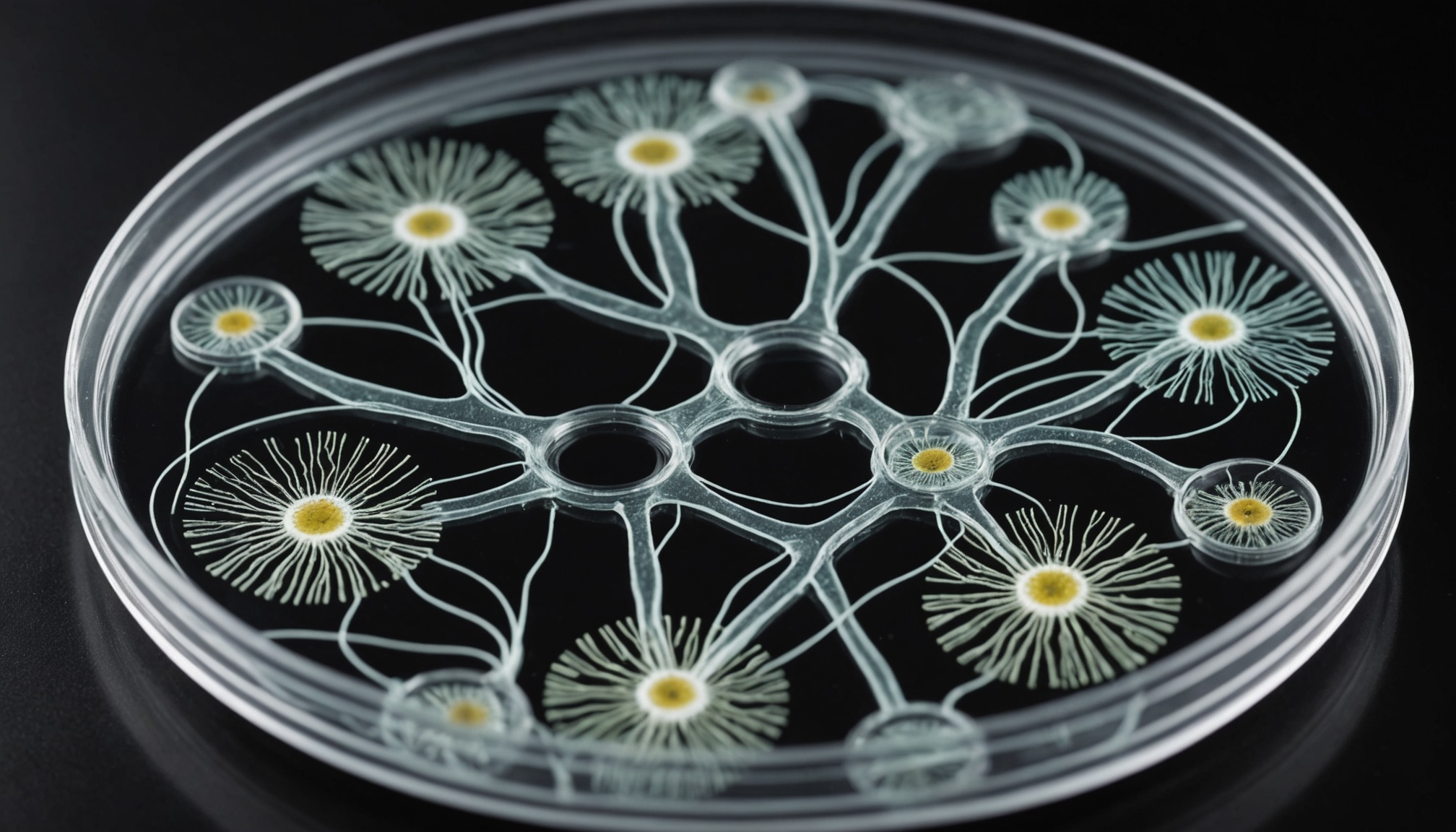


A research team led by McGill University has built a computer that runs on living bacteria. The device can work through large, complex problems using a small fraction of the memory and resources that a normal electronic computer would need. The work, published in Microsystems & Nanoengineering and described in a McGill announcement, is the result of a 20-year collaboration among researchers in Canada, Europe, the United Kingdom and Australia.
Standard computers test possible solutions one after another, so for very hard problems the number of checks grows so fast that solving them can take years or centuries. Very hard problems are those whose difficulty explodes as they grow. The bacteria-based machine instead explores many possible answers at the same time.
How the living computer works
The team translated the problem into a graph, a map of possible choices, and rebuilt that map as a network of tiny fluid-filled channels, a technology called microfluidics. Each path through the network stands for one possible solution, and special junctions act as logic gates, the decision points of computing. Vast numbers of swimming bacteria then move through the channels, testing many routes in parallel. Crucially, the bacteria divide as they travel, so the number of living processors grows along with the problem. To prevent overcrowding, the researchers can adjust the temperature and control how fast the bacteria multiply. Automated image analysis finally traces the successful routes and reveals the combinations that satisfy the problem.
The machine is not meant to replace electronic or quantum computers. The researchers present it as a cheap, resource-efficient tool for problems that conventional machines handle badly, with possible uses in encryption, molecular biology and artificial intelligence. One example is mapping the structure of proteins: the team argues that AI systems only estimate answers from existing data, while their device is built to actually solve problems. A scaling analysis in the paper identifies the point where computing with multiplying bacteria is expected to outperform electronic computers.
This matters because the cost of computing, in energy and hardware, keeps climbing as problems get harder. A computer whose processing power multiplies on its own, uses little energy and runs with few errors points to a genuinely new way of tackling some of the hardest problems in science.