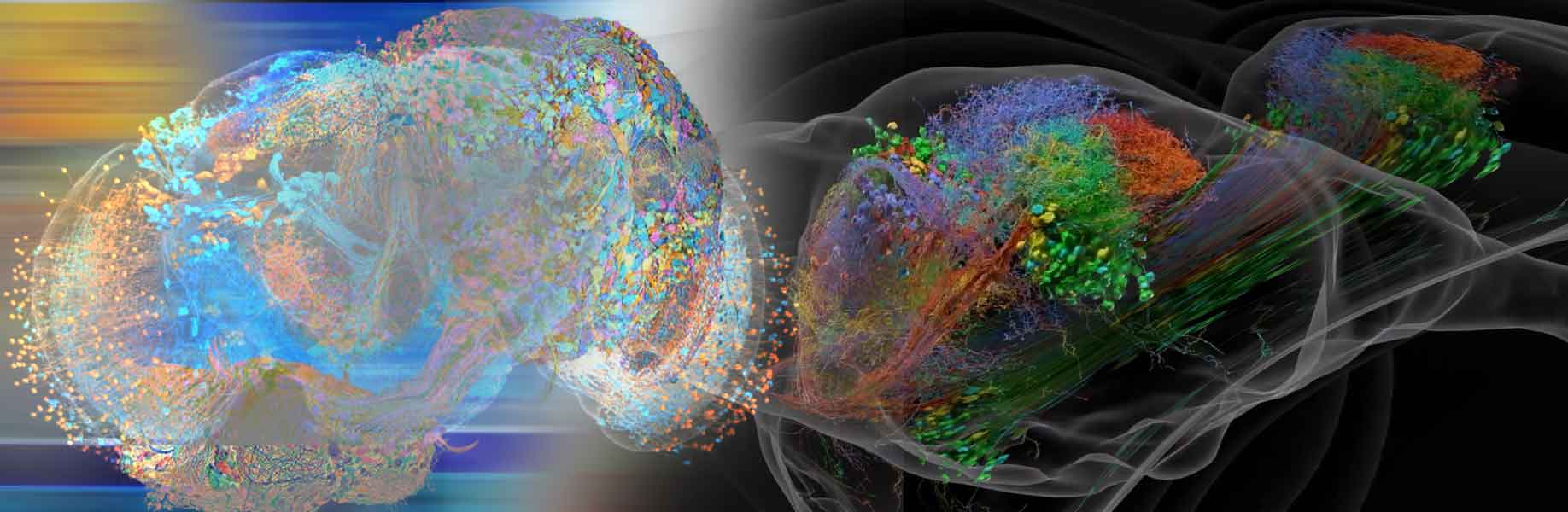

Google Research, working with HHMI Janelia and other collaborators, has published a complete wiring diagram of the male fruit fly brain and central nervous system. A connectome is a map of every neuron and the links between them. The new map contains more than 166,000 neurons and 125 million synaptic connections. By neuron count it is the largest brain map so far. This research is published in Cell.
Fruit flies' brain maps can show how a nervous system senses the world, chooses actions, and might one day be repaired after injury. The new resource also includes the ventral nerve cord, the fly’s version of a spinal cord, so it links the brain to the body rather than stopping at the head. Human experts at Janelia checked and corrected the map. The data can be viewed and downloaded in Neuroglancer, an open tool for exploring large three-dimensional brain datasets.
From slices to a finished diagram
Making a connectome starts by cutting a brain into millions of thin slices, photographing each slice with an electron microscope, and using computers to stitch those flat pictures into three-dimensional neurons. Earlier work produced an automated female fly brain map and then a verified map of half a female brain. Methods keep improving, but people still spend years correcting errors and labeling cell types. Better automation is meant to make larger maps affordable. Google Research is using artificial intelligence (AI) -assisted tools for connectome studies.
The male map sits beside earlier female fly maps of the brain and nerve cord. Where neurons differ, researchers can study courtship and aggression. Where the sexes look alike, two full maps can show how individuals vary. Companion papers already use the male data to examine vision, taste, and social behavior. Related work is moving to vertebrates. A full human map remains out of reach, but the authors say these steps should help explain how brains work and, later, how to treat disorders such as Alzheimer’s disease, depression, and schizophrenia.