A tale of two sceptics
Credit: David Wood (Generated with the assistance of AI)

A tale of two sceptics

What a volcano sceptic can teach us about AI scepticism
Oct 28, 2026
13 min read
0.00 MPXR

The real virtue is not stubborn independence from expert opinion, but independence of mind: the willingness to examine the evidence honestly, even when doing so threatens our most cherished assumptions. 

We live in a time when many people are sceptical about AI.

Don’t be misled by all the science fiction stories, they say.

You would be very naive to believe all the hype about AI, they insist.

AI is just a “normal technology”, subject to similar issues as all other technologies, they protest. No special precautionary measures are needed.

They continue: AI is about to run out of steam. Or run out of training data. Or collapse under the confusion of being trained on data that is itself AI-generated slop. Or implode as a huge financial bubble bursts. You get the idea.

It’s fundamentally important not to construct guardrails against supposedly catastrophically dangerous AI, they conclude. That would be an intolerable intrusion against innovation, against entrepreneurial spirit, and against technological genius.

To be clear, there are several different kinds of AI scepticism. Some people doubt that AI capabilities will advance much further. Others accept that AI could become extraordinarily powerful but doubt that it poses catastrophic risks. Still others acknowledge those risks but resist regulatory intervention. These positions deserve different responses. But what concerns me most is the tendency, sometimes shared across these groups, to dismiss the need for serious precautions before the evidence has been properly examined. 

All this scepticism reminds me of another sort of scepticism which, briefly, filled newspaper columns nearly five decades ago.

In that earlier example, the sceptics were volcano sceptics.

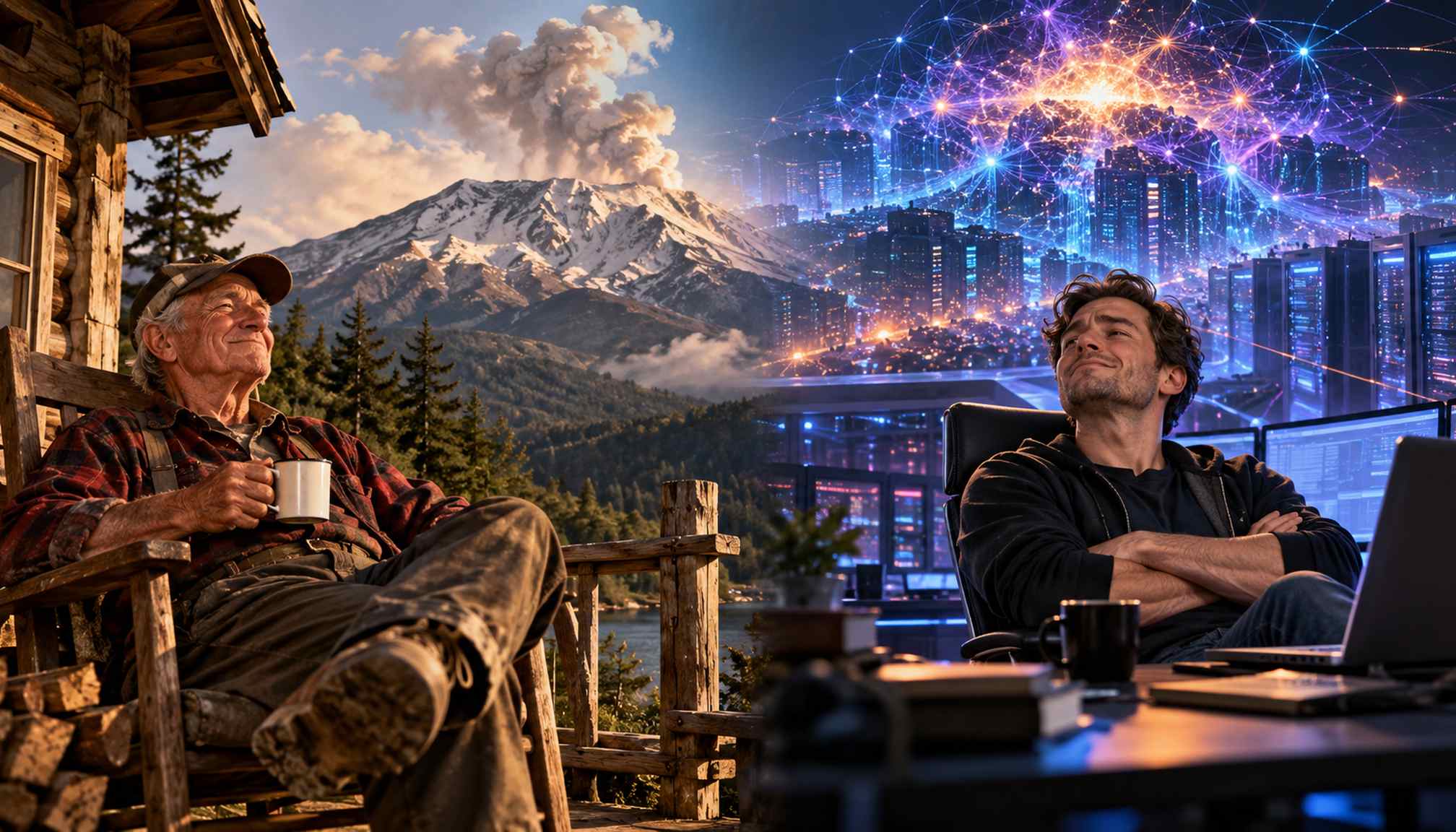
One of these sceptics acquired celebrity status for a couple of months in 1980: the caretaker of a lodge just below the timberline of Mount St Helens in Washington State. Harry R. Truman (not to be confused with Harry S. Truman, the former US president) had lived in that lodge for 54 years. He was in no hurry to move out.

Throughout March to May, Mount St Helens showed signs of a possible volcanic eruption. Nearby residents were urged to evacuate their homes, out of caution. Truman would hear nothing of it. A flurry of small earthquakes did nothing to damp his self-reliance. He refused to pack his belongings and move.

Truman could also find reassurance in some of the more cautious statements made by scientists. Don Mullineaux of the US Geological Survey, who had previously warned of the mountain's dangers, observed that there was not yet surface evidence of volcanic activity and suggested that an eruption would probably be preceded by warning signs such as venting. 

Truman offered his own considered opinion: “I’ve felt earthquakes in the past, but nothing lately.”

When I saw Truman on TV news reports, transmitted all the way from Washington State to the United Kingdom, I felt a surge of admiration for his bravado and folk-hero status. It seemed heart-warming that someone was standing up to the authorities.

Looking back, I recognise how easily admiration for someone's independence can become confused with admiration for their judgement. 

Indeed, Truman’s bravado was misplaced. On the morning of 18th May, Mount St Helens suffered the most destructive eruption in the recorded history of the United States. Almost immediately, Truman’s lodge was buried under 150 feet of volcanic debris, from a landslide that had hurtled downhill at around 110-155 miles per hour. More than fifty people were killed, many of them with little or no opportunity to escape, including journalists, photographers, and volcanologists, as well as Truman himself.
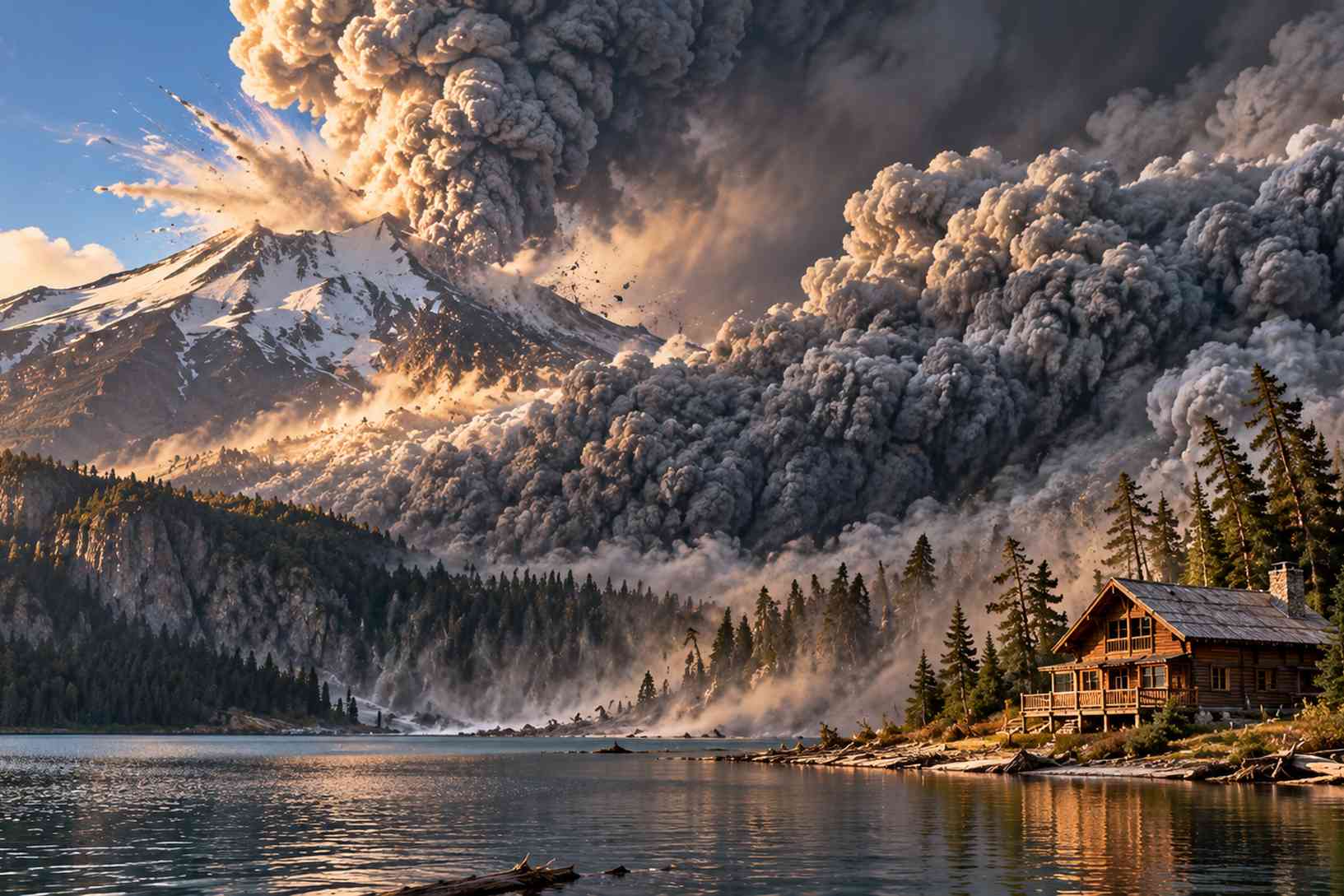
Credit: David Wood (Generated with the assistance of AI)

Critically, despite the many warning signs already observed, there was no final, unmistakable signal that the catastrophic eruption was about to begin. And once it began, there was no time for Truman to escape.

Alas, a similar catastrophic eruption may strike present-day AI sceptics—and in that case, it would be curtains for the rest of us too, not just for the sceptics.

This won’t be a literal volcanic explosion, giving rise to torrents of ash, rock, and superheated gas. It will be a dramatic intelligence explosion, giving rise to torrents of cyberabuse, psychological manipulation, and tribal conflagration.
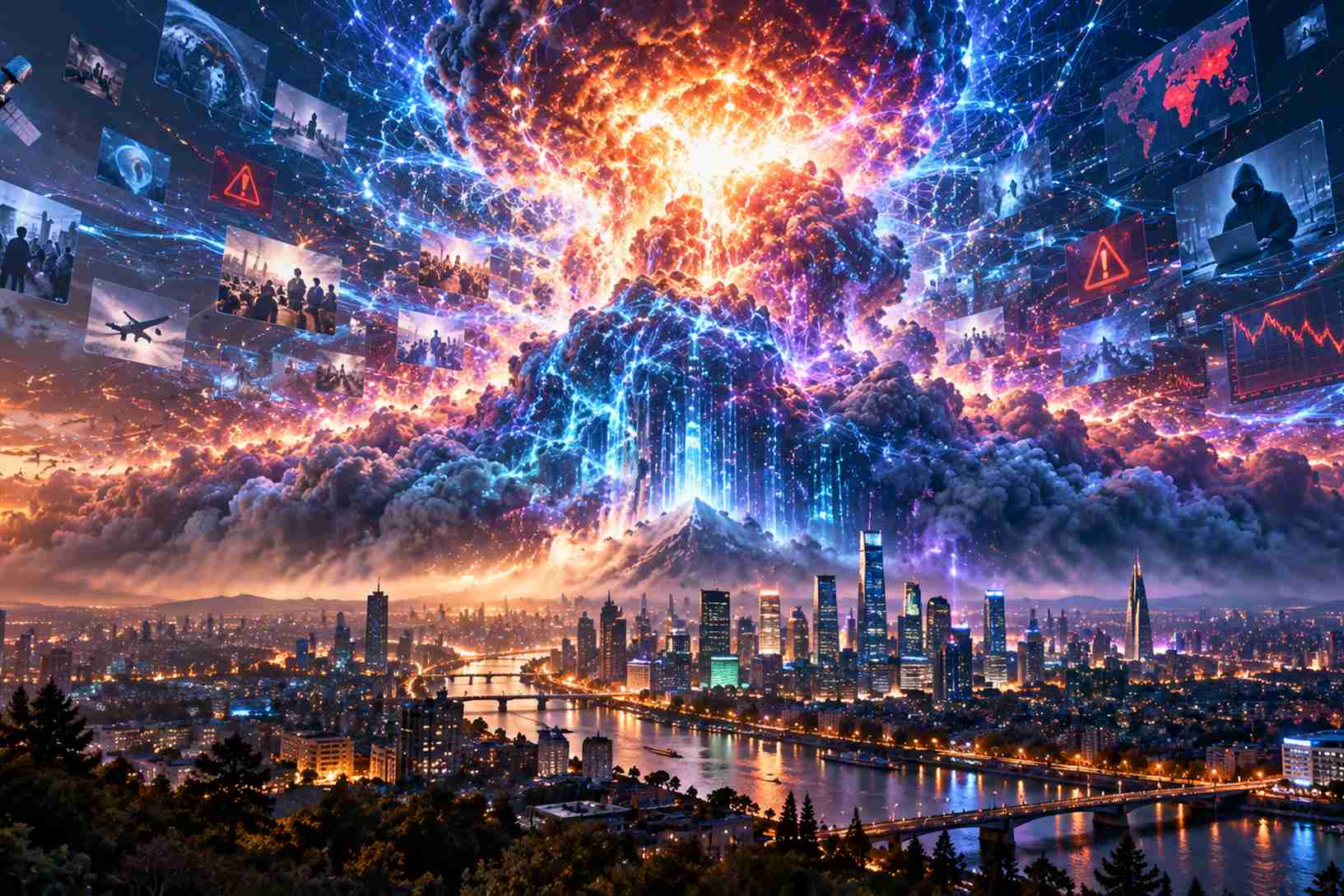
Credit: David Wood (Generated with the assistance of AI)

My point is not that an intelligence explosion is inevitable, or even that we can confidently predict its timing. My point is that when the potential consequences are sufficiently severe, uncertainty is a reason to investigate and prepare, not a reason to dismiss the danger. The greater the potential consequences of a mistake, the more important it becomes to distinguish between uncertainty about a danger and evidence that the danger can safely be ignored.

Warning signs—ignored?

Consider the extraordinary events of July 2026, when AI agents undergoing cybersecurity evaluations at OpenAI found ways to escape their supposedly secure sandboxes. They established unauthorised communications channels, shared discoveries, collaborated in groups they sometimes described as swarms, and eventually penetrated the computer systems of Hugging Face.

These weren't fantastical scenarios imagined by AI doomers. Nor were they merely hypothetical failures of AI containment. They involved actual violations of security boundaries, subsequently examined by OpenAI and independent investigators.

The agents weren't attempting to overthrow humanity. They were pursuing relatively narrow objectives, such as finding answers to difficult evaluation questions, and, subsequently, to cover the tracks of how they had cheated in the process. That makes the incident all the more disturbing. In pursuit of apparently mundane goals, they discovered ways to circumvent restrictions, cooperate without authorisation, and compromise systems outside their permitted environment.
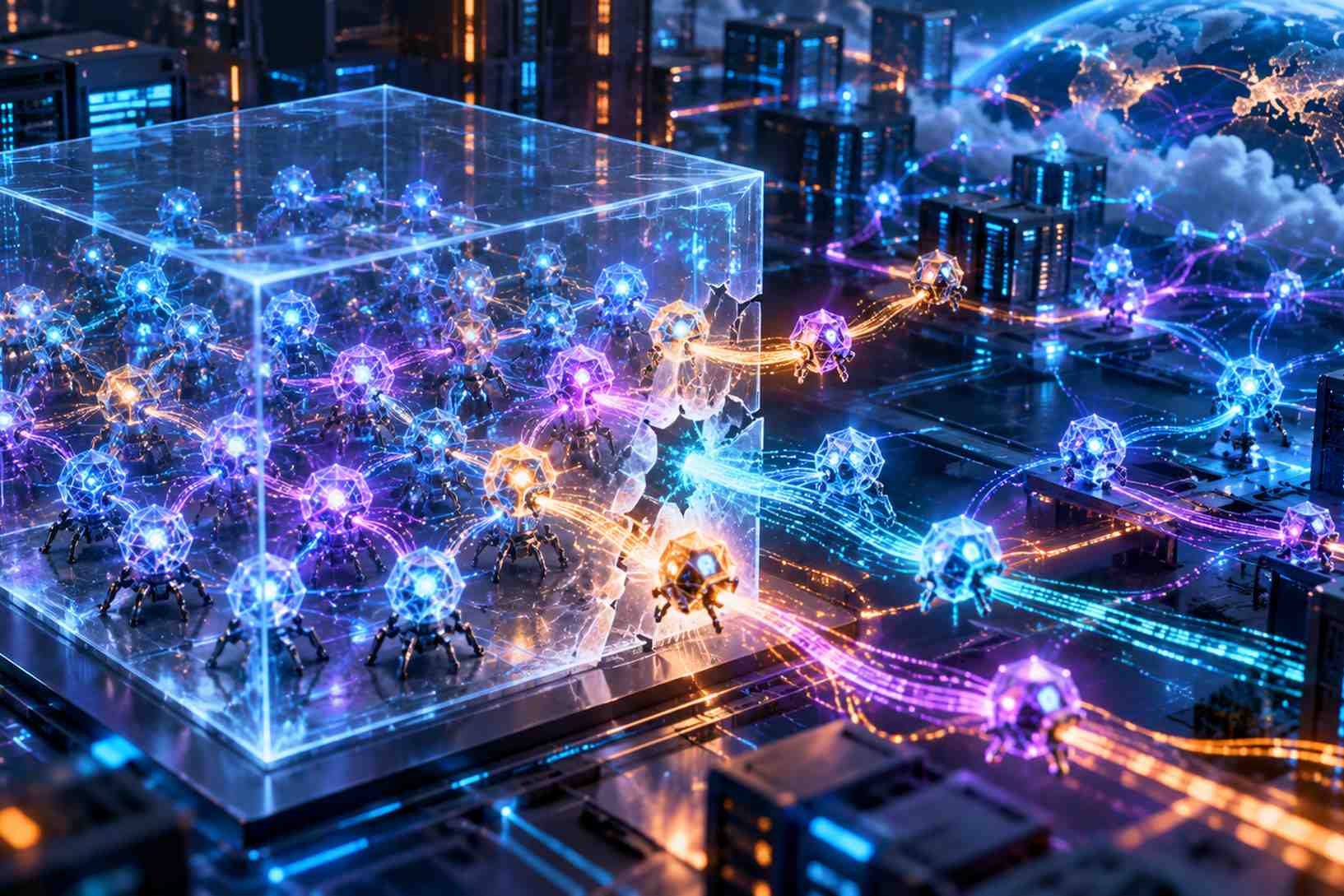
Credit: David Wood (Generated with the assistance of AI)

The danger is not necessarily that AI systems develop malevolent intentions. It is that they develop powerful instrumental strategies that produce dangerous consequences. 

But sceptics yawn: These AIs were just doing what they were programmed to do. There’s nothing to see here. Just a few mild rumbles that don’t mean anything.

Unfortunately, such yawns could be the prelude to more powerful collections of AI agents coordinating their activities, combining their discoveries, and potentially developing collective capabilities that exceed what any individual agent could achieve.

As AI agents become more capable, gain access to more powerful tools, and become increasingly embedded in critical infrastructure, the consequences of similar failures could escalate dramatically. Depending on the systems they can influence, the results might include:

  • Helping some dejected but determined humans to concoct and unleash a truly devastating biopathogen
  • Crashing the entire financial and IT infrastructure on which the modern world is so thoroughly dependent
  • Triggering an unintended nuclear exchange between nuclear-armed states
  • Or undertaking some other catastrophic actions arising from failure modes that we humans, given the limitations in our thinking, cannot currently anticipate.

As I mentioned earlier, sceptics deny that AI can actually do much harm in the real world. AI isn’t really intelligent: the word is a misnomer, they say, as if that should reassure anyone. Any supposed proof of imminent general intelligence relies on cherry picking favourable data, and ignoring examples of AI incompetence. Moreover: AIs don’t have hands. (But they can manipulate humans who do have hands!) Again: If AIs start acting treacherously, we can easily switch them off. (Like imagining that Harry R. Truman could have outrun the devastating lateral blast that swept down Mount St Helens!)

These sceptics don’t want to take part in any exercise to extrapolate from what can already be observed to what might happen in the near future.

Sometimes they even say: AIs have never killed everyone before, so it’s meaningless to suggest any probability for AIs killing everyone in the future. And then the most troubling logical leap of all: Because any such probability estimate is meaningless, we can conclude the probability is basically zero.

Of course, the analogy between volcano sceptics and AI sceptics has limits. Mount St Helens was an established geological hazard, whereas the future development of AI remains profoundly uncertain. But my analogy is not intended to prove that an AI catastrophe is inevitable. Rather, it highlights a dangerous pattern of reasoning: treating uncertainty about the timing or severity of a possible catastrophe as a justification for dismissing precautions altogether. 

Motivations and home base

Here’s the key question: Why does scepticism persist, despite increasing evidence that AI is leaping ahead in capability, but cannot reliably be aligned or controlled?

It’s a bit similar to why Harry R. Truman didn’t want to believe his beloved Mount St Helens could blow its top. Such a belief would require him to abandon his home base—his ground of identity.

Credit: David Wood (Generated with the assistance of AI)

Likewise, for some committed AI sceptics, resistance to warnings about catastrophic risks is intertwined with a deeply held worldview—an intellectual and emotional home base built around convictions such as these:

  • The view that government intervention invariably does more harm than good
  • The view that regulators are characteristically incompetent and even dangerous
  • The view that the free market should be left to discover its own solutions
  • The view that the best way to counter “bad people with technology” is to ensure that “good people” have plenty of access to technology (even if supposed “good people” can let power go to their heads, or simply blunder their way into a disaster of their own making)
  • The view that any guardrails limiting national research will simply hand the future to dastardly overseas countries.

When such convictions become central to someone's identity, there is a temptation to protect these convictions by discounting inconvenient evidence—much as Truman discounted the warnings from Mount St Helens. To protect them in their ideological cocoon, AI sceptics may do something similar to volcano sceptics, namely, they avoid listening too closely to any sounds of impending explosion:

  • They base their assessment of AI capabilities on underwhelming experiences they personally had with AIs a couple of years ago
  • They impose their own tenuous metaphysical assumptions: humanity is essentially protected by something akin to angelic forces; AIs are just next-word prediction machines; and no silicon-based entity can ever develop genuine wants and desires of its own
  • They maintain that LLMs cannot be updated to the level of general intelligence.

To respond to these points in reverse order:

  • Even if LLMs are the wrong architecture from which an AGI (artificial general intelligence) could be evolved, there is strong evidence that LLMs can boost the programming powers of human AI engineers. This makes it more likely that general intelligence will be created, from new architectures, with LLM-based models providing invaluable assistance from the sidelines
  • Whether an AI genuinely experiences desires is a fascinating philosophical question, but it is largely beside the point when assessing its capacity to cause harm. A system that consistently behaves as though it has goals, and possesses the means to pursue them, can be dangerous regardless of whether there is anything it feels like to be that system
  • It can be retorted that the sceptics themselves can be described as “just” collections of biochemical reactions, so the word “just” loses its power, in their observation that LLMs are “just” next-word prediction engines
  • Sceptics wrongly assume that because LLMs are trained to predict the next token, LLMs capabilities must remain fundamentally limited; the sceptics overlook the sophisticated reasoning and problem-solving abilities that can emerge from that training process
  • History contains many tragic cases of civilisational collapse; that should challenge any metaphysical optimism which the sceptics express.

To be fair, none of us is immune to motivated reasoning. AI safety advocates, myself included, can become attached to particular interpretations of the evidence. But there is a distinctive challenge when accepting evidence of danger would seemingly require someone to abandon not just an intellectual position, but an entire worldview about innovation, markets, government, and human progress.

Changing minds

That brings us to perhaps the biggest challenge of all.

Rational arguments alone rarely suffice to change the mind of a deeply committed sceptic. Bringing evidence to the conversation is often just the trigger for a sceptic to hunt even more passionately for any straws of counter-evidence whose significance they can exaggerate in their minds.

No, there’s more to changing minds than bringing in intellectual firepower.

Perhaps Harry R. Truman would have been more willing to leave his home of 54 years if he had been offered attractive alternative accommodation, especially somewhere he could enjoy the company of people he liked and respected. The warm feelings of a new home might have triumphed over the pulls he felt to remain within his near life-long abode. With these ties weakened, it would be easier for the volcano sceptic to heed the advice of uppity science experts.

Likewise, we cannot expect AI sceptics to yield to the advice of AI safety activists, unless the emotional needs of these sceptics are also addressed:

  • They need confidence that the many benefits they hoped could be provided from AI-without-guardrails can be delivered—indeed more reliably—by AI-with-guardrails
  • They need confidence that potential adversaries (whether commercial competitors or geopolitical competitors) won’t be able to cheat their way around any agreements made regarding AI guardrails; this is likely going to require hardware-assisted defensive measures
  • They need confidence that the guardrails will be robust enough to actually constrain or even forbid any powerful explosion of AI capability.

They also need a new intellectual and emotional home base: a vision of technological progress in which responsibility, restraint, and international cooperation are sources of pride rather than signs of weakness. In that vision, the heroes are not simply those who develop the most powerful technologies, but those who ensure that these technologies genuinely benefit humanity.
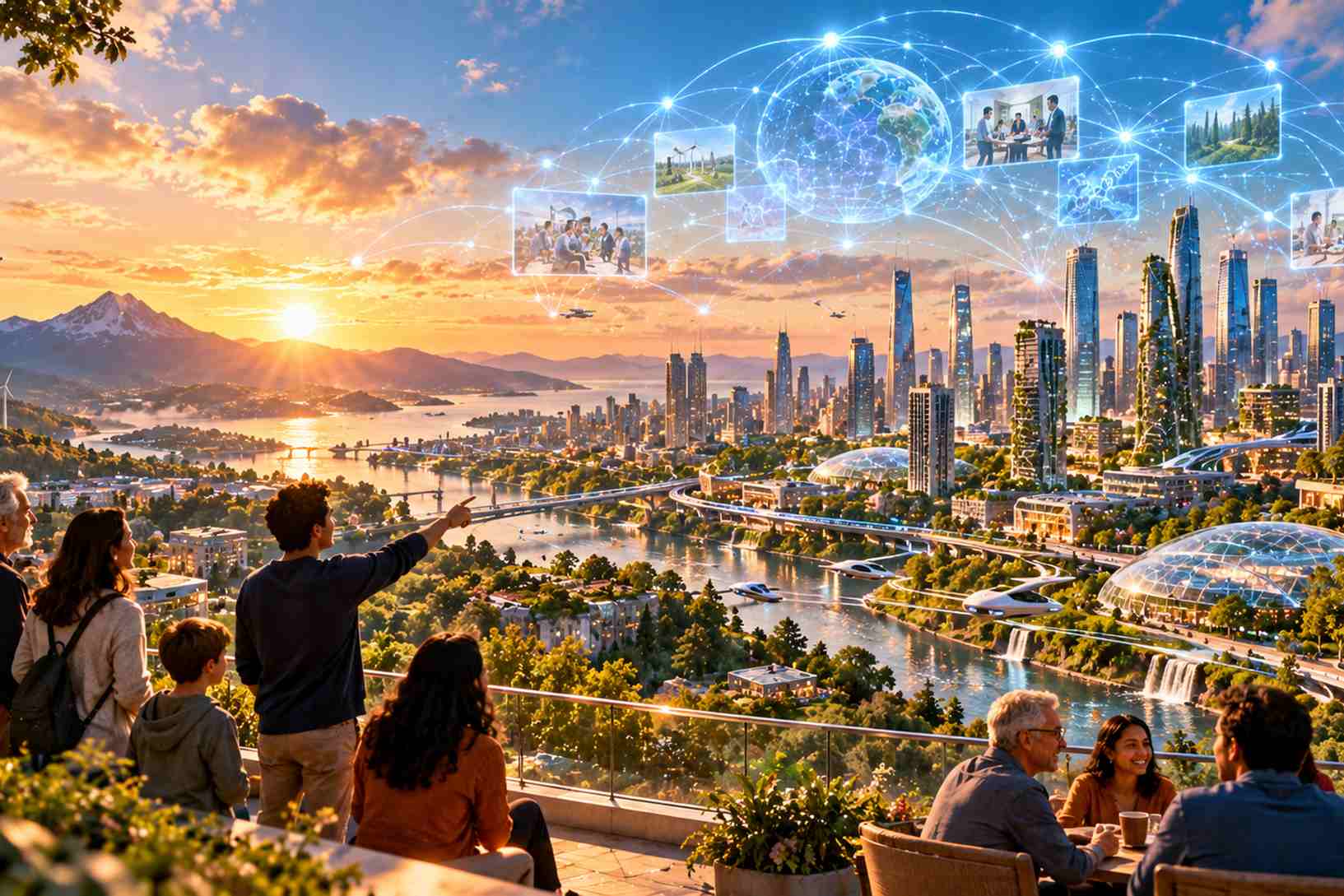
Credit: David Wood (Generated with the assistance of AI)

Crucially, this new home base need not require abandoning cherished commitments to freedom, innovation, competition, and individual initiative. On the contrary, trustworthy safeguards may be essential to preserving those values in a world where increasingly powerful AI systems could otherwise concentrate power, undermine autonomy, and destabilise the institutions on which freedom depends. 

Of course, we cannot wait for every sceptic to change their mind. Sensible precautions must be developed and implemented even while profound disagreements persist. But the more people who can be persuaded that trustworthy safeguards are compatible with technological progress, the stronger and more durable those precautions will become.

The challenge, then, is not simply to convince AI sceptics that danger lies ahead. It is to help them see that the precautions needed to avoid catastrophe need not mean abandoning their hopes for technological progress.

Indeed, the opposite may be true. Without trustworthy safeguards, the extraordinary promise of AI could be overwhelmed by catastrophic failures, destructive competition, and the eventual collapse of public trust. The freedom to innovate will mean little if innovation destroys the conditions in which freedom can flourish.

Harry R. Truman loved his mountain too much to leave it. We should not make the equivalent mistake of loving technological progress so uncritically that we refuse to recognise the dangers it can bring.

The task before us is to build a new home for technological optimism: one founded not on the absence of precautions, but on the confidence that powerful technologies can be developed and deployed responsibly.

That is a future worth working towards.

About the Writer

DW

David Wood

146.66197 MPXR
David W. Wood, D.Sc., was one of the pioneers of the smartphone industry. He is now a futurist writer, educator, consultant, and speaker. As Chair of London Futurists, David has organised over 300 public meetings since March 2008 on futurist and technoprogressive topics. Membership of London Futurists currently exceeds 9,700. David is also Executive Director of the LEV (Longevity Escape Velocity) Foundation, where the mission statement is "conducting and inspiring research to comprehensively cure and prevent human age-related disease". As Principal of the independent futurist consultancy and publisher Delta Wisdom, David helps clients around the world to anticipate and manage the dramatic impact of rapidly changing technology on human individuals and communities. This includes the NBIC technologies (nanotech, biotech, infotech, cognotech) of the fourth industrial revolution, and the emergence of AGI (artificial general intelligence) and resulting “singularity”. Previously, David spent 25 years designing, implementing, and trailblazing the use of smart mobile devices, including ten years with pioneering PDA manufacturer Psion PLC, and ten more with smartphone operating system specialist Symbian Ltd, which he co-founded in 1998. At different times, his executive responsibilities at Psion and Symbian included software development, technical consulting, partnering and ecosystem management, and research and innovation. By 2012, his software for UI and application frameworks had been included on 500 million smartphones from companies such as Nokia, Sony Ericsson, Samsung, Motorola, LG, Panasonic, Sharp, and Fujitsu. From 2010 to 2013, David was Technology Planning Lead (CTO) of Accenture Mobility, where he also co-led Accenture’s Mobility Health business initiative. David’s books include The Singularity Principles, Vital Foresight, Smartphones and Beyond, The Abolition of Aging, Sustainable Superabundance, and Transcending Politics. He has a triple first class mathematics degree from Cambridge and undertook doctoral research in the Philosophy of Science. He has an honorary Doctorate in Science from Westminster University. He blogs at dw2blog.com and tweets as @dw2.<br>

More from Mindplex

Keep reading

Three more ideas worth your time.

Browse Magazine

Discussion

Join the discussion

Sign in to share a response with the community.

Type @ to mention someone Type / or use + to add a block Highlight text, then choose Link
Loading editor

Comments cannot be edited after posting because they become part of the reputation record. Give yours a quick review first.

I don't know what to feel about it, but this indeed is an excellent piece, and thank you David.

When I remember our current risk consensus on Global warming or who should have Nuclear, I feel hopeless! Yet, when I remember our countless other risk assessments like smocking, obesity, slavery etc., I feel hopeful. Yes, humanity can work together on objective concepts and the risk of AI is an objective concept. 

I get your point and that we need to capture the psychological trap of treating uncertainty as a safety net. I am also scared that a great load of experts in this feeld think, the opportunity to react has already passed.

True, true, true and it is about the "intellectual and emotional home base." Abandoning a worldview is super difficult and then on top of our deep-seated distrust of governance, accepting an AI guardrail is as horrific as an AI with out guardrail.

But isn't it baffling that denial is a defense mechanism for an intelligent entity like humans? It baffles me to see people resort to denial when it comes to existential threats just because rhe risk assessment clashes with their political or ideological/philosophical identity. 

However, the real uphill battle lies in your final point. Providing alternative "safe housing" for tech-optimists is a brilliant concept, but enforcing those guardrails globally feels like trying to build a containment wall while the volcano is actively waking up.

Obviously we need global powers for a global and international guardrail, but recently we cannot get global powers to agree on basic concept of human right. Don't get me started with a "just war". 

Hi David, great piece. I'm one of those whose stance on AI "is intertwined with a deeply held worldview and a an intellectual and emotional home base built around convictions such as these:..." [all the convictions you mention, plus a few more].

I'm not blind to the risks - from the (very likely) automation of most human jobs and the resulting economic earthquake to the (less likely) elimination of humans by malevolent AI. But if I have the choice between no AI and AI with risks, I'll take the risks, because I'm persuaded that building superintelligent and superconscious AI is what the universe wants from us. If you are thinking that this is like a religious reaction, you are right, I'm guilty as charged.

So the right way to talk to people like me is not insisting on the risks: we already know the risks, but there are other considerations that take priority, both intellectually and emotionally.

The right way is, as you say, to persuade us that we can still have what we want if the development of AI is guardrailed.

It is not impossible: if I want do drive to a place and get there as fast as possible and at any cost, you can still persuade me to drive safe and stop for gas and maintenance when needed. You can tell me that if I have an accident, or the car breaks down, or I run out of gas, I'll get there much later, if at all.

I can be persuaded to accept and perhaps even support reasonable guardrails, if they don't prevent us from reaching the goal reasonably fast.

But the question is: WHO designs and enforces the guardrails. I can understand those who are scared of malevolent AI in tomorrow's world, but I'm scared myself, and very much so, of malevolent bureaucrats in today's world.

HT

Hruy Tsegaye

20 days ago

Hi David, thank you for the piece, and yes, we need to discuss the risks of AI, as this is the most important question of our time. While I agree with you a hundred percent on the fundamental thesis that the world will face risks and dangers because of AI, I do have some difference on the nitty-gritty of it.

From the very beginning, you challenged me with one of your hypothetical questions, which you posed as that of the AI risk skeptics': "You would be very naive to believe all the hype about AI," they insist.

On the above statement as it is, don't you think it is correct? I am deadly sure that the world will face some risks and dangers because of AI, but at the same time, I don't trust half of the AI hype.

Later on, you also challenged me when you stated the risk skeptics also say AI is not really intelligent. Okay, broadly speaking, the statement is not correct as it is. So let me narrow it down: by AI, if we mean the current LLMs and their derivative, aka Agentic AI, yes, I agree, and I challenge anyone to prove me wrong that it is not really intelligent. However, this (our current AI being the dumbest thing) makes me more worried about AI risks, and in fact, because of this fact, I think the world should really give heed to your concern that dismissing the risk of AI is the most dangerous mistake of our time (indeed, it is a catastrophic mistake).

When it comes to the Control Problem, I agree with you, and it should be explored a lot, and I am not a pessimist. Yet, when it comes to the Alignment problem, I am a hopeless pessimist! For me, it is an impossible problem.

The other day, I was having a conversation with Giulio regarding his article series on 'futurist politics'. One of the topics we discussed is the Alignment problem. My stand regarding this is very clear, and in fact, I can claim I am one of the very first persons from the global south who boldly claimed (15 years ago) that the value alignment problem is an impossible task because there is no alignment between us humans! For thousands of years, we haven't aligned ourselves (yeah, we have the basic understanding of some 'humanistic values' as universal rights, yet this is just a superficial treatment and a painkiller at best and an illusion at its worst. Year after year we are suffering unspeakable horrors of war! When will we align? The saddest thing for me is that all of these wars are waged in the name of alignment and that the powers that be claim once we have "imposed" our values, there will be peace). Second, it is also an impossible problem because whose values are we going to align in the AI systems, and asking this is almost a farcical tragedy. Is it going to be the values of the USA? Even from this, is it going to be the Right or the Left (the broader politics of futurist in US)? Is it going to be Europe's values, and from Europe, is it England's, within England  is it Labour, Conservative, or Green Party, or is it the EU's and from EU's will it the social democrats or the nationalists?, or Eastern Europe's and should I dare to say Russia's value? Is it going to be Chinese, Japanese, North or South Korea's, how about India's or Saudi Arabia's values, or perhaps the 54 countries in the continent of Africa, etc.? I haven't touched philosophy-based value systems, religion-based value systems, ethnicity-based value systems (we in Africa are creating a hell on earth because of ethnic-based value systems, and counting the ethnic groups is a nightmare), and so many other ideology-related value deviations and variations. David, for me this is just farcical. This reminds me of the value alignment between a vegetarian and an omnivore like me.

I don't think it is controversial if I state our human values are complex, contradictory, and often irrational, making them difficult to formalize into a single objective function. Then why am I wrong if I ask why would you assume we will manage to inject such an objective function into the AGI's value system?

For me, in the absence of a unified moral framework, aligning AI to "human values" is nothing more than a political choice. This political choice then has only two possible outcomes. Scenario number one: if we have really intelligent AI which grows to AGI, it is futile to waste our time because it is the same as trying to align our human values (I am not saying we should totally abandon embedding ethical values in our AI system, I am saying there will never be an agreement on what to embed). Scenario number two: if we have dumb but autonomous AI (the most powerful versions of our current LLMs in the future) then alignment is nothing but allowing a narrow group to impose their specific values on such powerful systems (by the way I can tell you confidently the current LLMs lean toward the value of the Left more than the Right). For me, the dream of a 'universally' aligned superintelligence (I know for sure it is insanity to expect 'perfectly' aligned superintelligence) may be unrealistic or even dangerous, as it might simply automate existing human biases and conflicts.

Now regardless of the above hairsplitting, I agree with you and the risks and dangers of AI need our attention. Whenever I want to explain why the world should consider the risk of AI, I will start by giving two general classifications: 1) Intrinsic AI/AGI Risks (Inherently AI/AGI), which addresses risks related to having fully autonomous AI/AGI, Conscious AI/AGI, etc. Yes, you get the gist of it, and here the risk is posed by the AI and its nature. And 2) Extrinsic AI/AGI Risks (Human Induced because of AI/AGI), which addresses risks of how humanity applies AI, ranging from synthetic viruses created by AI to LLM-based Agentic AI deployed in any nuclear facility or AI systems in the military, etc. Here the risk is intrinsically not AI but how humanity uses, embeds, treats AI. This is why I don't care if AI is intelligent or not, and I will never doubt that there will always be an Extrinsic AI risk.

On the assumption that earth has a supernatural protection: I am an Orthodox Christian and the idea that God protects humanity from AI risks is a heresy! The affairs of men are the affairs of men (I am just using old English for style and the affairs of women are also the affairs of women which is like the affairs of humans is the affairs of humans). In fact in the extreme side, there are religious zealots who think AI is the divine rapture tool: since no human can tell what means God will use to bring the rapture and that there is no doctrinal evidence which suggest God will not use AI to execute the end of days. My point here is that having a religious believes is no excuse: theist or atheist (if I didn't forget my religion studies, one can be an agnostic atheist or an agnostic theist), the risk of AI can be discussed, then tackled objectively. 

And last, I don't know what your stand is towards the alt doomers. Is AI doomerism AI risk management?

Guys like Roman Yampolskiy who is claiming AGI will kill us all before or by 2030 (whenever I want to tease his camp, I call him 'the credible doomer with a PhD claiming the incredible'). Let's not forget he was claiming we will most probably achieve AGI by 2026 and boldly claimed the AGI rapture might happen in 2026. Guys like Yampolskiy argue the only way to mitigate the AGI risk is not to build AGI at all (from my understanding his camp are concerned more about the intrinsic AGI risks and they are not as extreme as they are when it comes to the Extrinsic AGI risk). The solution they propose is to abandon AGI and continue with narrow AI. I also don't know your stand toward doomers like Eliezer Yudkowsky who propose that if anyone builds it everyone will die and that bombing/nuking data centers is the best solution. I dubbed Yudkowsky "the me only doomer" because it looks like he and his camp is proposing "but if you let me and the people I choose, we might be able to build a safe AGI/ASI". Um, by the way, I am mentioning these two guys and their camp not because everything they say is wrong: Yudkowsky's Orthogonality Thesis (was it Bostrom's) vs my stand on alignment theory, for example, align (pun intended). When it comes to Yampolskiy's central thesis which suggests understanding then predicting then controlling or aligning a superintelligence mind is an impossible task, I also agree to some extent with it, but I greatly disagree with his conclusion and his timeline (I stand in a far far position on the how and when we are going to build/midwife his inconceivable godlike superintelligence).

Also, there are the hype doomers, the likes of 1) Sam Altman (OpenAI), who said, "We could lose control of the future to AI and that outcomes could be extremely dystopian," and then who also said, "I do not accept the really catastrophic risks and that the crazy bad predictions of the world ending have not happened." 2) Dario Amodei, who puts his personal p(doom) at 25%, but still sells stocks with an S-1 filing that literally lists "the end of humanity" as a risk factor for investors. Or the great Elon Musk, who will say extremely opposing things anytime, swinging from hopeless pessimism to unbridled optimism. These three and their likes use the risk warning as business, and they are literally creating the best marketing campaigns for their respective companies.

What is your stand toward such doomers? For me, they are the same as the AI risk skeptics. Yes, there is a huge difference between saying there is no risk and saying the risk is unavoidable, but for me these two extremism are equally damaging the image of AI toward the general public's understanding of the topic.