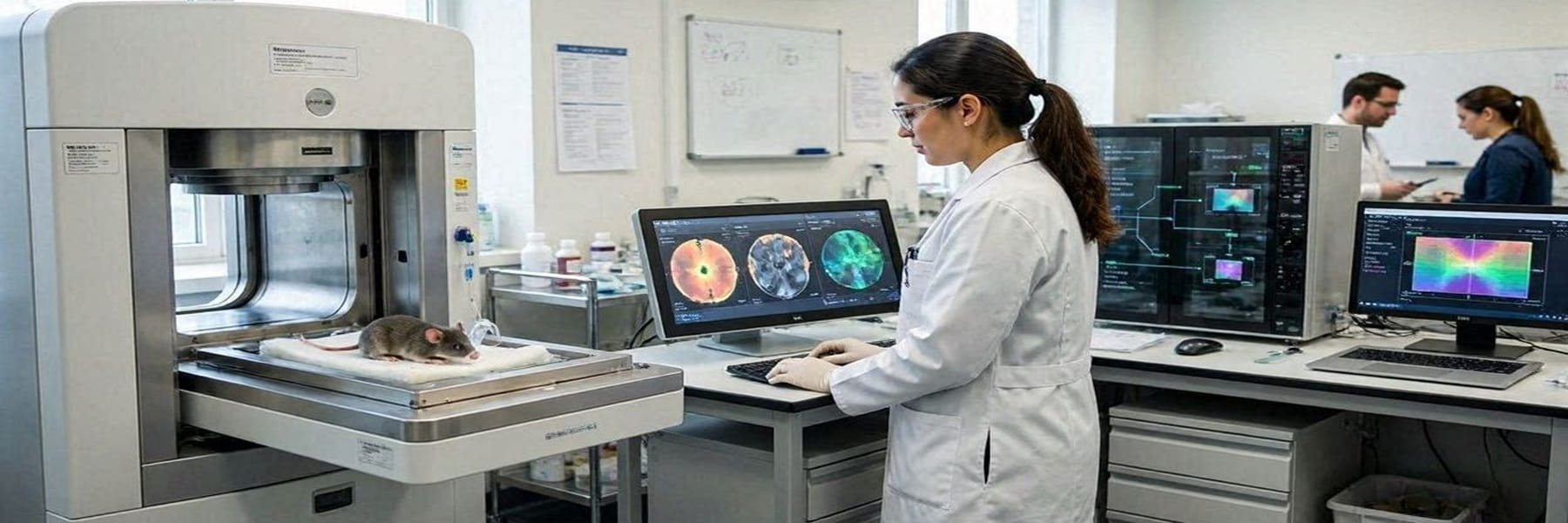

A new review published in the Journal of Biomedical Optics highlights major technological progress in small-animal molecular imaging, emphasizing how multifaceted innovation is reshaping preclinical research. The study focuses on how modern imaging systems are becoming more precise, sensitive, and adaptable for studying disease processes in animal models, particularly mice and rats.
According to the review, small-animal imaging has become central to biomedical research because it enables researchers to observe biological processes in real time at molecular and cellular levels. These capabilities are essential for understanding disease progression and evaluating therapeutic responses before clinical trials in humans.
The authors describe how recent improvements in imaging hardware and computational methods are expanding what researchers can measure. Hybrid imaging systems that combine different modalities are increasingly used to overcome limitations of single-technique approaches. These integrated systems allow scientists to gather both structural and functional information simultaneously, improving the accuracy of biological interpretation.
The study also emphasizes the growing role of advanced data processing techniques, including image reconstruction and analytical methods that enhance resolution and quantitative reliability. Together, these innovations are improving the consistency and reproducibility of preclinical imaging experiments.
Despite these advances, the review notes ongoing challenges, including the need for better standardization across imaging platforms and improved integration of multimodal data. Addressing these issues is seen as critical for strengthening the translational bridge between animal studies and human clinical applications.
Overall, the findings suggest that continued interdisciplinary innovation in optics, biology, and computational science will further accelerate the development of more powerful small-animal imaging systems, reinforcing their role as a cornerstone of modern biomedical research.