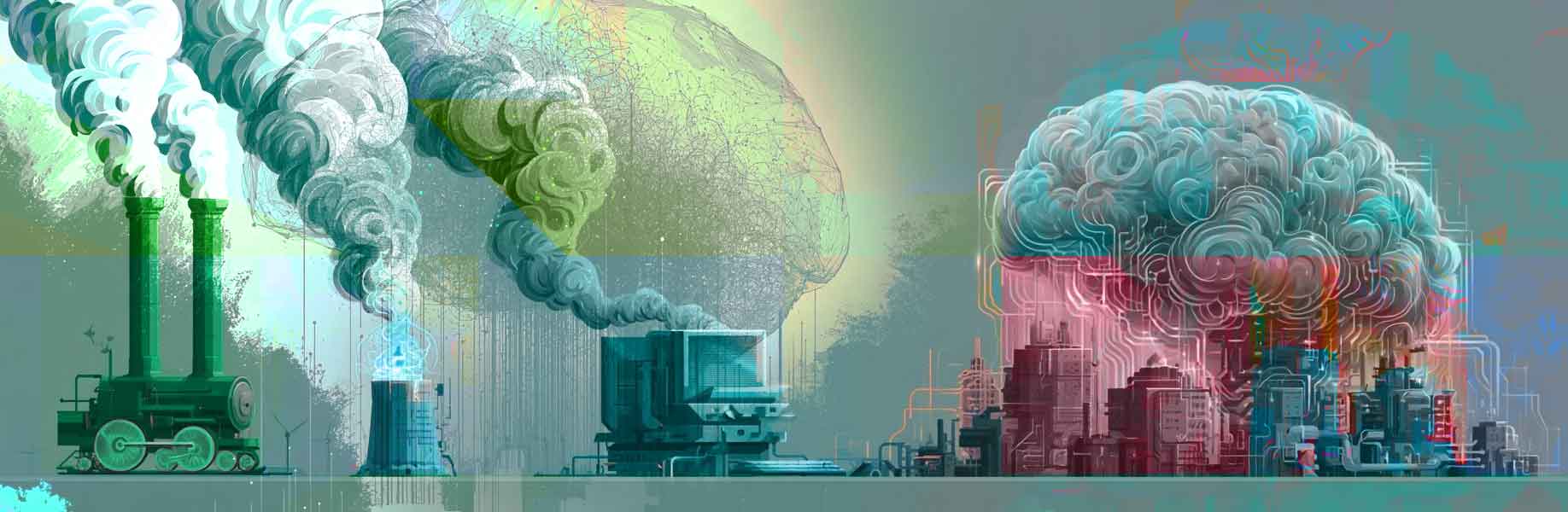
We are living through a major turning point in history, a time where technology is no longer just supporting human life, but actively reshaping it. This shift is often called the Fourth Industrial Revolution.
The first three revolutions changed the world step by step: steam power brought machines, electricity enabled mass production, and computers introduced digital transformation. Now, the fourth revolution is different; it is about intelligent, connected, and autonomous systems that can think, learn, and act.
AI: The Brain Behind the New Era
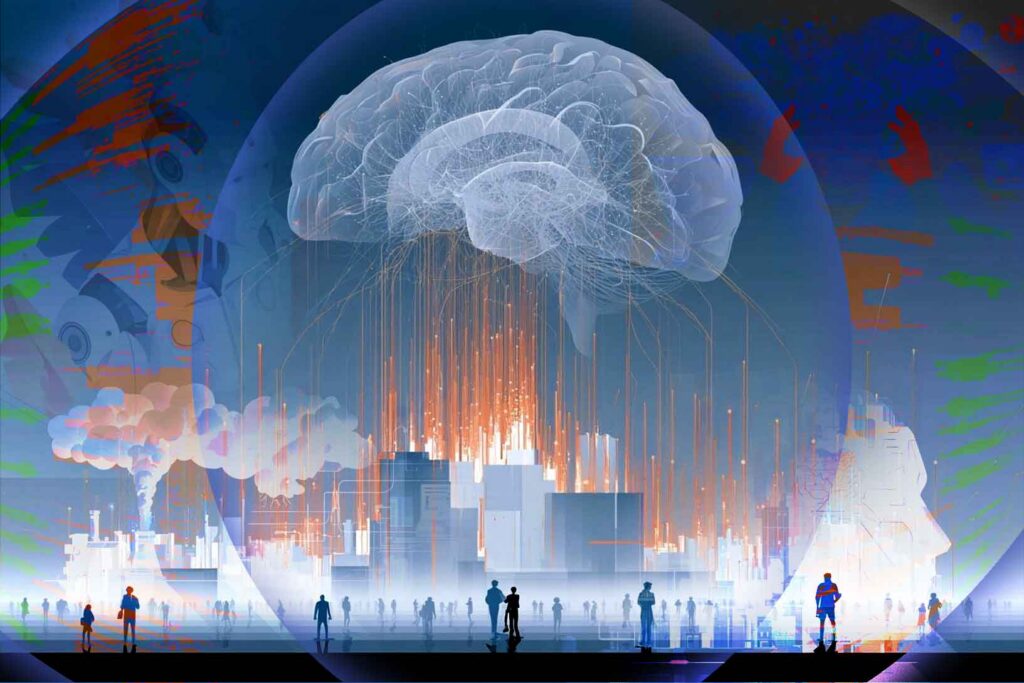
At the center of this transformation is Artificial Intelligence (AI). AI is not just another technology. It is the brain that allows machines and systems to make decisions, learn from data, and interact with humans in meaningful ways.Today, AI is already part of daily life, even if we don’t always notice it:
- When Google Maps suggests the fastest route through traffic
- When Uber predicts your ride fare before you book
- When Facebook recommends friends or content
- When Netflix suggests what movie to watch next
These systems are not random; they are powered by AI learning from your behavior.
How AI Actually Works
At the core of AI systems is something called an intelligent agent, a system that follows a simple cycle: Sense → Think → Act
For example:
- Google Maps senses traffic data
- It thinks by calculating the fastest route
- Then it acts by guiding you
Behind this process is something very important; data.Without data, AI cannot function. Every click, search, message, and online activity creates data that feeds AI systems. But raw data alone is not useful. It must be cleaned, organized, and processed, and that is often the hardest part.
Why AI Became Powerful Only Recently
Even though AI has existed for decades, it became truly powerful only in the last 10-15 years. The reason is simple:
1.Big Data - we now generate massive amounts of information every second
2.Powerful computers -modern chips like GPUs and TPUs can process data extremely fast
Together, these two factors made AI practical and scalable. This led to the rise of deep learning, a method where machines learn patterns in a way loosely inspired by the human brain. It is this breakthrough that made modern AI systems possible.
AI in Business: A New Competition
AI is no longer just a research topic it is now a business strategy. Big companies like Google, Amazon, Microsoft, Apple, and IBM are competing aggressively in the AI space. They are doing three main things:
- Hiring AI experts
- Investing in AI startups
- Buying AI companies
Instead of building everything from scratch, companies often acquire startups to quickly gain AI capabilities. This shows how valuable AI has become in global competition.
AI in Everyday Business Life
AI is transforming how businesses operate in three major ways:
1. Customer Interaction
Instead of humans answering every query, companies now use chatbots and virtual assistants.
For example:
- Ordering flowers from automated systems
- AI recommending products in online stores
This makes customer service faster, cheaper, and available 24/7.
2. Sales and E-Commerce
Platforms like Amazon and Netflix use AI to recommend products and content based on user behavior.
For example:
- “People like you also watched…”
- “You may also like…”
In fact, a large portion of online purchases today comes from AI recommendations. This makes shopping feel personal almost like the platform understands you.
3. Workforce and Skills
AI is also changing jobs.
There is now a growing demand for skills like:
- Data analysis
- Machine learning
- Business intelligence
But the problem is simple: there are not enough skilled people. This creates a gap between what companies need and what workers can offer. As a result, many jobs are evolving rather than disappearing. People are now expected to work alongside machines rather than replace them.
The Uneven Global Impact
One of the most important findings is that AI is not evenly distributed around the world. A small number of countries dominate the AI landscape, especially the United States, followed by countries like China. This creates what researchers call an AI divide similar to the digital divide. This could increase global inequality in education, income, and economic power. Challenges We Cannot Ignore Even though AI brings many benefits, it also creates serious concerns:
- Privacy issues (your data is constantly tracked)
- Security risks (systems can be hacked)
- Ethical concerns (bias in decisions)
- Job displacement in some sectors
For example, an AI hiring system might unintentionally favor certain groups over others based on past data. This is why responsible use of AI is very important.
What This All Means for the Future
AI is not just changing technology it is reshaping:
- How businesses operate
- How people work
- How countries compete
It is improving healthcare, education, transportation, and communication. At the same time, it is forcing societies to rethink jobs, skills, and fairness. The future will not be about humans versus machines but about humans working with machines.
Final Thought
Artificial Intelligence is no longer a futuristic idea. It is already here, deeply embedded in our daily lives and global economy. The real question is not whether AI will change the world; it already is. The real challenge is: How do we make sure this transformation benefits everyone, not just a few?