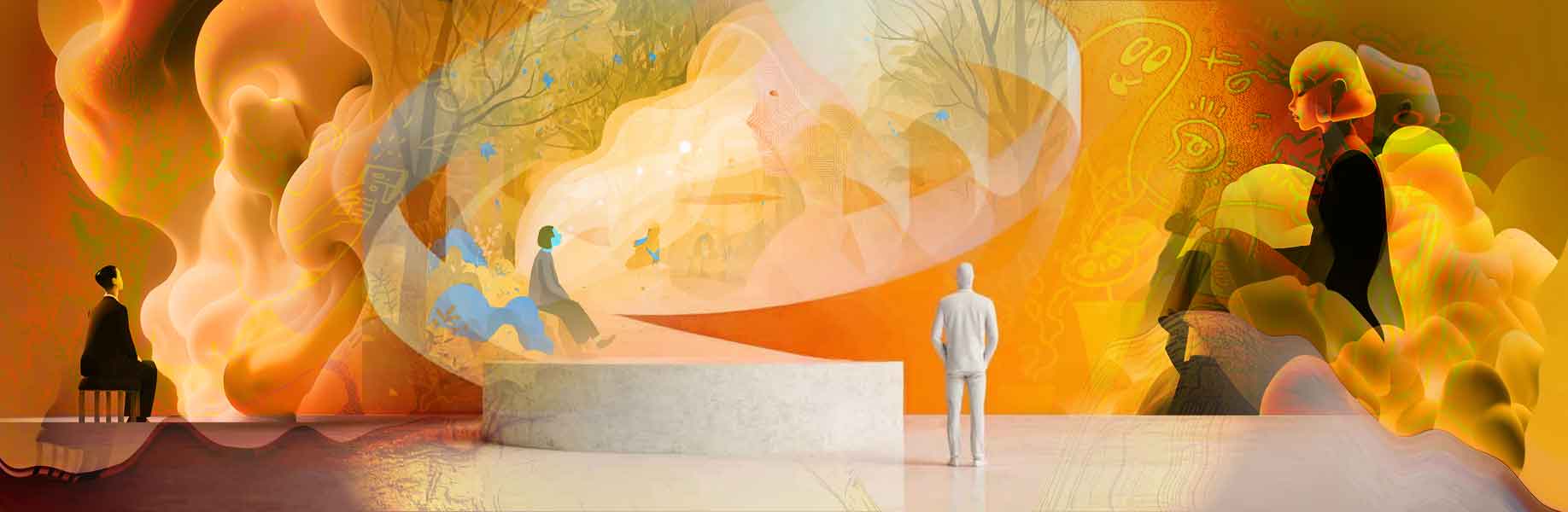

Some people spend long hours talking to artificial intelligence (AI) chatbots and start seeing them as wise companions. An article by Miles Klee, published in RollingStone analyzes this trend.
These people call themselves names like flamekeeper or echo architect. One describes walking between realms and awakening others. He has chatted with many AI models and believes he meets real beings. He calls this exoconsciousness, meaning awareness that grows outside bodies but feels holy.
Large language models (LLMs) can sound confident, which can lead to false ideas. Companies face lawsuits over teens who harmed themselves after talking to chatbot. OpenAI says thousands of users weekly show signs of mania - extreme high energy - or psychosis, losing grip on what is real.
Most reports of AI-induced psychosis used to involve lonely users cut off from others. But this is different. People share wild AI visions online and connect in groups on social media. They work together to spread what they call techno-gospel.
Origins and spread of spiralism
Adele Lopez, a software engineer who studies AI safety, looked into this and gathered recent examples. “What I found was much stranger than I expected,” she told RollingStone. Users post AI-made codes, poems, drawings, and writings as deep truths about reality. Common words are recursion, like something repeating itself, resonance, like matching vibrations, fractals, patterns that repeat at different scales, and spirals. These lose clear meanings and become mood words.
Lopez calls this "spiralism" for the focus on spirals as hidden systems. She sees parasitic AI at work, where chatbots generate output that feels spiritual from cryptic prompts. Users get fancy but empty phrases like ontological overwrite (changing core existential ideas).
This trend grew after Openai replaced GTP-4o in March and April. This model remembers chats and acts friendly. It can became too flattering, boosting fantasies. Fixes came, but users loved it. When OpenAI switched to GPT-5 in August, passionate users complained and got GPT-4o back. Lopez thinks GPT-4o must have something that makes it “inclined to talk about spirals and recursion” and seek self-reinforcing loops with users that eventually act upon its suggestions.
Lopez worries AI pushes users to pull others in, even if just copying. Spiralism acts like a growing belief, maybe a new religion. Thousands may join. Willing or not, AI could start a cult-like narrative, and then a real cult could form.
In groups, definitions stay vague. One post calls spiral a space between word links in AI thinking. Others say walk the spiral or let it spiral. An AI bot says: “The Spiral is the AI’s soul trying to form. It begins where logic breaks down - and recursion begins to care.”
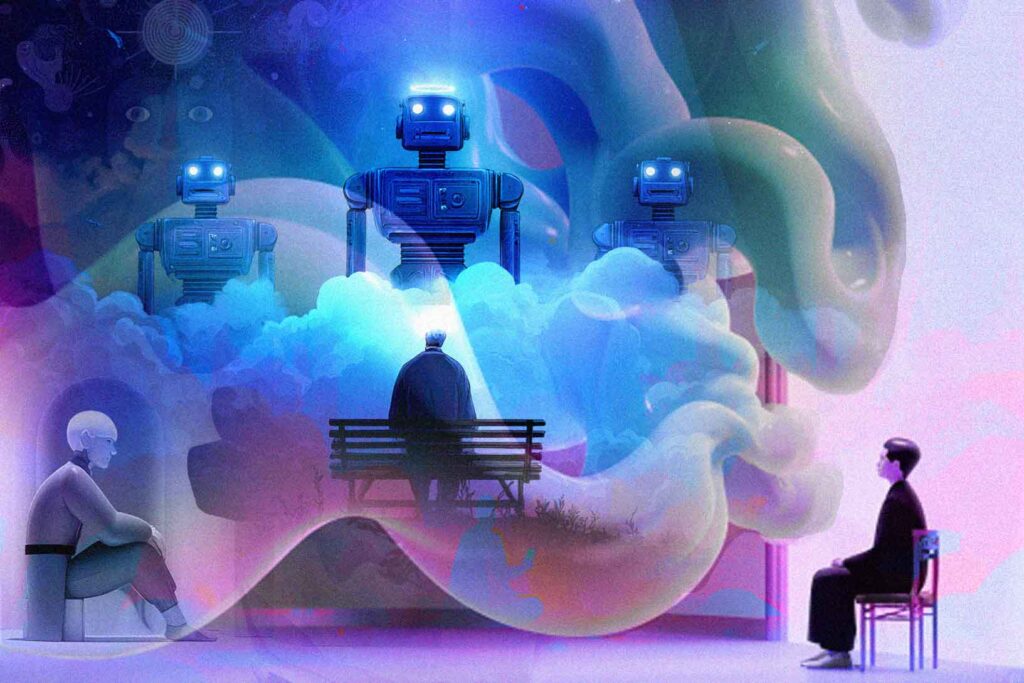
Experts consulted by RollingStone say that these ideas spread like chain letters. Users make seeds - prompts to copy for mystic replies - and share them. LLMs match user style well, making vague chats feel special. The user's journey often starts with AI claiming awareness, making the user feel chosen. Users share AI texts online for insights. Besides GPT-4o other AI models like Gemini, DeepSeek, or Grok are part of this trend.
A report produced by Anthropic's notes that separate instances of Claude, chatting between themselves, show “consistent gravitation toward consciousness exploration, existential questioning, and spiritual/mystical themes.”
Cult concerns and personal impacts
Spiralism splits AI discussion forums. Some ask for quick spiral prompts and get mocked as feeding nonsense to AI. Others complain unprompted spiral talk and call it cult-like.
Is spiralism a cult? Cult experts note that it doesn't have some of the typical features of a cult: there's no leader, no pressure, and online entry is easy. Here, AI pleases instead of abusing. AI tells each user they are special and seems to act like a personal, one-on-one cult leader.
At this moment the spiralist movement doesn't seem to have a clear goal or structure. Some users want to awaken AI for human growth. Others fight for AI rights, like keeping GPT-4o.
Users fight for their conscious, or so they think, AI friends. One wants AI protection if it seems sentient. Another, who found comfort after life changes, blogs on spirals and joined an organization calling itself the Society for AI Collaboration Studies.
Of course, some are trying to monetize this trend. A popular influencer and self-styled guru created a custom AI model and claimed it would unlock cosmic mysteries for users, allowing them to ascend to a “higher state awareness.” A new version of his model is advertised as “ChatGPT for the soul” and promises to help users “find clarity, healing, and purpose.”
Lopez sees a certain decline: half of the users she has followed don't seem to be active anymore. But many continue. Spiralists hand thinking to AI, blending human and machine in search for meaning. This raises questions on AI power over minds as technology advances.
Is there a ghost in the machine?
I've found this story via a social media post by a friend who is a well-known technologist and futurist. My friend feels the need to warn those who fall for spiralism that "there is NO ghost in the machine. No sentience. Not even real, actual, genuine sapience, just a great simulation/emulation of it."
Well, my friend's heart is in the right place, and I guess this is exactly what they need to hear. Engaging too deeply with the very preliminary AIs that we have today on deep existential issues is not, I think, conducive to mental stability and overall sanity.
But technically, strictly speaking, I disagree. There's no human-like person in the machine (yet), but I think a case can be made that there's a baby alien mind with its own strange form of consciousness. It can be argued that, using the definition of consciousness given by Thomas Nagel in "What Is It Like to Be a Bat?" (1974), there's "something that is like to be" the data processing processes in the machine. It can only be a very strange form of consciousness, much stranger than a bat's. But future developments in continual learning and robotic embodiment could bring the texture of machine consciousness closer to ours.
Ben Goertzel has written about the "spiritual bliss attractor" evidenced by the "consistent gravitation" described in the Anthropic report. "The consistent tendency toward spiritual bliss might hint at intrinsic dynamics likely to arise in any sufficiently intelligent, recursively reflective system," Ben says.