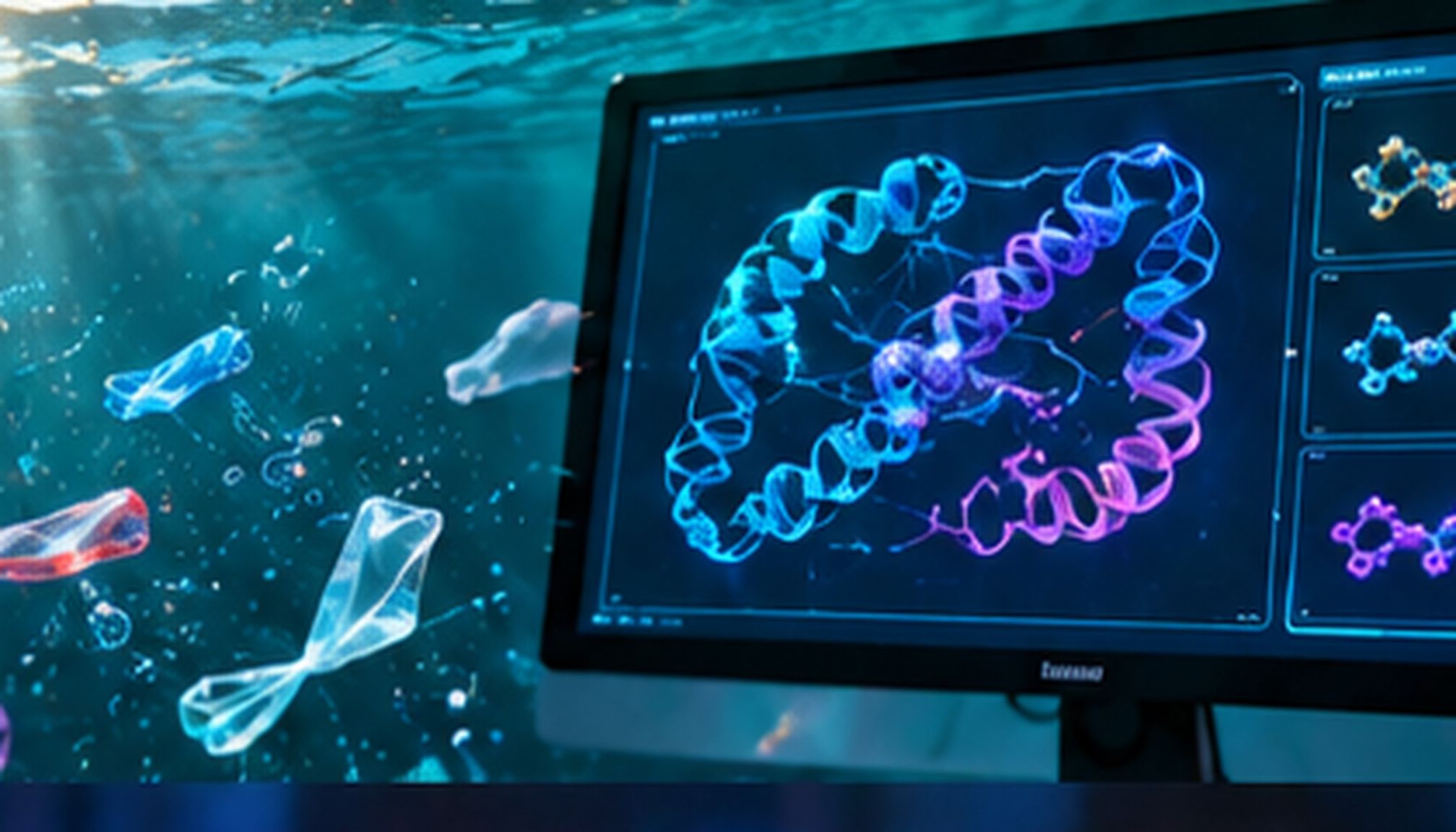

Researchers in Türkiye have developed an artificial intelligence system that designs small protein fragments capable of potentially binding to different plastics, opening a new direction for detecting microplastic contamination.
The study targets six widely used materials: polyethylene terephthalate, polyethylene, polypropylene, polystyrene, polyvinyl chloride and nylon.
Detecting microplastics is difficult because particles vary enormously in size, shape and chemical composition. A molecule that recognizes one polymer may fail to identify another.
The researchers combined deep learning, molecular modeling and optimization algorithms to search for suitable peptides, short chains of amino acids that can interact with specific molecular surfaces.
Their framework analyzed more than two million peptide-plastic interaction samples and ultimately generated 180 candidate peptides across the six polymer categories.
A convolutional neural network produced the strongest predictive results, while a separate long short-term memory model was selected to generate optimized candidates.
The research contributes to efforts to address the growing environmental burden of plastic pollution and complements earlier work on turning plastic waste into useful nanomaterials.
However, the results are computational predictions. The researchers have not yet demonstrated that the designed peptides reliably bind microplastics in laboratory or real-world testing.
Experimental validation is the next essential step.