Researchers at the University of Miami used artificial intelligence (AI) together with laboratory experiments to look for uncharted protein functions. The study, published in Nature, compared three-dimensional shapes of more than 214 million predicted proteins rather than matching letter-by-letter genetic codes.
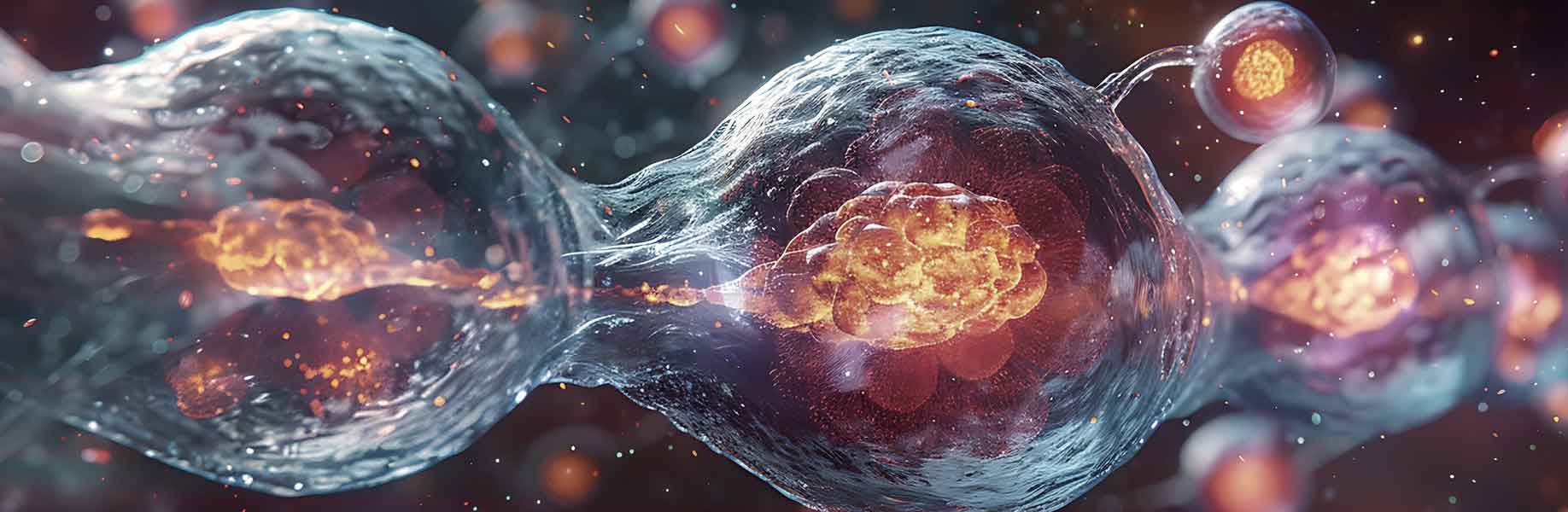
The search targeted hidden relatives of G protein-coupled receptors, or GPCRs. Those are proteins that usually sit in the outer cell membrane and help a cell sense signals from outside. One candidate, TM184C, looked like a GPCR in shape but did not act like a typical surface sensor. Much of it sat inside the cell, in the membranes of vesicles, which are tiny membrane sacs that move cargo. Those vesicles traveled along microtubules, stiff tracks that serve as internal roads, and collected in thin projections that reached neighboring cells.
Those projections worked as bridges. Through them, cells passed metabolites, which are small chemical fuels and building blocks, as well as vesicles and larger organelles, including mitochondria, the structures that make most of a cell’s energy. When TM184C was disrupted, cells made fewer bridges and changed shape and vesicle layout. The researchers said seeing TM184C-marked vesicles move through the connections suggested a route for substantial exchange, not only a faint chemical signal.
How sharing might help or harm
Sharing may help a group survive stress by moving fuel or damaged parts. Unequal flow could let one cell take from another. The links could look different in normal tissue and in aggressive cancers such as glioblastoma, a fast-growing brain tumor. In a tumor short of oxygen and nutrients, bridges might help some cells last longer.
TM184C also appears to tune autophagy, the cell’s habit of breaking down and recycling worn parts. When TM184C levels fell, autophagy markers rose. A similar yeast protein, Hfl1, was removed and caused defects; human TM184C repaired them. That rescue points to a role kept across about a billion years. Isom stressed that AI must be checked by experiment and should not be trusted on its own. The paper does not present a drug or a human trial. TM184C is one mapped example of what a shape-first search can pull out of the dark proteome.