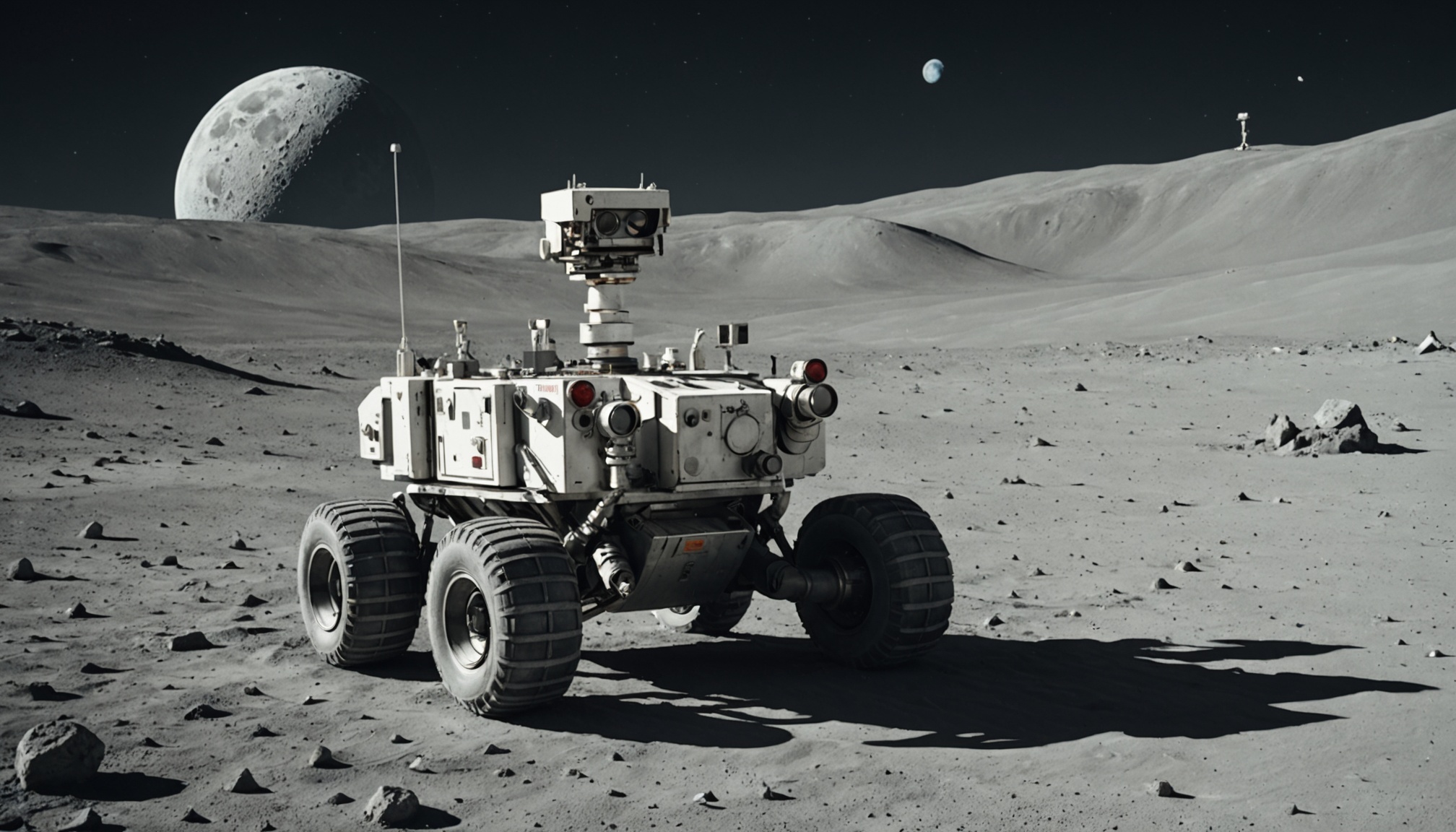


A computer capable of running large language model (LLM) software will travel to the moon aboard Astrolab's FLIP rover as early as November 2026, MIT Technology Review reports (open copy). The 480-kilogram vehicle, short for FLEX Lunar Innovation Platform, is the first in a series of rovers NASA has contracted from Astrolab to support future Artemis missions.
From low Earth orbit to the lunar surface
The rover will carry 20 scientific payloads, including a lidar 3D mapper and a sensor to detect helium-3 in lunar regolith. Among these instruments is an HPE Spaceborne-4 edge computer - a system combining a 64-bit CPU with a graphics processing unit (GPU), a chip that can execute many calculations simultaneously.
HPE has tested this technology on the International Space Station through three prior Spaceborne missions. In 2025, computers launched in 2021 and 2024 ran Meta's Llama 3.2 LLM as part of the Space Llama initiative, helping astronauts with research tasks.
The lunar environment presents far greater challenges. Temperatures near the lunar south pole swing between 80 degrees Celsius in sunlight and minus 200 degrees Celsius in shadow. Radiation levels reach nearly three times those inside the shielded space station, which also benefits from Earth's magnetic field. The Spaceborne-4 uses the same software-based radiation protection as its predecessors, monitoring for particle strikes and reducing power when needed. It relies on the rover's radiators to manage heat.
Specialized LLMs on the system will analyze camera and lidar data to assist with navigation and extract insights locally, reducing transmission requirements. This approach addresses a longstanding problem in space exploration: communication delays. The round-trip signal to Mars can take 20 minutes, and even lunar operations suffer from stale data. The Soviet Union lost two rovers due to operator errors caused by such delays.
This mission matters because AI-enabled autonomy could transform deep space exploration. Besides lunar operations, there is potential for Mars missions.