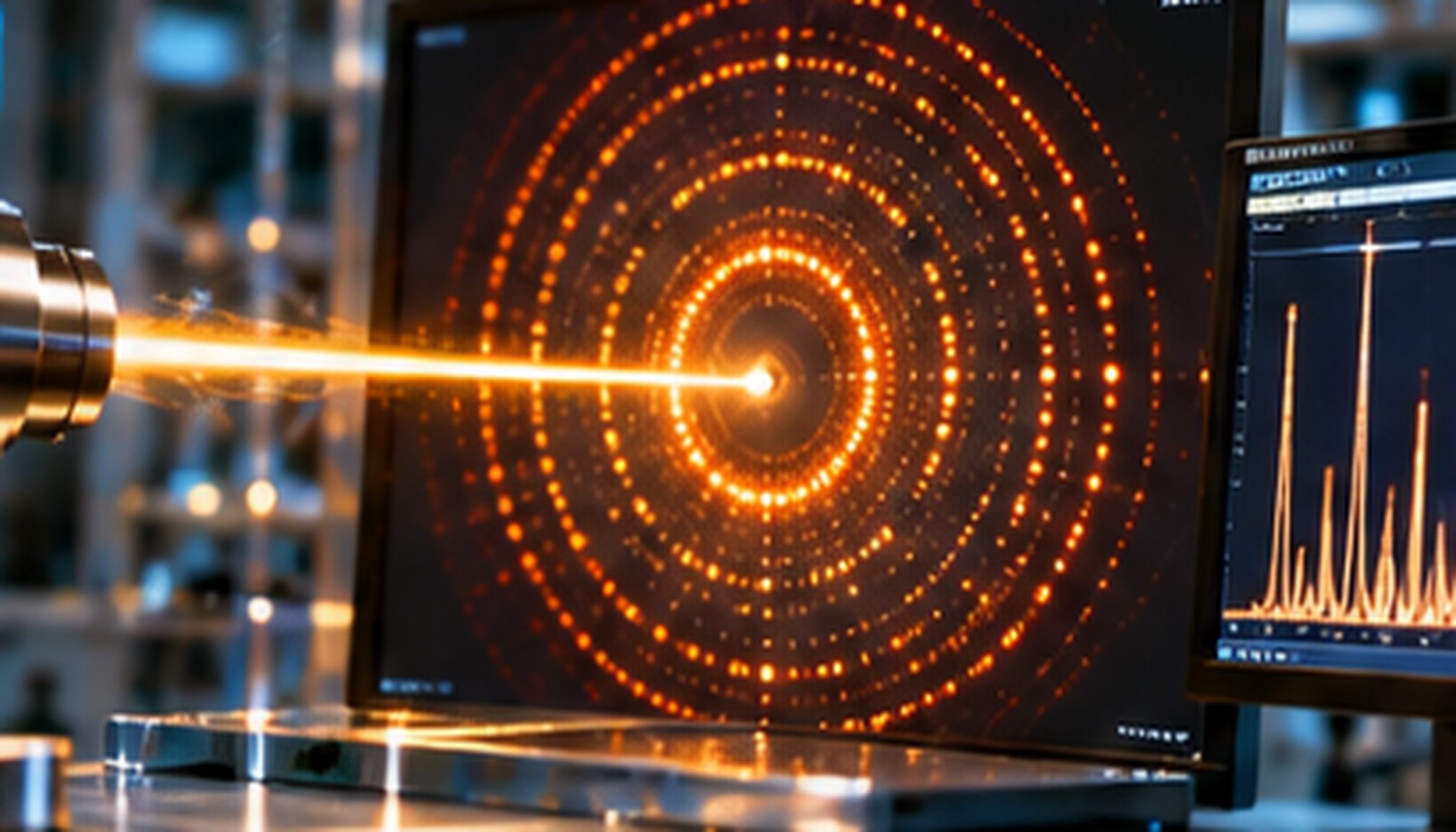

Scientists at Argonne National Laboratory have developed an artificial intelligence system that can rapidly identify important properties of crystals from powder X-ray diffraction measurements.
Called AlphaDiffract, the system analyzes the distinctive patterns produced when X-rays scatter through crystalline materials. It predicts a crystal’s structural family, space group and lattice dimensions, tasks that traditionally require iterative analysis by specialists.
The researchers trained their model on more than 31 million simulated diffraction patterns, derived from 312,267 curated crystal structures. When tested against experimental measurements in the RRUFF database, AlphaDiffract achieved 81.7% accuracy in identifying crystal systems and 66.2% accuracy in identifying space groups.
The advance builds on earlier AI efforts to predict crystal structures and the broader movement toward physics-guided artificial intelligence for materials discovery.
Unlike traditional approaches that address different crystallographic properties separately, AlphaDiffract predicts multiple properties together.
The system is not a complete replacement for experimental crystallography. However, it offers a potentially faster starting point for researchers studying new materials for electronics, energy and other technologies.