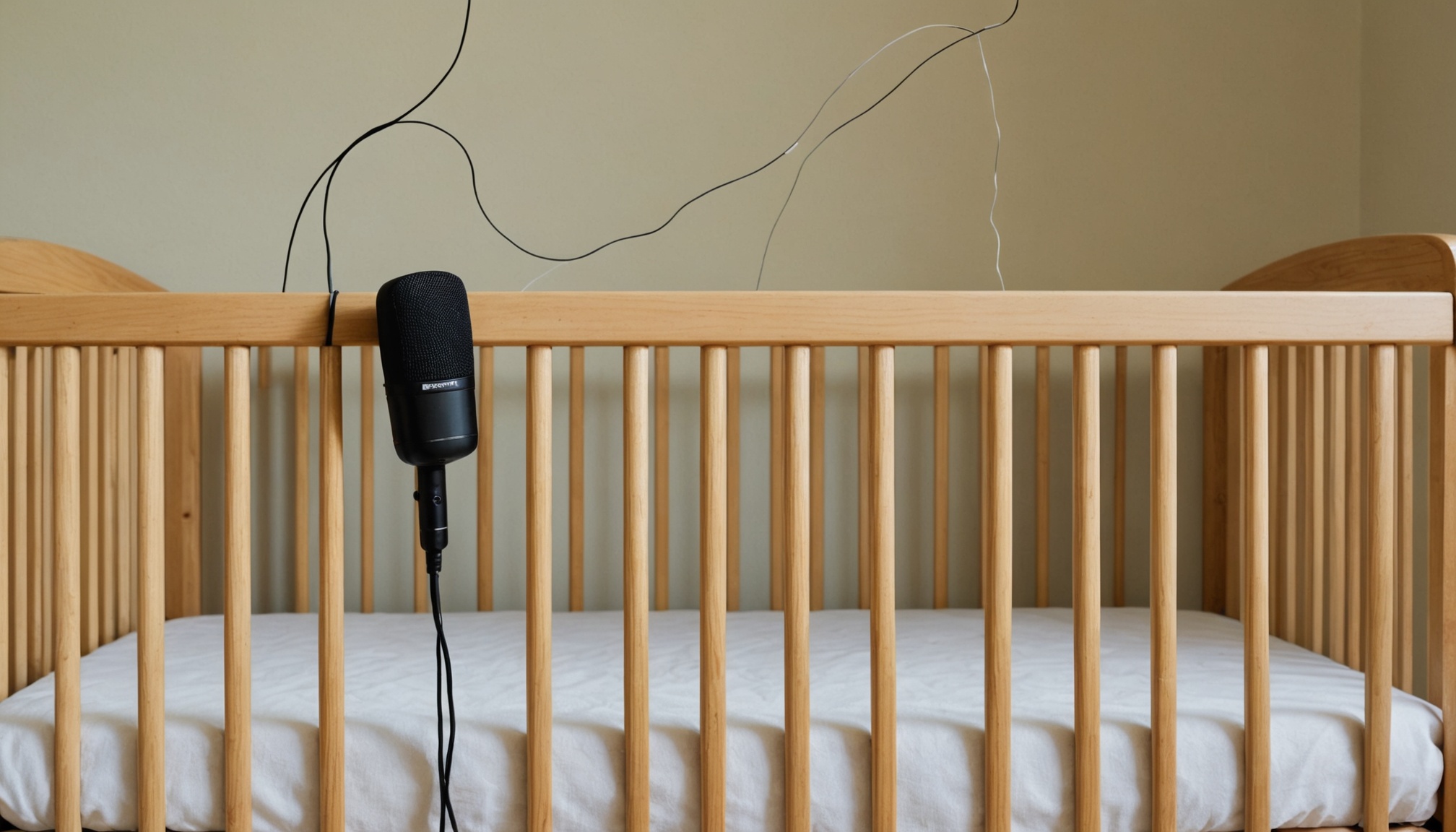


Babies learn language from the messy stream of everyday life, while today's large language models train on trillions of words. A Princeton team has now shown that an AI model can learn the sounds of speech and thousands of words from only the speech a single child actually hears, on roughly the same schedule as the child. The study was published in Science and covered by SingularityHub.
The work rests on the First 1,000 Days project, which installed cameras and microphones in 15 US homes and recorded 12 to 14 hours a day across each child's first 1,000 days of life. For this study the team used the audio from eight children, yielding up to 6,600 hours of usable speech per child after filtering out noise, silence, and overlapping talk.
Learning day by day, with sleep-like replay
Each model began as a blank slate, with no built-in knowledge of English sounds or words. An audio encoder split speech into 20-millisecond segments, and a decoder learned to predict which sound would come next. Rather than seeing all the data at once, the model heard the recordings day by day, in the order the child experienced them. At first it retained almost nothing. The fix was replay: at the end of each simulated day the model revisited fragments of recent speech, echoing how the brain consolidates memories during sleep. With replay, the models learned to tell apart English speech sounds, called phonemes, within about the first year, and went on to build vocabularies of thousands of words, closely tracking each child's measured vocabulary growth.
The same framework worked across all eight children. Differences in learning pace were captured by adjusting just three internal settings: how much speech was replayed each night, how quickly the model learned, and when word learning began. The model learned from cleaned-up sound alone, without the gazes, gestures, and social responses that real children rely on.
The result matters because it shows that the everyday speech surrounding one child contains enough structure to support core language learning, when paired with a memory-like consolidation process. It gives developmental scientists a computational test bed for theories of how children learn, and it hints that future AI systems could learn far more efficiently than today's data-hungry models.