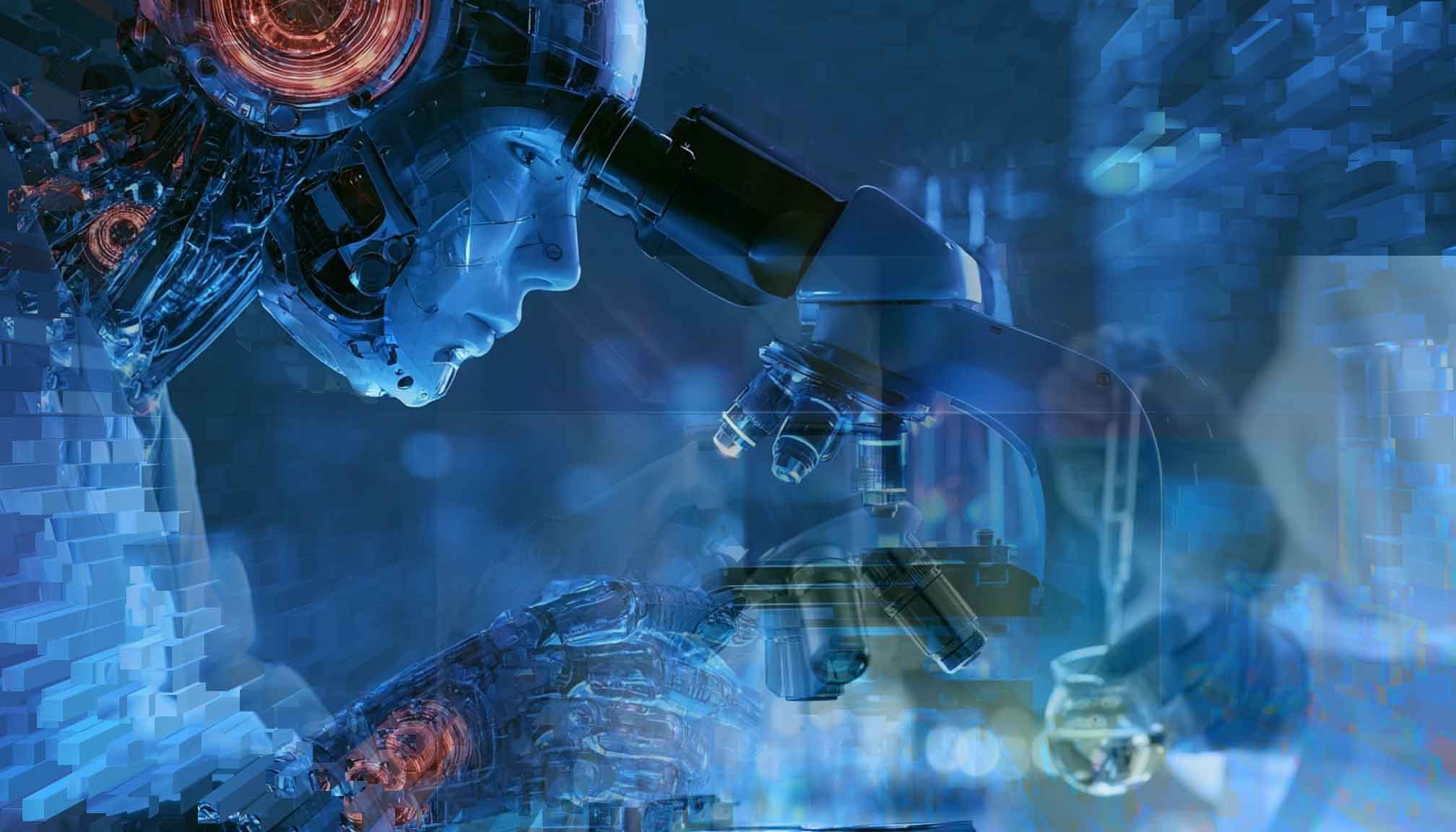


Researchers at Chalmers University of Technology in Sweden have developed an artificial intelligence (AI) scientist capable of carrying out the complete cycle of biological research with minimal human intervention. The system can generate scientific hypotheses, design experiments to test them, and interpret the results. This work represents a step toward self-driving laboratories that could accelerate the pace of scientific discovery.
The research team combined advances in large language models, automated reasoning, and laboratory automation to create a closed-loop AI laboratory. They demonstrated the system by conducting research on brewer's yeast, Saccharomyces cerevisiae, a common model organism in biology. The AI was supplied with scientific knowledge including the yeast's genome, its metabolism, and findings from previous studies.
How the AI scientist works
Systems biology, the field that studies complex interactions within biological systems, involves vast amounts of data that can overwhelm human researchers. The researchers explained that the AI scientist can identify promising biological questions, recommend experiments to address them, evaluate the outcomes, and refine its understanding through successive iterations. The system moves beyond decision-support tools to actively generate new scientific knowledge.
The integration of AI's analytical capabilities with physical laboratory automation is relatively uncommon and marks a developing frontier in research technology. A parallel is found in self-driving cars, where AI processes information, draws conclusions, and takes action. The robot scientist Eve, originally designed for drug discovery, was updated with large language models and automated reasoning for this study.
The researchers stated that autonomous laboratories could transform research by systematically investigating biological systems far more quickly than current methods allow. Such AI systems could shorten the time needed to explore complex scientific questions and make better use of laboratory resources.
The researchers emphasized that autonomous AI will augment rather than replace human scientists for the foreseeable future. Humans remain essential for setting research priorities, interpreting broader significance, and providing ethical oversight. The researchers envision future systems collaborating more closely with human scientists as partners in addressing difficult questions in biology and medicine.
The study is published in the Journal of the Royal Society Interface.