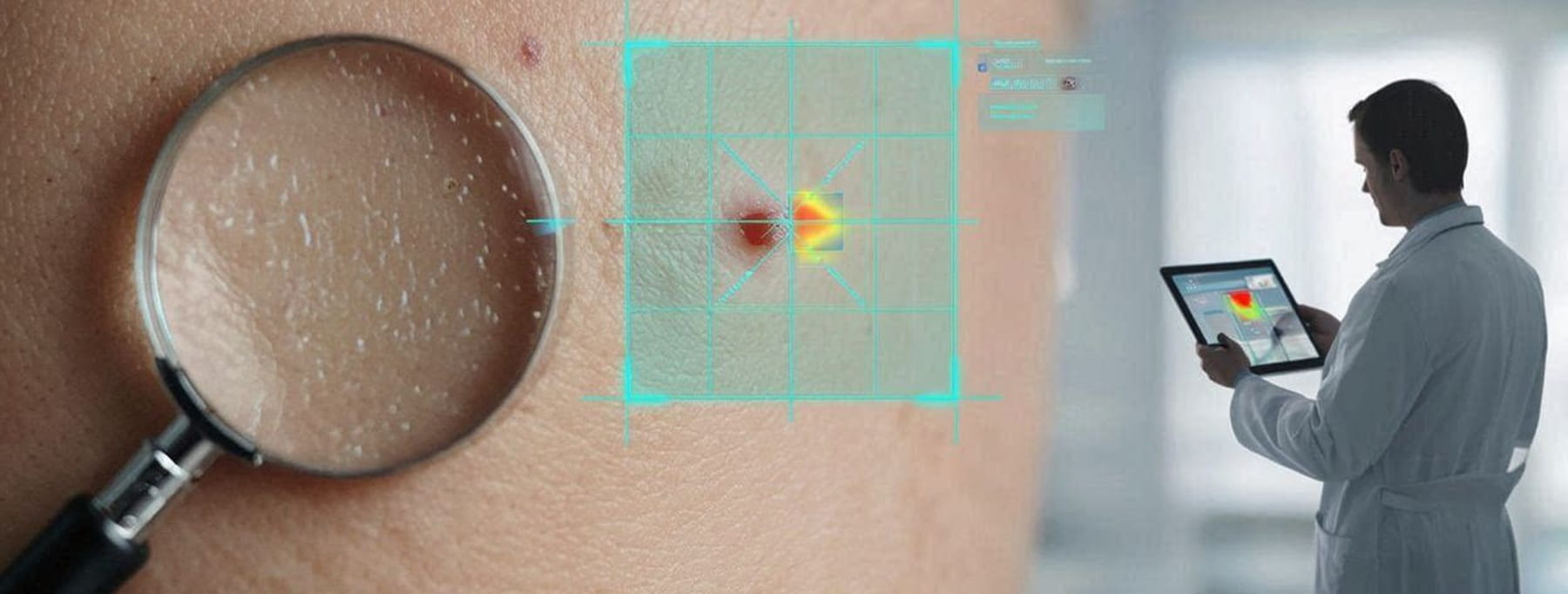

Researchers in Sweden have found that artificial intelligence can predict a person’s risk of developing melanoma up to five years in advance by analyzing data already collected in national healthcare registries. [1] In a study that included more than 6 million adults, a machine-learning model achieved a prediction accuracy of roughly 73%, a notable improvement over the 64% accuracy that could be reached using age and sex alone.
The analysis, published in Acta Dermato-Venereologica, drew on routinely gathered information such as medical diagnoses, prescribed medications and socioeconomic status. Of the 6,036,186 individuals covered, 38,582 (0.64%) were diagnosed with melanoma during the five‑year observation period. By combining the full range of registry data, the model could isolate small population subgroups whose five‑year risk of melanoma reached approximately 33%.
“Our study shows that data which is already available within healthcare systems can be used to identify individuals at higher risk of melanoma,” said Martin Gillstedt, a doctoral student at the University of Gothenburg’s Sahlgrenska Academy and statistician at Sahlgrenska University Hospital. Sam Polesie, associate professor of dermatology at the same university and a consultant at the hospital, added that “selective screening of small, high‑risk groups could lead to both more accurate monitoring and more efficient use of healthcare resources”.
The researchers stress that further studies and policy decisions are required before the method can be introduced into routine care. Nonetheless, they believe AI‑driven analysis of registry data could become a powerful tool for personalised melanoma risk assessment and for guiding future screening strategies.