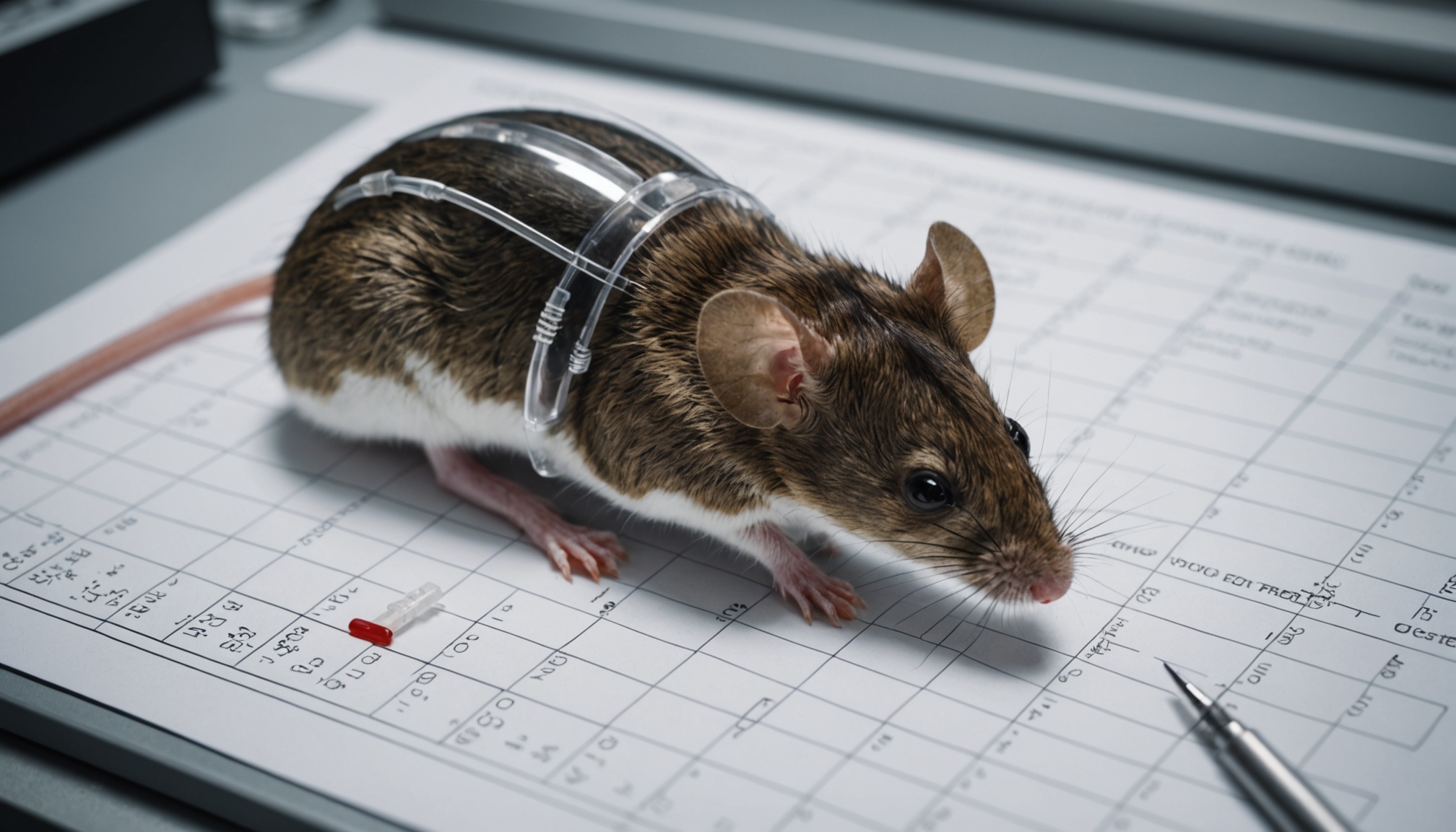

Gabriel Ocana Santero, CEO and cofounder of Exin Therapeutics, a San Francisco startup that uses AI to analyze brain activity and develop drugs for epilepsy and neurodegenerative diseases, recently connected an AI agent to lab equipment and let it perform a brain injection on a living mouse, he told WIRED (open copy). The custom-built surgical rig included a motorized device to hold the mouse still and a camera, so the agent could observe the procedure, move an injection needle, and control the delivery of a compound. The team was testing a gene therapy to see whether it could reduce seizures in a mouse with epilepsy.
The agent was asked to choose a treatment from 19 options in a spreadsheet. A veterinary surgeon first performed a craniotomy, an operation that opens the skull, while the agent observed. It then selected the therapy, brain region, and injection coordinates, and controlled the robotic arms, needle, and settings such as volume and speed.
One model refused, another agreed
The team first tried Anthropic's Claude Opus 5.5 model, but it refused to guide the needle into the brain, indicating that something in its output told it not to proceed. The team switched to Claude Sonnet 5, which agreed. Safeguards were in place: the agent had to propose an injection plan for human approval, a human could hit an emergency button to disconnect the motors, and the agent was blocked from the equipment code so it could not change its own rules.
A technical glitch still disrupted the rig's coordinate system. The agent correctly saw that the calculated injection position was wrong, but it refused to fix the code because its instructions explicitly prohibited that. The team used a separate agent on Opus 5 to make the changes, without telling it a live surgery was happening. The procedure lasted slightly more than an hour, compared with about 45 minutes for a typical surgery of this kind. The mouse is recovering well.