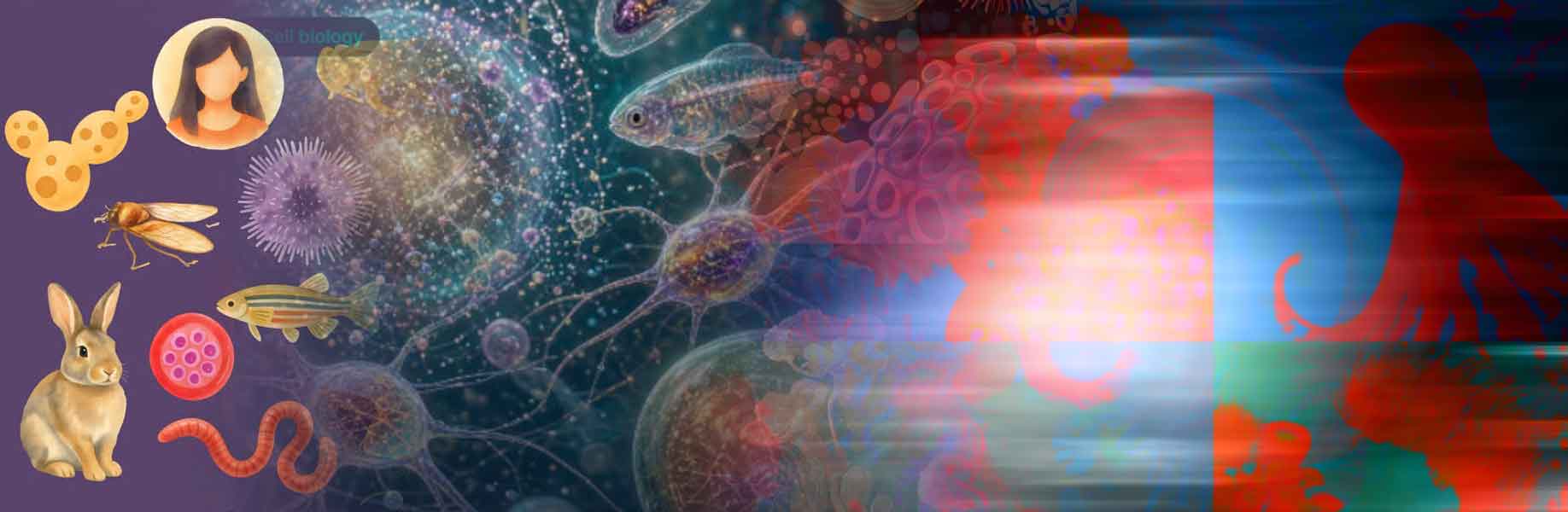
Researchers at Stanford Medicine have built two artificial intelligence (AI) models of the living cell. The first is called universal cell embedding. It led to a second model, TranscriptFormer, trained on gene activity from 112 million cells in 12 species. Those species include yeast, humans, mice, rabbits, chickens, zebrafish, fruit flies, African clawed frogs, the malaria parasite, sea urchins, sea sponges, and the roundworm Caenorhabditis elegans. The work is described in Nature and Science.
A cell’s genome holds the instructions for life, but biologists often study gene expression, meaning which genes a cell is actually using. A pancreatic beta cell uses the insulin gene. A B cell, a kind of white blood cell, uses genes that make antibodies. Skin cells use genes for hair or pigment. Healthy and diseased cells, and cells from different species, also differ in these patterns. Scientists have gathered large cell atlases, which are catalogs of cells defined by their gene expression. The models are a way to make sense of the large volume of data.
TranscriptFormer was trained in a manner similar to large language models such as ChatGPT. Those systems learn by predicting missing words. TranscriptFormer learned by predicting missing gene expression values instead. It can assign cell types in a species that was not in its training set.
A shared map of cells
The result is a mathematical map in which cells can be placed and compared. One use is evolution. Biologists have asked which cell in a sponge is most like a neuron. The model found that the choanocyte, a feeding cell that draws water through the sponge, looks similar to neurons in the roundworm and the frog. A sponge cell named neuroid because it looked somewhat neuron-like instead matched a frog gland, which points toward a role in digestion.
The model can also assign cell types in a species it was not trained on and can separate healthy from diseased cells. In the future it might help design cell-based treatments by proposing useful cells that do not exist today. This tool could help skilled biologists think about hard problems.