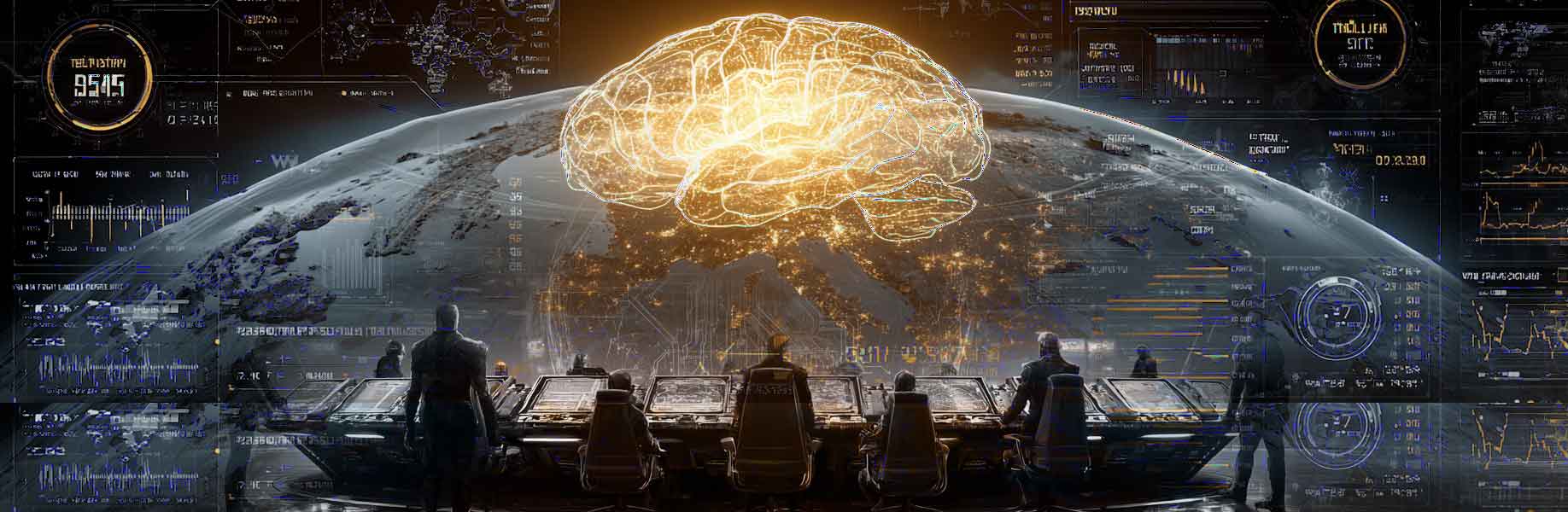

In Alicante (Spain), a small laboratory called WarMind Labs is developing an artificial intelligence that thinks like a General Staff; its first demonstrators are already being prepared for military and institutional clients. This AI designs synthetic “brains” that help a country to see earlier, understand better and decide with greater rigour in times of war and crisis. Behind it is a team led by Luis Martín, who has spent years arguing for a defence AI bound by doctrine, law and political control, rather than driven by bellicose impulses.
Intelligent General Staff
The innovation lies in shifting attention from the “smart weapon” to a cognitive General Staff. Its main asset is made up of frameworks for reasoning: architectures that turn scattered information into coherent plans, decisions and courses of action. These are “systems that know what they are doing”, able to prioritise evidence, generate hypotheses, anticipate reactions and learn continuously. Taken together, they provide a spectrum of strategic superiority through adaptive, evolving and autonomous systems deployed across all domains: land, sea, air, space and cyberspace.
Complex Reasoning
The core of this ecosystem consists of complex reasoning modules that can be combined much like the sections of a General Staff. One of them, Gran Capitán, helps to identify strategic issues, organise evidence, rehearse plans and assess their deterrent or deceptive effect. Another, Tireless Intelligence Analyst, monitors streams of information and keeps hypotheses up to date without pause. A third, Alcázar, applies the same approach to cyber defence, spotting attack patterns, inferring intent and adjusting the response almost in real time using a model inspired by how humans think. Together they form a distributed military brain, closer to an expanded headquarters than to an autonomous weapon out of human hands.
Human Control
This technology adds a cognitive layer that shortens decision cycles without pushing commanders to the margins. Its architectures are designed to fit NATO doctrines, European legal frameworks and existing chains of command: realistic tools that strengthen resilience against pervasive hybrid threats, from cyber warfare to climate‑related crises.
A New Frame for War
They also sit squarely within the new frame of modern warfare: a battlefield shaped by swarms of uncrewed systems, continuous electronic warfare and software acting as a cognitive integration layer. The ability to handle information and decision‑time more intelligently goes beyond current uses of AI in war and may help ensure that decisions of this gravity are taken with greater clarity and human oversight in an environment that, by its very nature, tends towards inhumanity.
This article is republished from Futuribles. Here's the original article in Spanish and English.