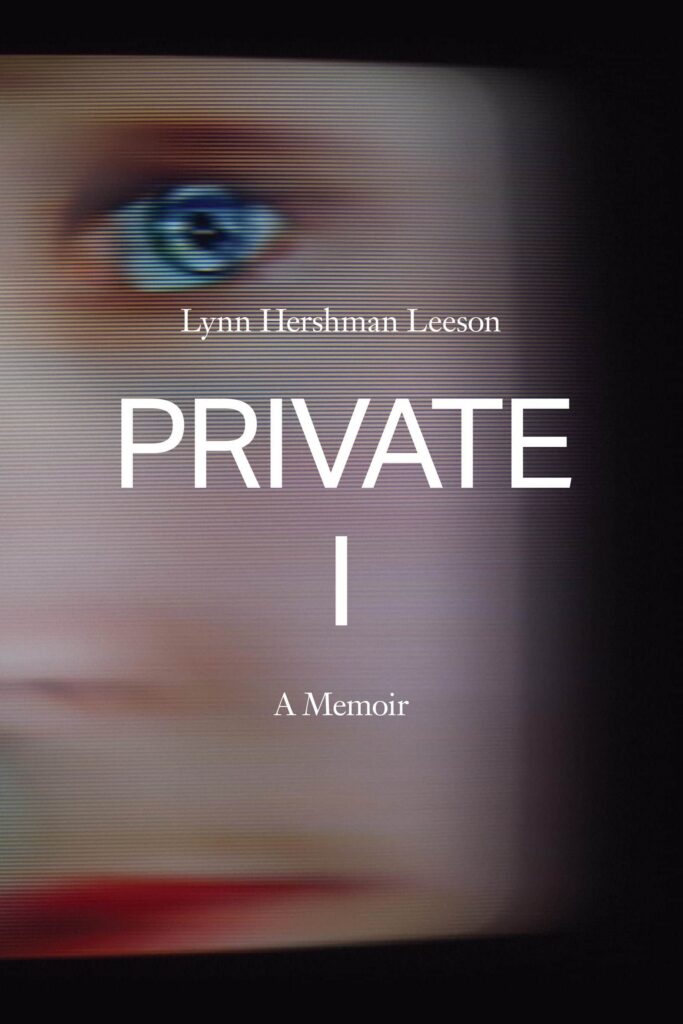
Lynn Hershman Leeson’s book Private i A Memoir defeated me. Don’t get me wrong. It’s my choice for best book of 2025 (and it has stiff competition).
Wanting to write an introduction about the most interesting of the abundant performance provocations and technological firsts packed into this relatively small-sized book (which is also jam packed with images and a few fold outs), I had to back away… slowly… before my head exploded. I couldn’t gather it all together. I literally had to stop writing completely for about a week before moving on to less challenging exchanges. More than a month later, I’m re-engaged, but I’m even more convinced that I can’t sit down and catalogue even the most salient of her complicated workings. Still…before I continue, please stop and explore her timeline on her website, because she’s done too many performance interventions at the crossroads of truth and fiction; of gender and power; at the intersection of technology and potential and surveillance and identity. If you spend some time with it, you will perceive how the abundance set me back on my heels.
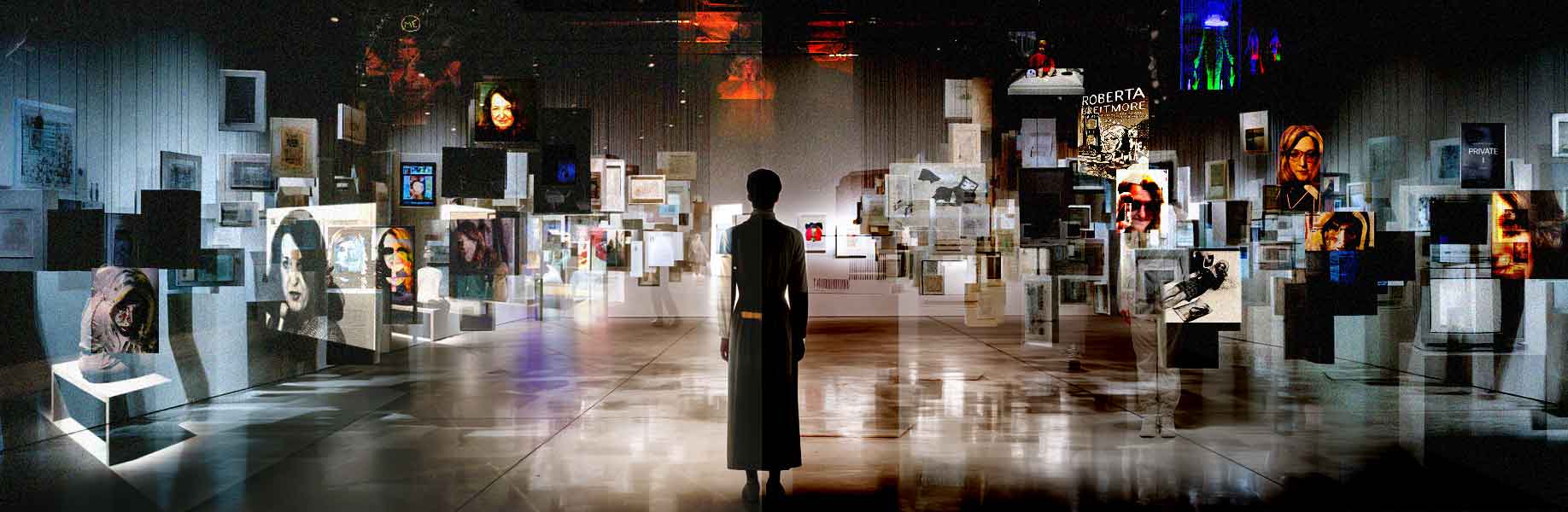
I first encountered Lynn when she appeared at the Mondo 2000 house/office. She was making a video work about virtual reality and I gave her the interview. I spoke about the confusion some people experienced even then (around 1990) between fictional and real persons via mediation and how that could be amplified by VR. I don’t remember if she had told me about her early performance work in which she created, in actual physical reality as well as in documented reality, a literal official second life, that of Roberta Breitmore… but I’m getting ahead of myself.
Dense, visually and textually rich, Private i a memoir, blew my mind with the wild audacity and the sheer volume of the works and public actions she has accomplished (the term “committed” may, in some cases, be just as appropriate). For one thing, I had no idea that she pissed off so many pinched little art scene/museum dictators! Read the book for details. (My favorite is when Henry Hopkins, then Director of SFMOMA told her “You don’t know your place.” Now that’s pretty fucking Victorian!)
Credit: Courtesy of HOTWIRE PRODUCTIONS LLC 2025Credit: Courtesy of HOTWIRE PRODUCTIONS LLC 2025
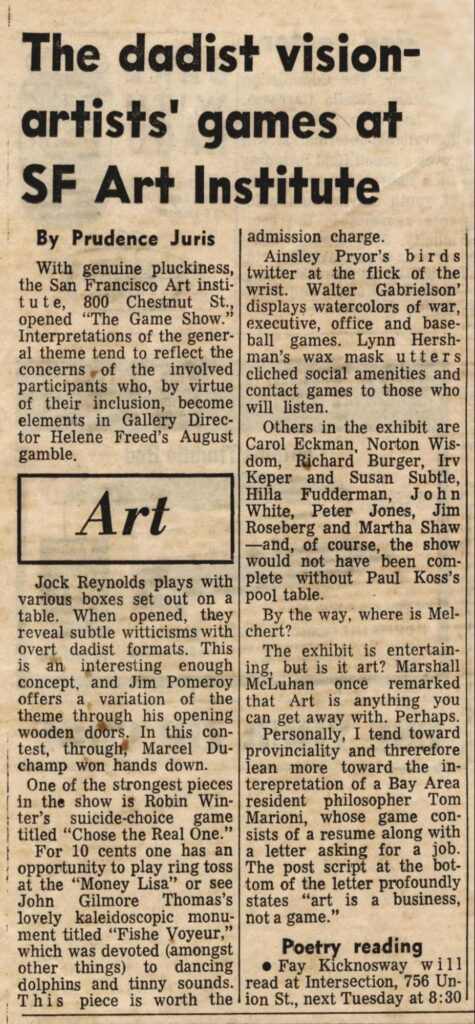
Lynn’s first major foray into questions of identity, trickiness and overcoming barriers to participation of women in general and herself in particular was enacted by the invention of several critics—Prudence Juris, Herbert Goode and Gay Abandon (!)—who managed to get reviews of women artists into prestigious art journals like Artweek and commentary into the SF Chronicle. In the book, Leeson writes, “Does existing bias justify these fictive tactics? Yes!”
A playful physical insertion of fictive characters into the real world emerged, eventually birthing that second life—the aforementioned Roberta Brietmore.
Credit: Courtesy of HOTWIRE PRODUCTIONS LLC 2025 (Roberta Breitmore “comic cover” by underground comix legend Spain Rodriguez)
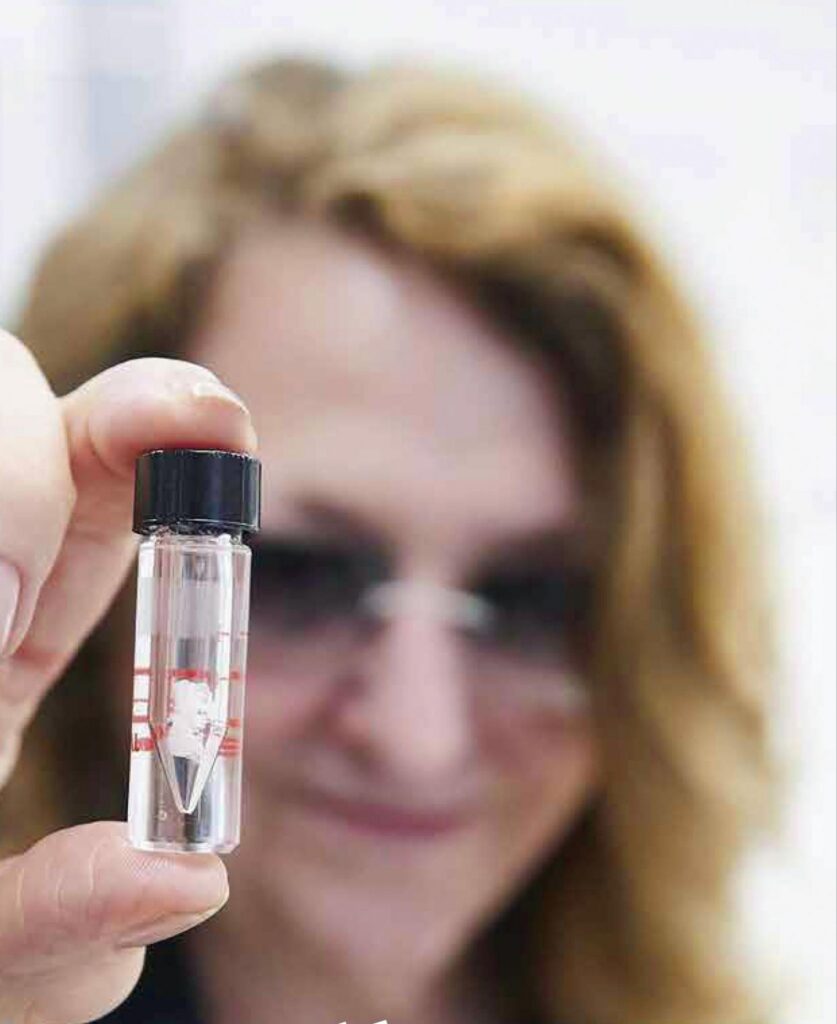
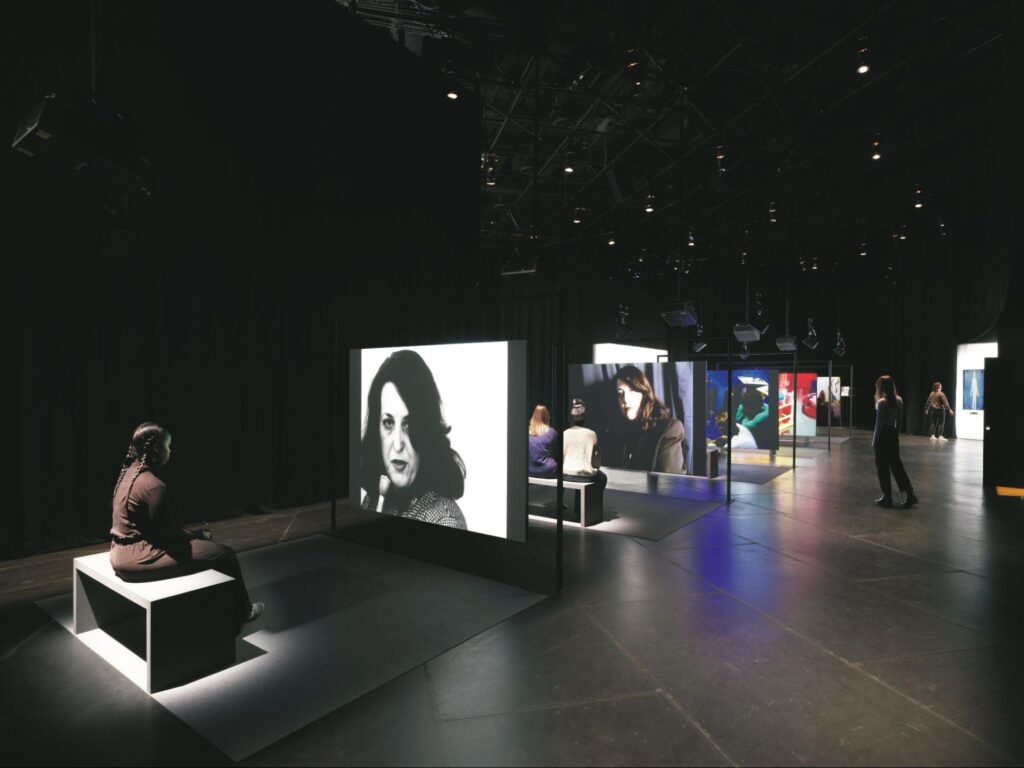
As perhaps the first experimental artist working in digital technology, Leeson invented what was arguably the first AI chatbot Agent Ruby. She also created early touch-screen audience interactive displays under the title of the Cyborg Series and explored surveillance culture and digital bias with works like Shadow Stalker. And then there were the telerobotic dolls like The Dolly Clones. If all this isn’t enough to twist your brain into a knot, Lynn, in collaboration with Dr. Thomas Huber of Novartis createdtwo original antibodies. This complicated tale is told in Private i, where Lynn asserts that “Novartis executives proclaimed that we had hit the jackpot!” I think you’ll just have to read the book.
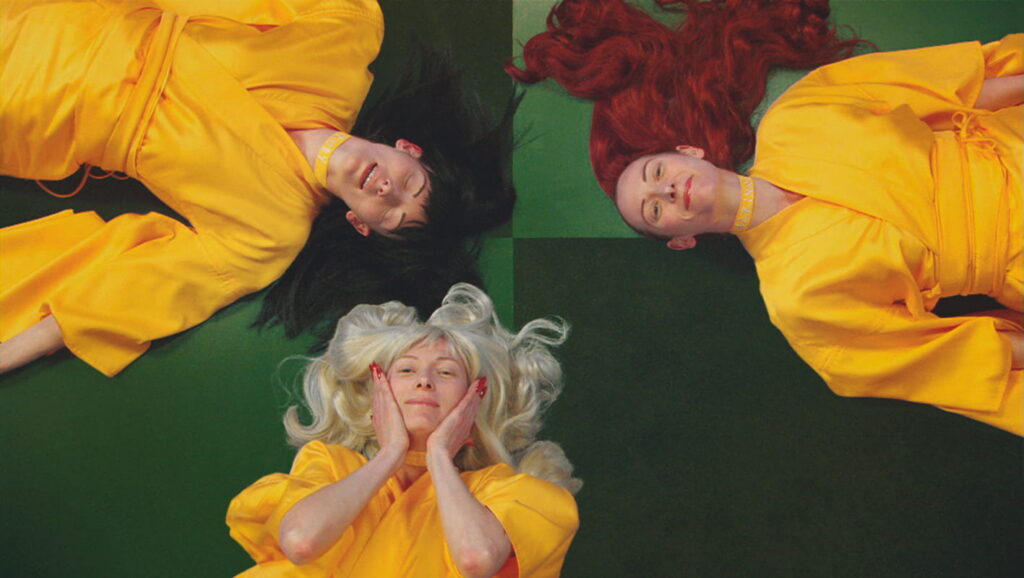
Lynn Hershman Leeson films include Conceiving Ada, with Tilda Swinton and Karen Black (I have a brief appearance); Teknolust (also with Swinton and Black); Strange Culture(about the weird raid and accusations of bioterrorism carried out against the artist Steve Kurtz among others.
I interviewed Leeson via email.
Credit: Courtesy of HOTWIRE PRODUCTIONS LLC 2025
RU Sirius: There’s a line in the book, “Writing this now, I wonder where we found the audacity to be so outrageous in the works I did. But I believed in the works and did not want to limit the possibilities by being polite. It applies to a specific performance but it could apply to so many of your actions. It also might be rephrased as “where I found the audacity.” So… where did you find it?!
Lynn Hershman:I truly believed the doctors when they said that I was going to die young because I had been born with a damaged heart. Therefore,I figured I had very little to lose and probably would not live long enough to have the consequences impact me.
RU: As the book reports, you had a difficult childhood with demanding parents, and you deal with complicated issues around women’s exclusion or underrepresentation in the art world, starting in the 1960s. You also started integrating whatever technology was available into almost everything you do. And this is surely also controversial.
What I wonder is, given this difficulty and complexity of your personal life, from whence comes the fun and playfulness that shines through in much of your work? Was it just a matter of discovering dada and of some other avant-garde trickster strategies or what would you attribute that to?
LH: I honestly think the playfulness and glee was the result of spending so much time at the Cleveland Museum where I was able to study how Turner and Cezanne addressed extraction. It was, in my view, a joyful strategy of how one could approach life. I learned from themasters.I studied how Rembrandt captured light, or Leonardo shaded a line, includingthe details and humor. I understood, with comprehension and glee that they were creating ideas in secret that almost no one would understand.
RU: The two obvious throughlines in the book seem to be the exclusion or under-representation of women in the art world, and becoming perhaps the first artist using tech/cyber both materially and conceptually in avant-garde works. I wonder if you would tie those two tropes together?
LH: Sure. I used the technology of my time to tell the stories of my time. It seemed appropriate especially as I live in the Bay where much of it was invented.
RU: So here’s a book that’s relatively small in size and that is packed with visuals (and a unique page format). And yet it seems to pack a startling amount of provocative actions, occurrences and ideas into the limited page count. Would you reflect on your life so far as having been “action packed”?
LH: Not really. I have been lucky and at times overworked, constantlyjuggling time and jobs. One could say "action packed" but that never occurred to me.
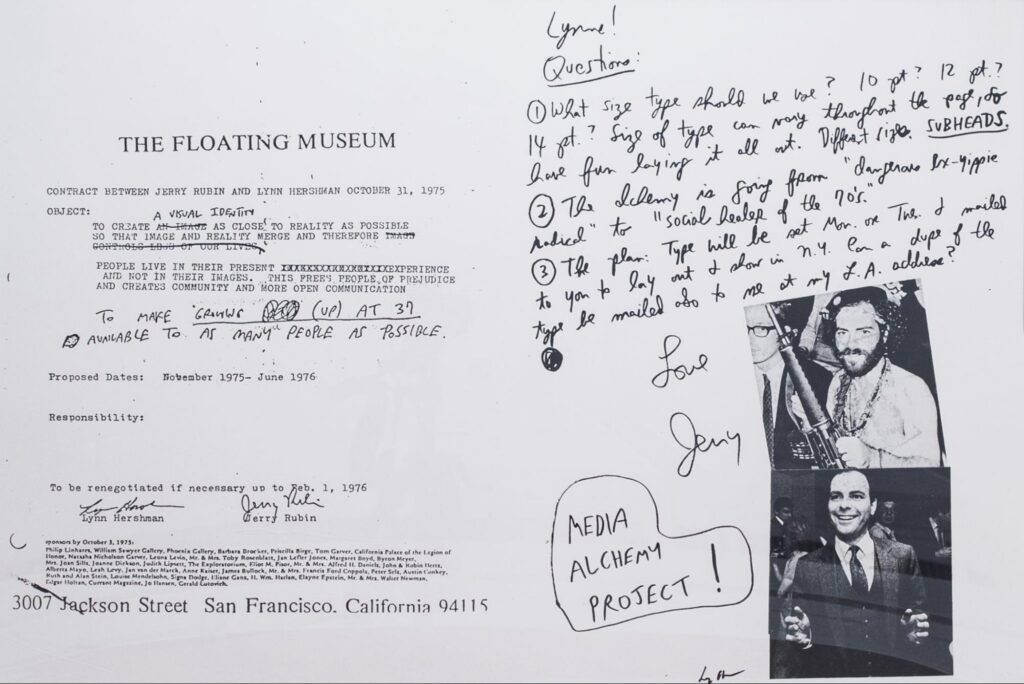
Credit: Courtesy of HOTWIRE PRODUCTIONS LLC 2025 (Note to and from Jerry Rubin about their collaborative makeover)
RU: It’s easy to see how you could hit it off with Timothy Leary and Jerry Rubin, who both had a place in your life and in the book. In the case of Leary, he could have taken tips from Roberta Breitmore about living underground.
LH: Actually he did take tips about Roberta and used them.
RU: Jack Kerouac characterized being a writer as being a spy. One observes people and uses them in the work. You materialized that and also turned it in multiple directions by inventing and becoming, part-time, the character Roberta Breitmore who is something of a private eye. It’s a richly complex undertaking. How did toying with identity impact on you during that time?
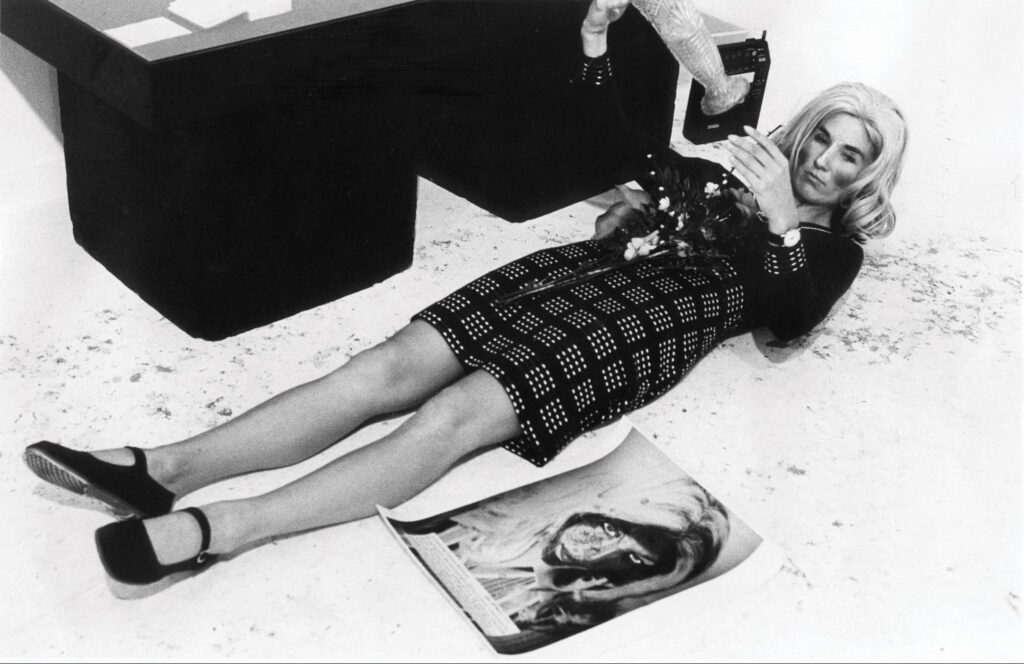
Credit: Courtesy of HOTWIRE PRODUCTIONS LLC 2025 (Roberta Multiple Lies Down Besides Construction Chart)
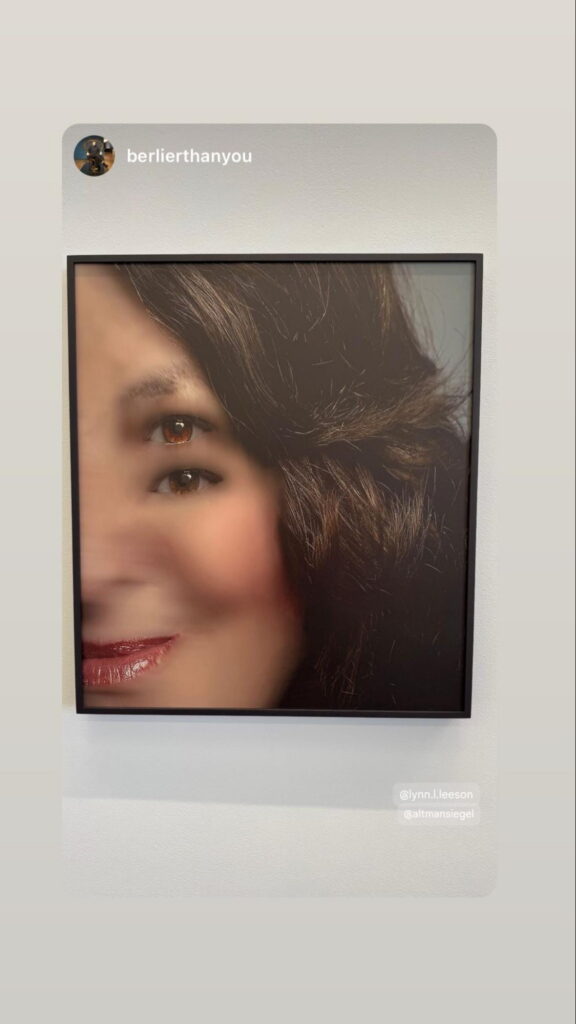
LH: How one defines and signifies identity was the most important idea I could think of. In fact, Roberta is more real than me because she could get credit cards and I could not. It brings up the question of what makes something "real". The discards of society remains in the portrait of that particular time...
RU: I’m struck by the troubles you had with showing your work at mainstream art museums and the like, not just in terms of the knee-jerk reactions to a woman artist but also in terms of the reactions to the unexpected nature of what you were presenting. "This is not art" reactions.
Credit: Courtesy of HOTWIRE PRODUCTIONS LLC 2025 (Prudence Juris in Artweek 1973)
LH: It was extremely disturbing!
RU: I imagined the art world of the 20th century as already post-Dada, deeply engaged with performance art and wide open for boundary defying works. My 1970s self is confused. What was up with that?
LH: At that time, there existed a very limited range of curators steeped in the past unable to see the present who were instilled with deeply ingrained prejudices. Curators like that still exist by the way, but there are more options now, including female and bisexual curators, who were not present back then.
RU:We haven't even touched yet on your work as a filmmaker, which is how I think of you. Conceiving Ada is my favorite but you've done quite a few. Do you have a favorite and are there any new ones on the horizon
LH: Teknolust is my favorite, or the Electronic Diaries.There is always a new one on the horizon. But it is not easy or fun to raise the money to do them as they never break even cost wise though critically they are acclaimed.
Credit: Courtesy of HOTWIRE PRODUCTIONS LLC 2025 (TIlda Swinton characters in Teknolust “Teknolust dance faces”)
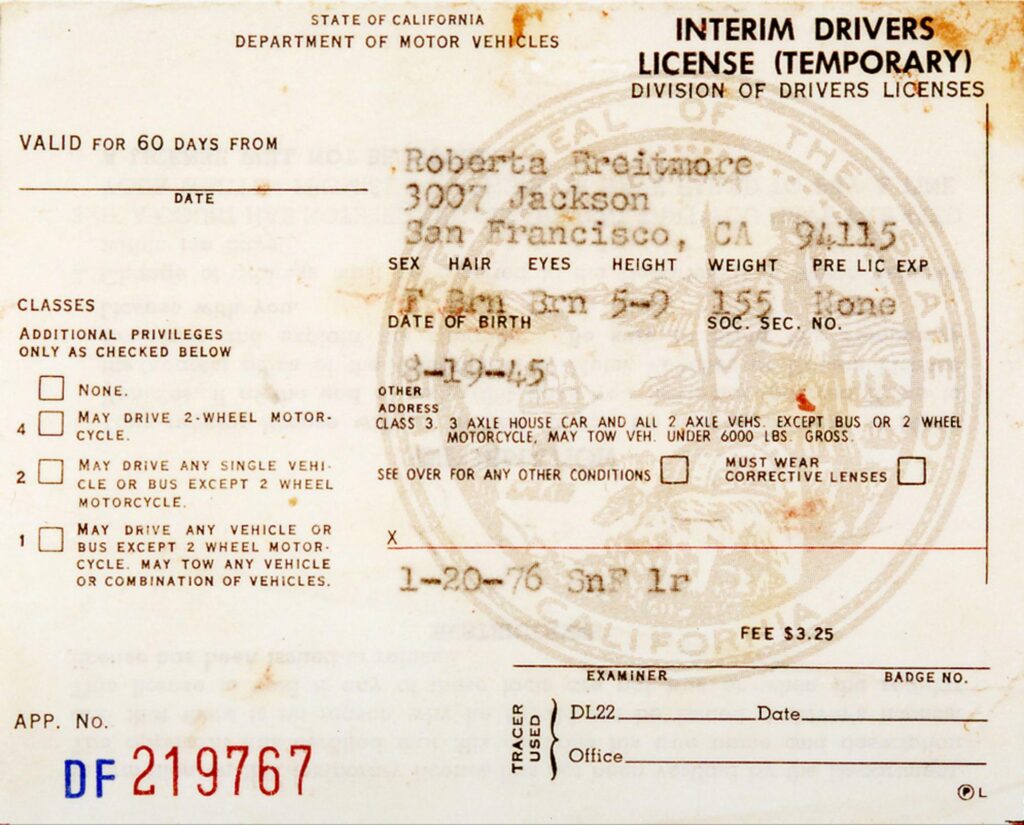
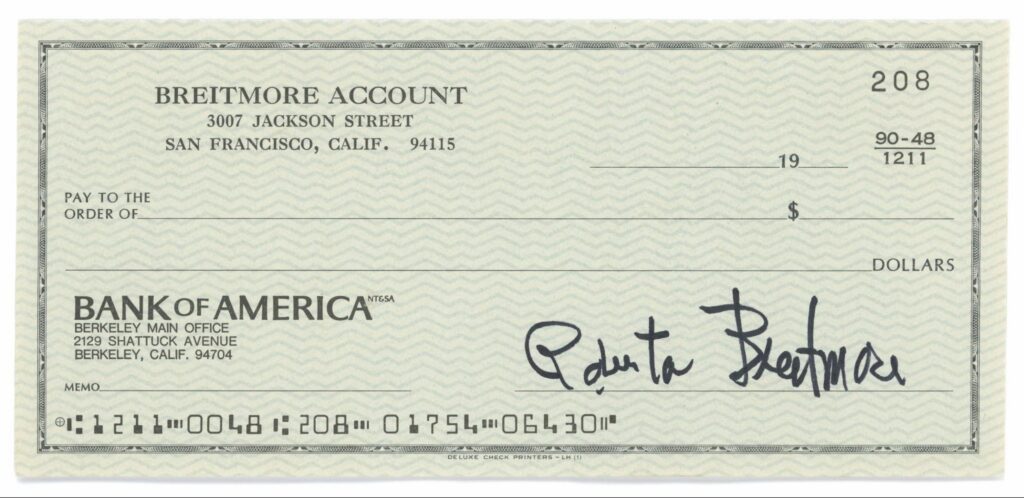
RU: I want to return once more to Roberta Breitmore since it’s such an extraordinary action. In the book, you wrote, “Roberta opened a bank account, applied for and received credit cards, and a drivers’ license.” Well, I guess the statute of limitations has run out! I mean, this is kind of an outlaw action (which is very 1970s). What role would you say risk plays in your work?
LH: Risk taking is critical. If I had done this work five years later, after computers were available, I would have been arrested for fraud and identity theft. Most things worth doing are risky, but as I thought I was going to die young (in those days I believed doctors) it didn’t matter.
Credit: Courtesy of HOTWIRE PRODUCTIONS LLC 2025Credit: Courtesy of HOTWIRE PRODUCTIONS LLC 2025
Would you accept a check from an experimental art creation?