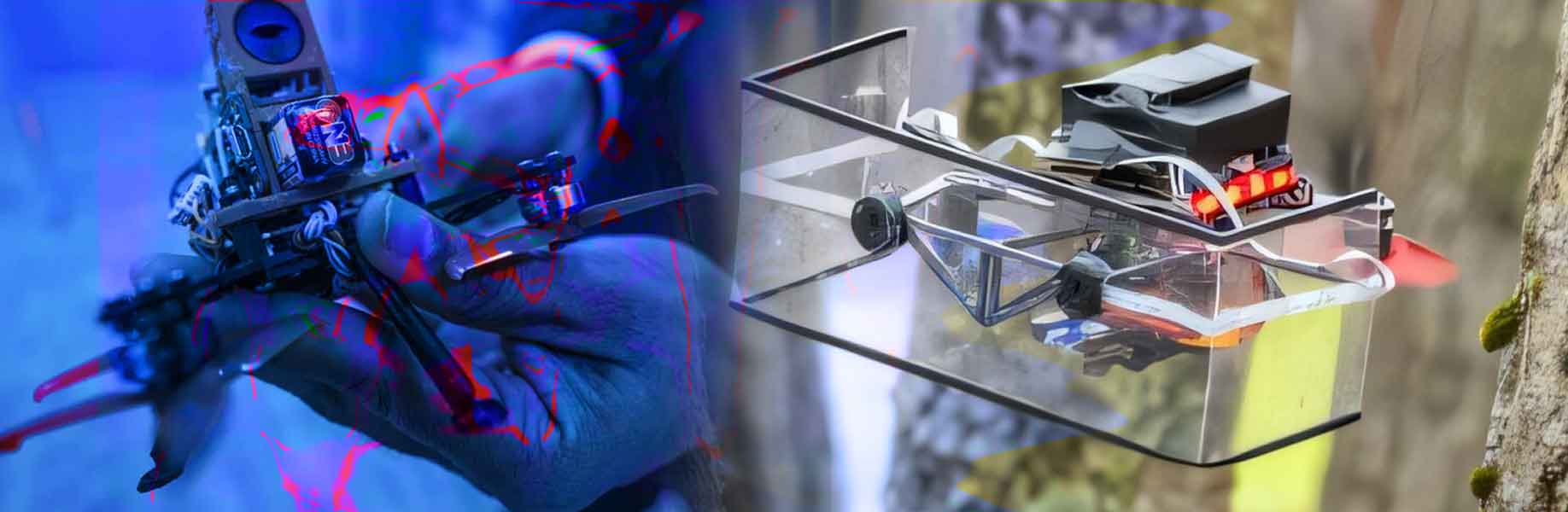

Researchers have developed small aerial robots that can fly through fog, smoke, and darkness using ultrasound sensors combined with artificial intelligence (AI). The system draws inspiration from how bats navigate using echolocation, which is the process of sending out sound pulses and interpreting the returning echoes to detect objects.
The advance, published in Science Robotics, offers a lightweight and low-power alternative to common navigation tools. Many drones rely on cameras or lidar, which is a system that uses laser light pulses to measure distances. These tools can be heavy, use a lot of energy, and fail in bad weather or low light. Propeller noise on small drones also complicates echo detection.
Ultrasound enables efficient navigation for tiny rescue drones
In tests, researchers fitted an X-shaped quadrotor drone, about six inches wide and weighing roughly one pound, with two tiny ultrasound sensors and an acoustic shield to reduce propeller noise. Deep learning helped the drone analyze weak echoes. The robot flew autonomously for about five minutes per battery charge. It successfully navigated wooded areas outdoors and obstacle courses indoors, including in complete darkness, fog, or simulated snow, achieving success rates between 72 and 100 percent across 180 trials. Performance dropped with very thin objects like slender branches that reflect signals weakly.
This approach could extend flight time for palm-sized robots in cluttered or hazardous environments, where extra seconds of operation might aid search-and-rescue efforts. "In a real search-and-rescue mission, a few more seconds of flight time could mean the difference between life and death for a survivor," says research leader Nitin J. Sanket in a Worcester Polytechnic Institute press release.
Sanket added that future improvements may focus on smaller sensors, longer battery life, and higher speeds. The work received support from the National Science Foundation and highlights potential for nature-inspired designs in robotics.