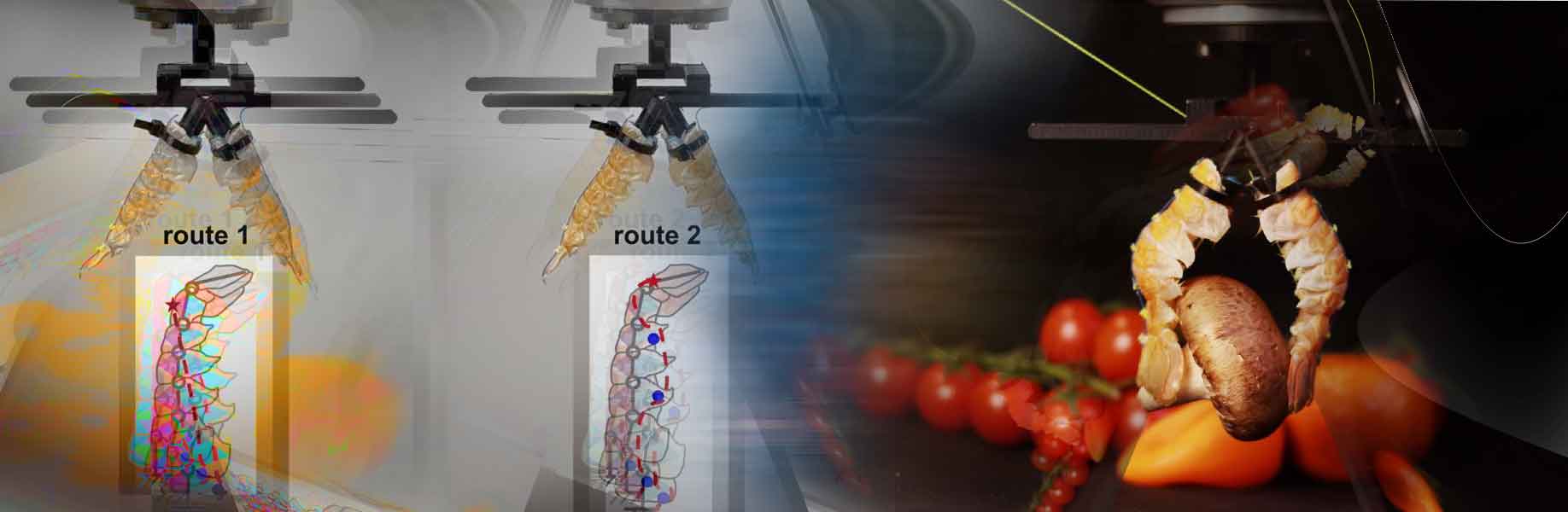

Roboticists o nature for ideas but often use materials like metal or plastic. A new experimental robotic manipulator developed at EPFL changes this by using exoskeletons from langoustines (small lobsters), which are often discarded as food waste. This approach mixes biological parts with man-made ones to improve robots and make technology more sustainable, meaning it uses resources without harming the environment long-term.
An EPFL press release explains that exoskeletons mix mineralized shells, which are hardened with minerals for strength, with flexible joint membranes, thin layers that connect parts. This gives a good mix of rigidity, or stiffness, and flexibility, allowing independent movement of segments. Crustaceans use this for quick, strong movements in water, and it can help robots too. By reusing food waste like these shells, the design supports a cyclic process where materials are recycled and reused for new purposes.
Applications in robotics
In a study published in Advanced Science, researchers strengthened langoustine exoskeletons with synthetic parts for three uses. They added an elastomer, a stretchy rubber-like material, inside the shell to control segments, then attached it to a motorized base that adjusts stiffness for extension, stretching out, and flexion, bending. A silicon coating, a protective layer, made it stronger and longer-lasting.
One version acts as a manipulator that handles objects up to 500 grams. As grippers, two exoskeletons can bend to hold items like pens or tomatoes of different shapes and sizes. It also powers a swimming robot with flapping fins, reaching speeds of 11 centimeters per second. After use, the shell and base separate, allowing reuse of most synthetic parts. This is the first example of blending food waste into robots with a focus on sustainable design, reuse, and recycling.
A challenge is the natural differences in shell shapes, causing slight variations in movement, like uneven bending in grippers. Future improvements could include better controllers to adjust for this. Researchers see potential in areas like biomedical implants, devices placed in the body for medical purposes, or platforms to monitor biological systems.