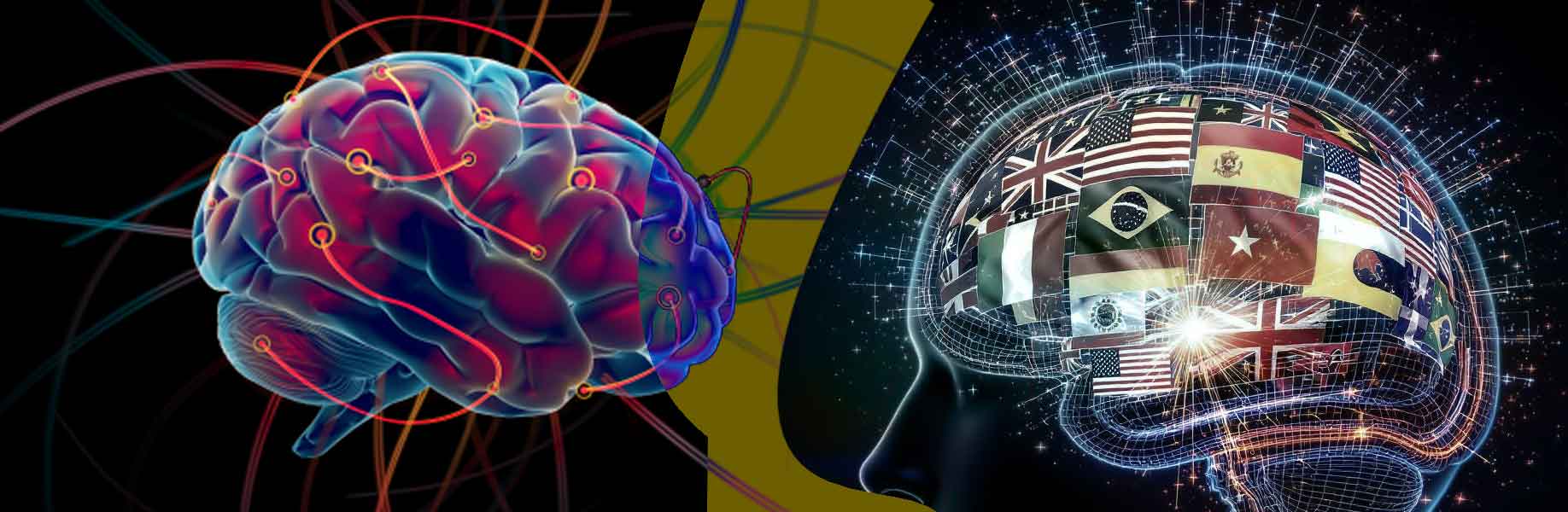
People who use more than one language often notice how the same idea can be expressed in very different ways depending on the words and grammar rules they choose. A recent study published in Cell examined this ability in detail. The work focused on the hippocampus, a brain region important for memory and organizing information, and showed that meaning is handled through a common overall pattern rather than through separate systems for each language.
The researchers recorded activity from hundreds of individual brain cells in four people who spoke both English and Spanish fluently. These recordings took place while the participants listened to stories, read sentences, and talked naturally in both languages. Most brain cells responded in unique ways to each language. A smaller group of cells showed matching activity for words that carried the same meaning, such as the Spanish word for earth and its English equivalent. The key discovery was that the way concepts relate to one another stayed consistent. The spatial arrangement of these relationships in neural activity formed a stable structure across languages.
Shared patterns in the brain
This arrangement, described as shared semantic geometry, means the brain keeps the connections between ideas steady even when the specific cells involved differ by language. Translation does not appear to depend on special cells that function like direct dictionaries. Instead, meaning arises from the combined activity of large groups of brain cells. The same structured pattern was also observed in certain artificial intelligence systems trained on multiple languages, suggesting that both the brain and these systems may follow similar principles for handling meaning across different inputs.
The findings help explain how bilingual individuals move between languages without confusion or interference. They also connect to earlier ideas in language studies that focus on underlying common structures rather than surface differences between cultures. Because the study included only a small number of participants who were undergoing medical procedures, additional work is required to test whether these patterns hold for other language combinations and larger groups of people.