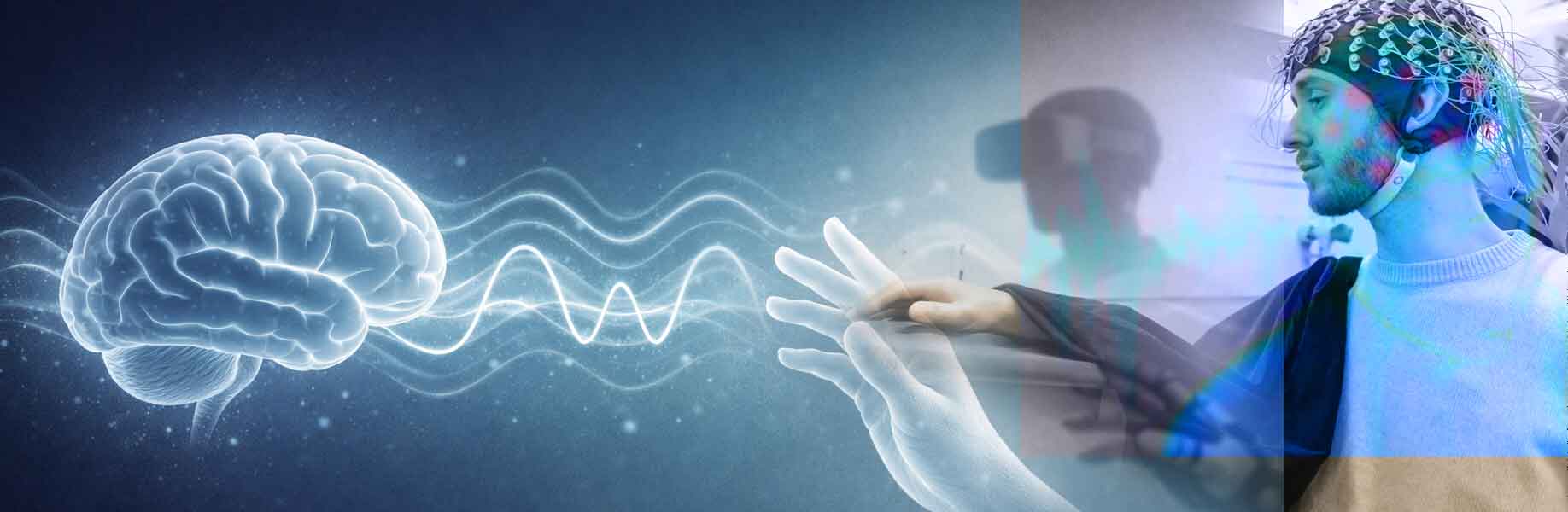

A new study from Karolinska Institutet, published in Nature Communications, explains how rhythmic brain waves called alpha oscillations help the brain tell the difference between our own body and things outside it.
Alpha oscillations are patterns of electrical activity in the brain that repeat at a certain speed. These waves play a key role in combining signals from our senses, like sight and touch, to create the feeling that our body belongs to us, known as the sense of body ownership. Researchers used experiments with 106 people to explore this.
They combined behavior tests, electroencephalography (EEG), brain stimulation, and computer models. In the tests, they focused on the parietal cortex, the brain area that handles sensory information from the body. The results showed that the speed of alpha waves in this area affects how accurately we sense our body as our own.
How alpha waves influence perception
People with faster alpha waves noticed small timing differences between what they saw and felt more easily. This higher temporal resolution, or precision in judging time, led to a clearer sense of body ownership. In contrast, slower alpha waves created a wider temporal binding window, meaning the brain grouped signals that were slightly out of sync as if they happened together.
This made it harder to separate self-related feelings from external ones, blurring the line between body and world. To confirm this, researchers used gentle electrical stimulation to change the speed of alpha waves. Speeding them up improved timing precision and strengthened the sense of self, while slowing them down had the opposite effect.
Computer models supported this by showing how alpha frequency controls the brain's judgment of sensory timing. The findings come from a classic experiment called the rubber hand illusion, where syncing touches on a fake hand and a hidden real hand tricks people into feeling the fake one is theirs. When timing was off, the illusion weakened, especially for those with faster waves. This work could help understand conditions like schizophrenia, where the sense of self is disrupted. It may also lead to better prosthetic limbs, which are artificial body parts, and more realistic virtual reality experiences by improving how sensory signals are integrated.