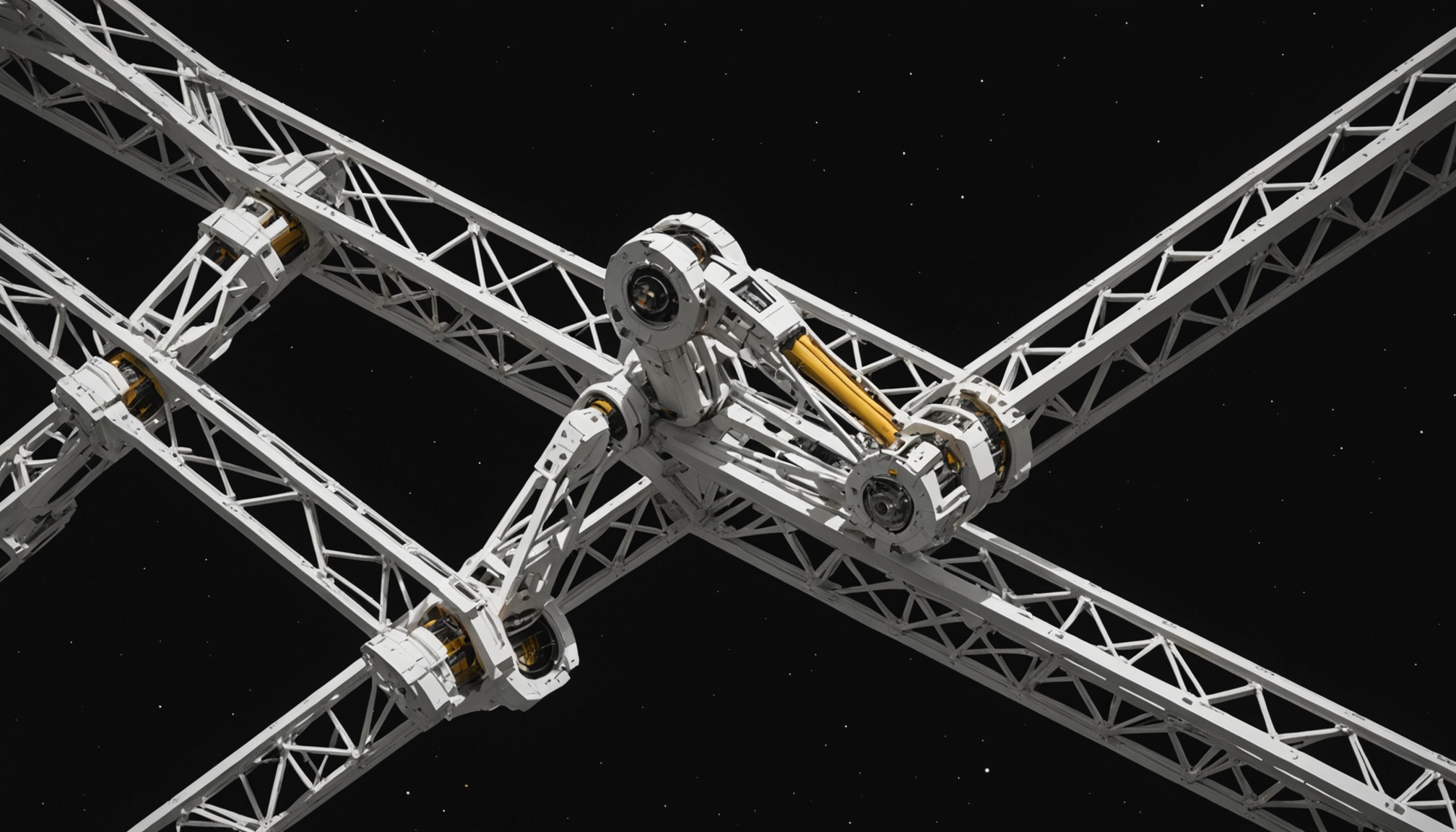


For the first time, a robot has built a structure in space without help from astronauts. The machine, called ASTRA, was designed and built at Caltech and funded by the US Defense Advanced Research Projects Agency (DARPA), according to a Caltech report. A robot arm picks tubes and connectors from dispensers and joins them into identical sections, called bays, of a truss, a light framework of beams. The goal was to assemble a 1.4-meter-wide reflector antenna from composite fiber tubes, aluminum joints, and a thin reflective film.
ASTRA launched on March 30. The payload, about one cubic meter in size, carried two prebuilt bays. In orbit, the team released the launch restraints, pushed out the two bays, and commanded the robot to build a third. Ground crews could reach the craft only during seven or eight 15-minute windows each day, so engineers reproduced each problem on a spare unit in a Caltech lab before sending up fixes.
A third way to build big structures in space
Until now, large space structures had to be folded for launch and unfolded in orbit, or carried up in pieces and assembled by hand. Both are limited by the size of the rocket fairing, the shell that protects cargo during launch. DARPA's NOM4D program, started in 2022, is testing a third option: shipping raw materials from Earth and manufacturing structures in orbit. ASTRA's full design calls for 11 bays forming a ring that holds the reflective surface, a concept the team says can scale to much larger trusses.
The mission ends in December, and the team does not expect to finish all 11 bays. Even so, the researchers say the demonstration proves the assembly concept works, although the design must be simplified. The reflective surface is a perforated film co-invented with the University of Pennsylvania; it needs less tension than the metal mesh normally used in such reflectors, allowing lighter structures.
This matters because many future instruments, from giant space telescope mirrors to large radio antennas and the huge solar arrays needed for space solar power, are too big to fit inside any rocket. Caltech has already tested parts of that vision in orbit. Showing that a robot can assemble large structures in orbit gives these ideas a practical path forward.