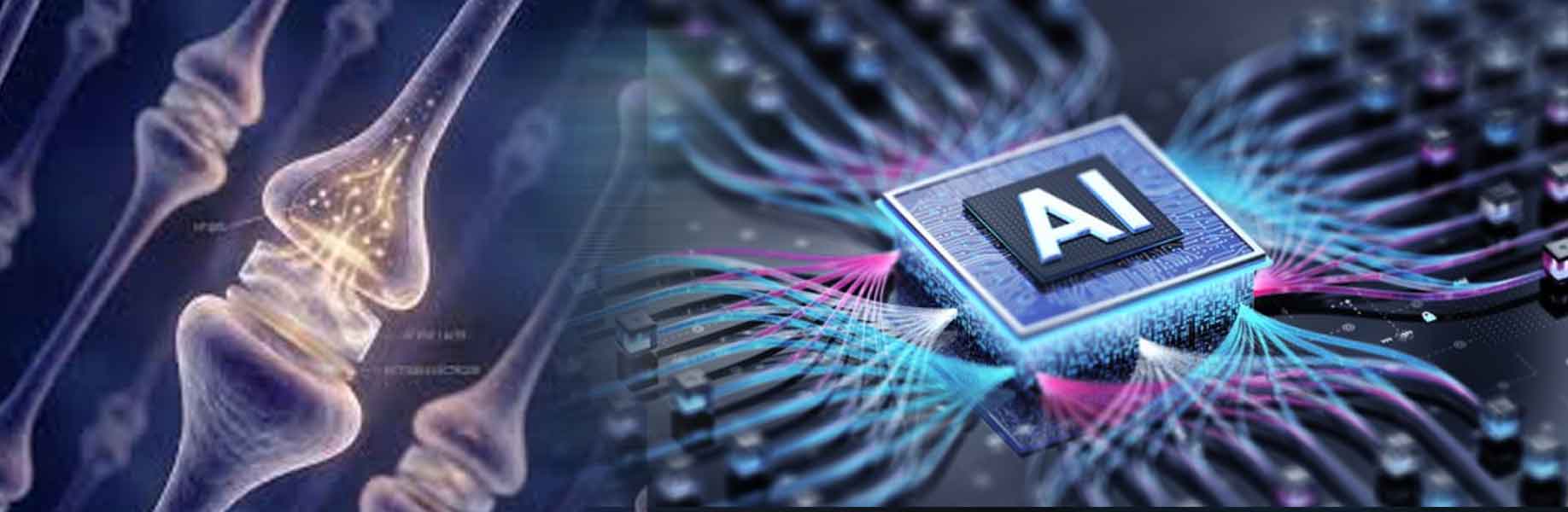

Scientists at DGIST have created the world's first artificial intelligence (AI) semiconductor that uses hydrogen to perform both computation and memory storage at the same time. This addresses a key limitation in current computers, where separate parts for processing data and storing information cause slower speeds and higher energy use.
Neuromorphic semiconductors are chips that copy how the human brain works. They handle calculations and remember data in the same place. At the center of such chips sits an artificial synapse. This component changes its ability to let electricity flow based on signals and keeps that change for memory, much like connections between brain cells.
Instead of using oxygen defects as in older memory devices, the researchers focused on hydrogen ions. They developed a method to inject or remove these ions using electric fields for more stable and uniform performance.
A major design advance
The device uses a two-terminal vertical structure for the first time with hydrogen control. This simple stacked setup has electrical connections only at the top and bottom. It allows many devices to be packed closely together, making it suitable for high-density future chips. No previous work had successfully managed hydrogen movement in this vertical format for artificial intelligence operations.
The new semiconductor remained stable through more than 10,000 operation cycles and kept its memory state over long storage periods. It also showed gradual changes in conductivity, allowing learning and memory functions similar to those in the human brain.
The researchers noted that this introduces a new way to change electrical resistance using hydrogen movement, different from traditional approaches. Their work on controlling hydrogen between stacked layers could reshape future artificial intelligence hardware toward lower power consumption and higher efficiency.
The scientists have described the methods and results of this study in a paper published in ACS Applied Materials & Interfaces.