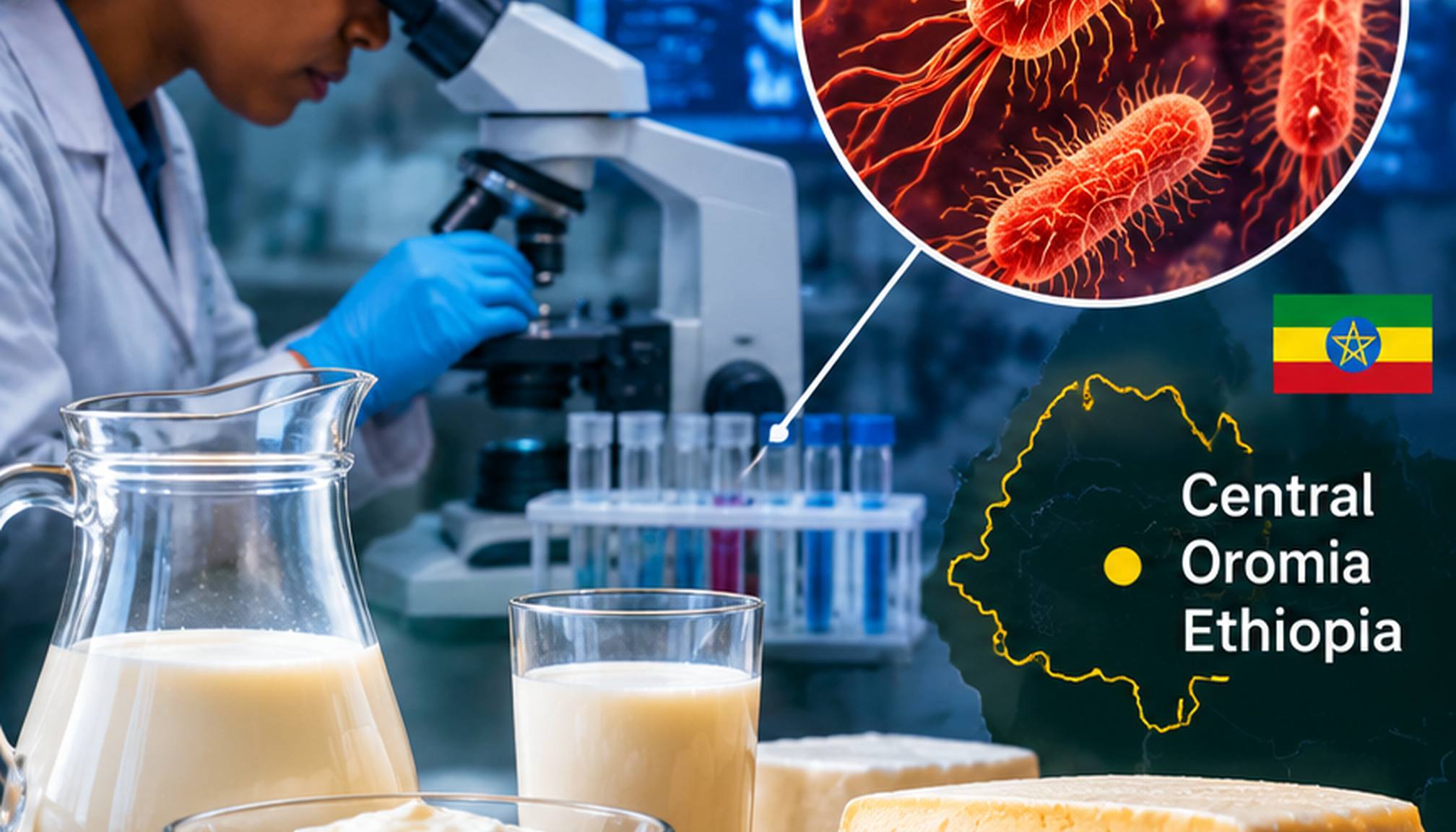

Ethiopian researchers have identified substantial antibiotic resistance among Salmonella enterica bacteria recovered from dairy products in Central Oromia, raising concerns about food safety and the effectiveness of commonly used antibiotics.
The study, published November 21 in Scientific Reports, analyzed 71 previously archived bacterial isolates from raw milk, pasteurized milk and cottage cheese.
Researchers from the Ethiopian Institute of Agricultural Research and Addis Ababa University identified several Salmonella serotypes, including Heidelberg, Enteritidis and Typhimurium.
Laboratory testing against 12 antibiotics revealed resistance to ampicillin in 60.6% of the isolates and tetracycline in 59.2%. Resistance to ciprofloxacin, an important antibiotic used against bacterial infections, was detected in 15.5%.
More concerning, 48.4% of the successfully serotyped isolates showed multidrug resistance, meaning they resisted several classes of antibiotics.
The findings add to global concerns about antibiotic-resistant bacterial infections and the search for alternative approaches to controlling resistant microorganisms.
Researchers emphasized the need for better dairy hygiene, responsible antibiotic use and regular surveillance.
Because the analysis used archived isolates rather than a new representative consumer survey, its resistance percentages should not be interpreted as the prevalence of contaminated dairy products across Oromia.