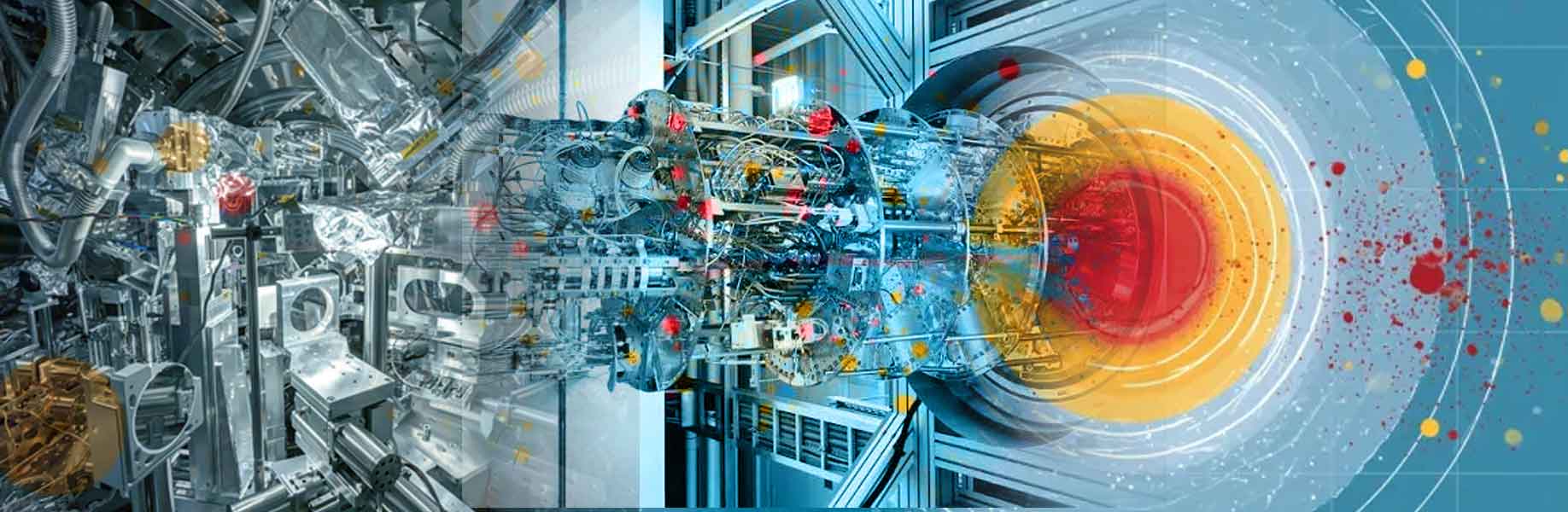

High-precision experiments have shown that the models most scientists use to describe electrons in warm dense matter do not give correct results. Warm dense matter is a state where a material is both very hot and squeezed to high pressure. It is hard to study but important for understanding what happens inside planets, how materials behave under stress, and efforts to produce energy through laser fusion. In the work, researchers squeezed a thin foil of aluminum with a powerful laser until it reached very high oressure and temperature. Then they sent very short X-ray pulses through it. These X-rays scattered in a way that revealed the collective movements of electrons, which are called plasmons. The scattered X-rays created patterns that could be compared with predictions from theory.
The common simple models, which treat electrons as if they form a uniform gas, predicted plasmon energies that were as much as 25 percent too high. They also could not match the full shape of the measured signals. Because these models are used to work out other properties such as how opaque the material is or how well it conducts electricity and heat, errors in the models lead to wrong ideas about the extreme conditions.
Better calculations match the observations
Computer simulations that use a method called time-dependent density functional theory gave results that agreed with the measurements. This approach calculates in detail how electrons respond when atoms sit in the irregular positions found in a hot compressed liquid. It takes more computing time than the simple models but has become practical. The improved match shows that the real positions of atoms and the ways electrons interact with them matter a great deal once the material enters this extreme state. Even aluminum, often seen as a basic metal, does not follow the simple uniform picture when it is this hot and squeezed. The same experimental approach, which combined X-ray scattering with other checks on the material state at the same time, can be applied to different substances and to higher temperatures. This could improve knowledge of conditions inside planets and of the fuel targets used in laser fusion work.
This research is published in Physical Review Letters.