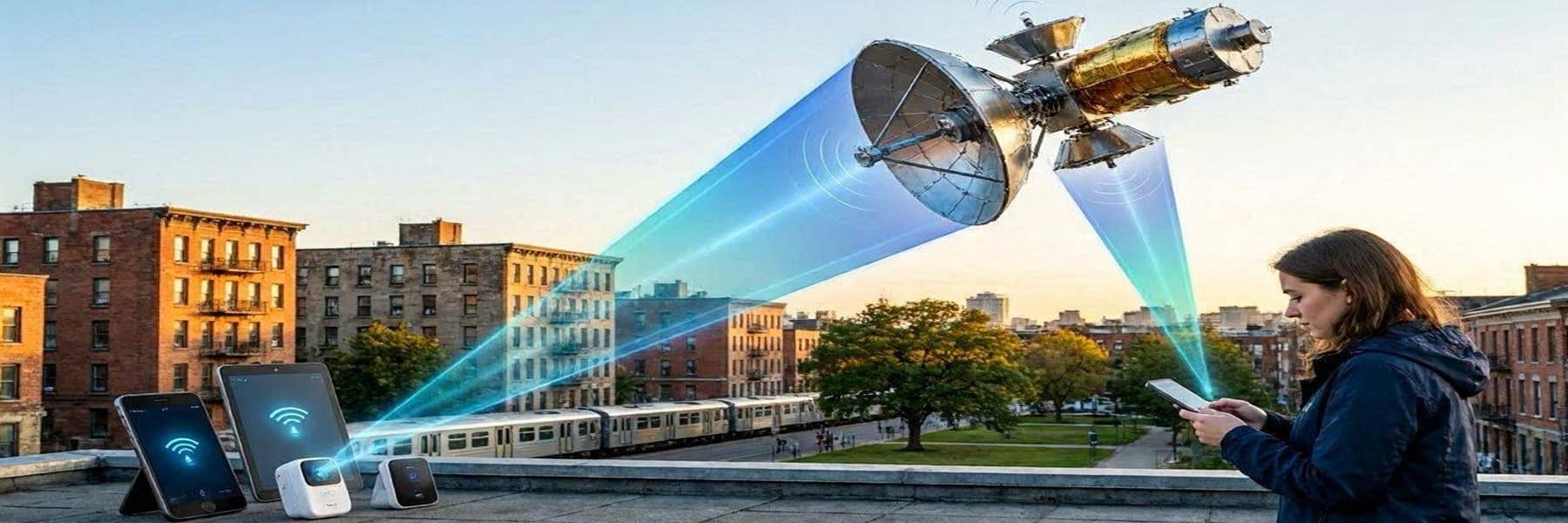

The Federal Communications Commission is preparing to consider whether Wi-Fi, Bluetooth and other unlicensed devices could connect directly to FCC-authorized satellites, a proposal that could extend connectivity beyond terrestrial network coverage.
FCC Chairman Brendan Carr said he will ask the commission to explore direct-to-device rules at its August open meeting. The proposal would examine connections to unlicensed devices on either the uplink or downlink, and would also consider allowing those devices to operate in space, including between spacecraft.
The proceeding would examine more than 225 MHz of unlicensed spectrum. It would also seek to clarify whether equipment authorized under the FCC’s Part 15 rules can be used within authorized spacecraft. Part 15 governs unlicensed equipment such as Wi-Fi and Bluetooth devices and aims to limit harmful interference. Carr said the effort could support connectivity in “dead zones” and encourage new products without requiring users or device makers to obtain spectrum licenses. His office describes the initiative as complementary to existing direct-to-device services that rely on licensed spectrum.
That distinction is important. SpaceX, AST SpaceMobile and Amazon are among companies developing or offering direct-to-device systems that use licensed spectrum. The FCC proposal would not create an immediate consumer service. If commissioners approve the notice, it would proceed through public comment and reply periods before any final rules are issued.
The question now is whether unlicensed spectrum can deliver useful satellite connectivity without disrupting established services. The FCC’s upcoming vote begins that regulatory test, rather than resolving it.