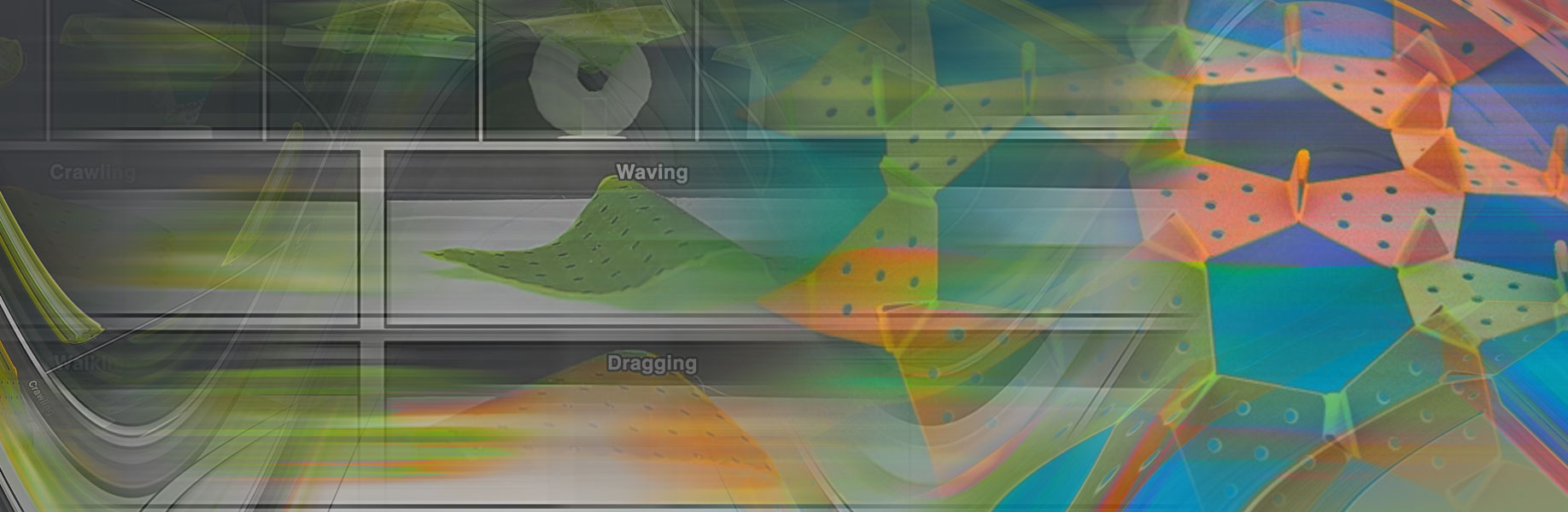

Researchers have invented a new kind of robot called metabots. These robots start as flat sheets of plastic with holes. They have no motors. Yet they can snap into hundreds of different shapes to move or grab things. The sheets look like animated plastic that crawls or jumps on a surface.
The key is thin films added to the plastic. These films act as actuators that change shape when triggered. Some respond to electricity. Others react to magnetic fields. This lets researchers control the sheet from far away. For example, an electric current makes the sheet bend.
By joining several sheets together, the robot gets more options. One example uses four sheets. It lies flat like paper at first. Then it folds into 256 stable shapes. Stable means the shape holds without extra effort. A video shows these robots in action.
Versatile movement without complex parts
The metabots move in many ways. They jump or crawl at different speeds. They change shape to fit rough ground. They also grip and lift objects. Adding piezoelectric materials gives more control. Piezoelectric materials make vibrations when electricity flows through them. By changing the voltage and frequency, researchers make the robot turn left or right in place.
This design is cheap to make. It uses simple materials. The robots adapt easily to new tasks. Researchers bridged two fields here. Metamaterials are man-made materials with special patterns for unique traits. This work joins metamaterials and robotics for flexible robots.
The study proves the idea works. "This is early-stage, proof of concept work, but it demonstrates that this approach to robotics is both inexpensive and highly adaptable," say the researchers in a press release. “Our goal was to bridge metamaterials and robotics, and we think the results are promising.”
This opens doors for low-cost robots in tight spaces or dangerous areas. Future versions could explore buildings after disasters or handle small repairs. The researchers have described the methods and results of this study in a paper published in Science Advances.