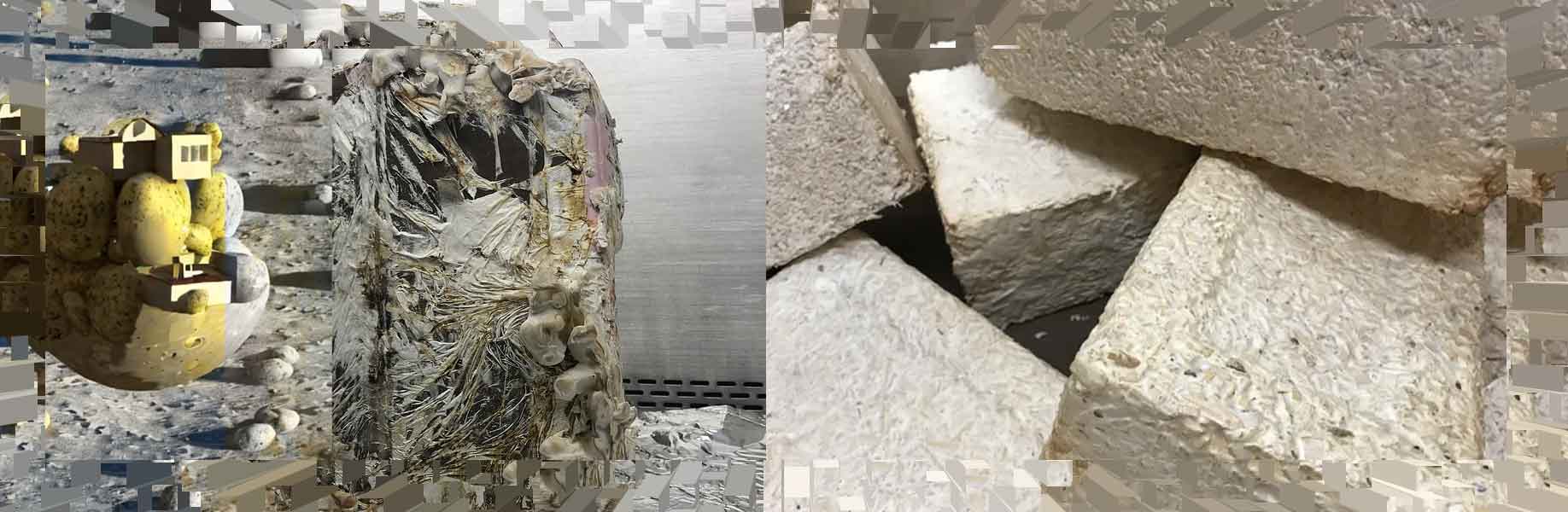

The University of North Carolina (UNC) at Greensboro will lead a NASA-funded project. The work examines whether fungi can be grown into construction materials for the moon and Mars. The aim is to use resources already present on those bodies instead of shipping heavy supplies from Earth.
Regolith is the loose rock and soil that covers the surface of the moon and other planets. Researchers plan to mix selected fungi with regolith and a simulation of human waste. Fungi are living organisms that feed on dead matter. They spread by forming dense networks of thread-like structures called hyphae. These hyphae can bind regolith particles into a firm composite. The material can later be sterilized and pressed into shapes similar to bricks.
Building on the Moon and Mars with biology
This approach uses in-situ resource utilization, a method that relies on materials found at the construction location to lower costs and simplify space missions. The project focuses on shelf fungi and related species. These types are chosen for their natural rigidity, like the strong, step-shaped growth sometimes seen on forest trees.
The university laboratory provides knowledge from mycology, the scientific study of fungi. Scientists there will determine which species grow effectively and create solid links with the regolith. Luna Labs, a company skilled in materials testing, will measure the strength and compression limits of the finished composites. Astronauts will need to recycle resources as much as possible in space, and the research explores whether fungi can turn limited local supplies into practical building items.
The effort is at an early stage. It supports NASA’s Artemis program, which plans permanent lunar bases before 2040. These moon activities will prepare the way for human missions to Mars expected within the next 20 years. Such biological methods may become important for sustainable living far from Earth.