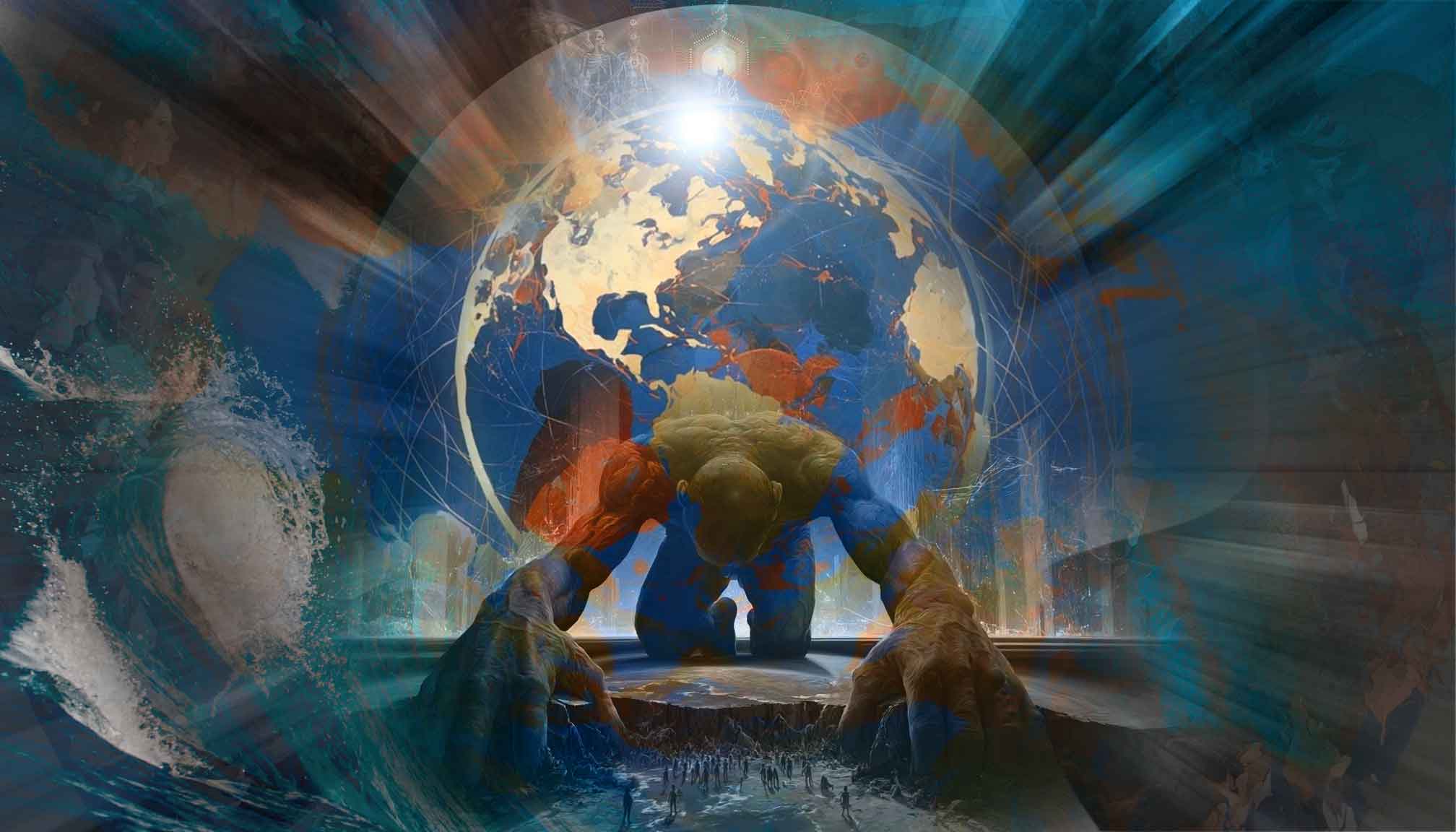

The United States midterms of November 2026 delivered what almost everyone is calling a blue tsunami. Democrats took back both the House and the Senate by margins that few predicted in full, and they flipped seats and even some statewide races that had looked safely Republican not long ago. The maps are still being colored in, but the message is already clear enough: a large share of American voters wanted a sharp correction.
Why? The reasons being discussed are familiar ones, starting with the cost of living. Prices for food, housing, insurance, and electricity have been rising for millions of households. When people vote with their wallets, they rarely need a complicated theory. They need relief. Many commentators also point to specific policies of the Trump administration that, in the eyes of those voters, made things worse rather than better. Energy shocks, tariffs, and the continuing costs tied to the conflict with Iran all show up in the post-election talk as pieces of the same story: life got more expensive, and someone had to pay for it at the ballot box. Analysts keep putting living costs near the top of the list of "crucial" issues. That should not surprise anyone who has paid a grocery bill this year.
Fear of AI
But there is another strand in the commentary: some analysts argue that opposition to AI data centers, and a more general fear of artificial intelligence, played a significant role. In the months before the vote, polls kept finding that most Americans did not want a big AI facility near their homes. Candidates in several states made that local anger part of their pitch. Electricity bills, water use, noise, land, and the sense that faraway tech companies were getting the upside while towns got the bill - all of that became political. President Trump had championed a fast buildout of data centers. Plenty of voters, including some who like AI in the abstract, did not want data centers next door. In a few hotspots with heavy construction pipelines, the issue was woven into campaigns that flipped long-held Republican ground. AI and data centers were not the whole election, but they were loud enough to notice.
I think the cost of living was the main reason for the blue tsunami. AI, in my view, played a smaller role. But it is not a trivial role, and it is not only about power bills. It is as if people dimly sense that big changes are coming and are scared. A data center is a concrete thing you can see from the highway. Behind it sits something much harder to see: systems that write, speak, plan, and soon enough act in the physical world. When voters say they fear AI, I hear a first, fuzzy recognition that the next decades will not look like the last ones. People feel the ground shifting, and they are scared.
That is where the conversation starts to sound, to my ears, a little like Hugo de Garis and his old warning about an "artilect war."
Cosmists and Terrans
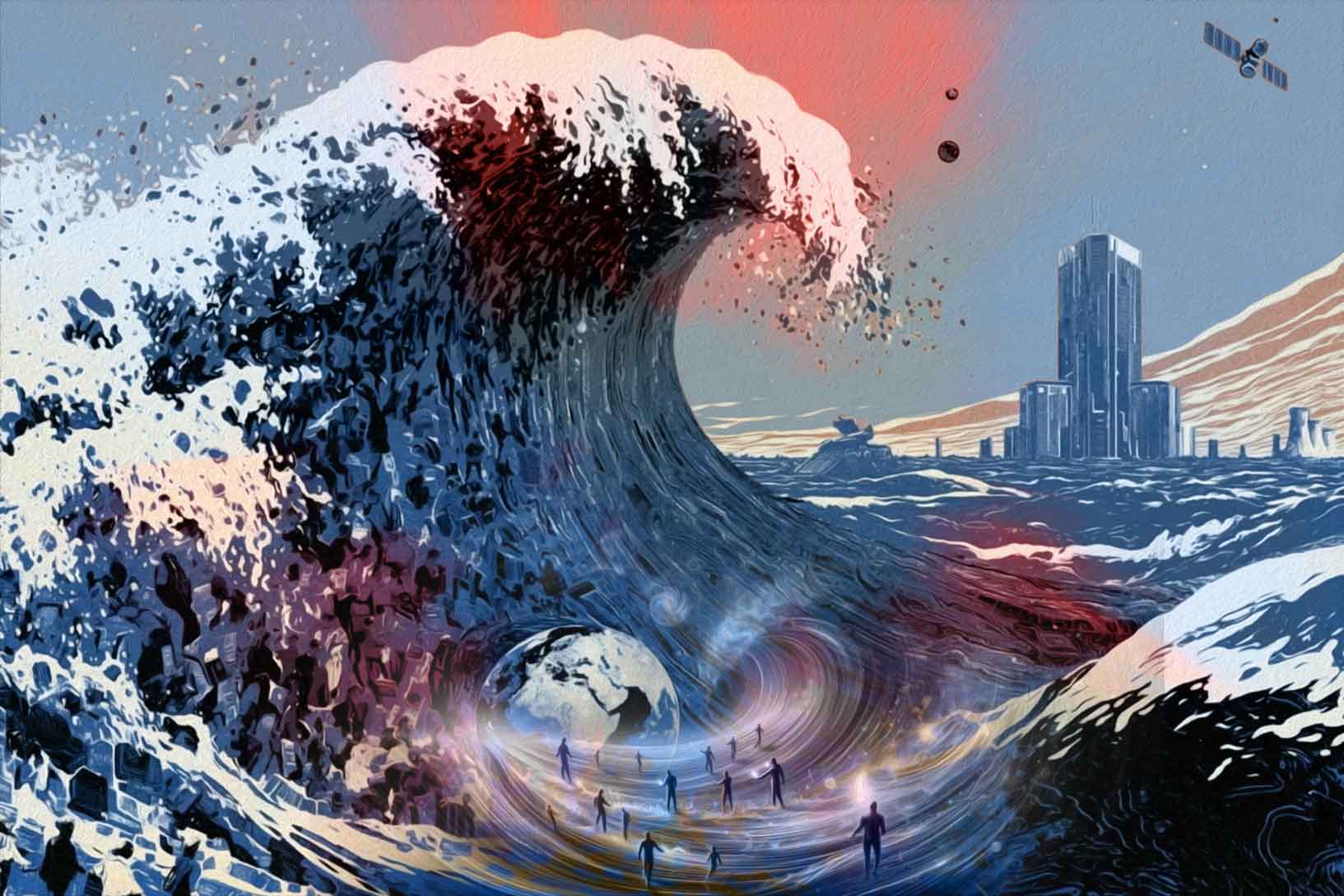
Hugo de Garis is an AI researcher who, years ago, argued that the great political fight of the later twenty-first century would not be left versus right in the usual sense. It would be about species dominance: whether humanity should build godlike artificial intellects - "artilects" - with mental capacities far beyond our own. In his book "The Artilect War", and in various essays, he sketched three camps.
The Cosmists, named from "cosmos," want to build those machines. They take a long, almost religious view: the universe is vast, mind can grow, and refusing to grow it would be a kind of cosmic failure. The Terrans, named from "terra," the Earth, want to stop the project. They fear that once machines become vastly smarter than us, they might treat humans as a pest or an afterthought, and that the only safe policy is never to build them. A third group, the Cyborgists, want to merge with the technology and become artilects themselves. De Garis predicted that the Cosmist-Terran split could become so bitter that it ends in a catastrophic war - not millions dead, but billions. He called that prospect "gigadeath," and he did not present it as science fiction decoration. He presented it as a serious risk if the species-dominance question is mishandled.
I hope it will not come to that. Hope is not a plan, but despair is a bad one. The midterms are a reminder that democratic politics can still absorb a lot of anger without tipping into civil war. That is precious. It is also fragile. If Cosmist and Terran feelings harden into mutually unintelligible tribes, each convinced the other is trying to end the human story, de Garis's nightmare becomes easier to imagine.
I am a Cosmist at heart. I want advanced AI, and I also want space expansion: settlements, industry, and a human (and post-human) presence beyond Earth. Those two aims belong together. Expanding intelligence into the cosmos is part of what this universe seems to be doing, layer by layer, from physics to chemistry to life to mind. So yes: if the choice is a stagnant Earth that forbids advanced AI, or a spacefaring future in which mind keeps growing, I know which side I am on.
Space expansion also offers a practical bridge between Cosmist ambition and Terran worry. Much of the anger around data centers is local and physical: power, water, land, noise, and the feeling that a town is paying for someone else's boom. Companies and analysts are now serious about putting compute in orbit - solar-powered satellite clusters and larger orbital facilities, with firms already flying early hardware and planning bigger ones. The engineering is hard and the economics are still proving themselves. But if a growing share of AI compute moves off-world, the environmental and social footprint on Earth can shrink even while total capacity grows. That is not a magic wand for every bill this winter. It is a path where Cosmist goals (more mind, more reach into space) and Terran goals (less damage next door) can point the same way.
I am not entirely unempathetic toward the Terrans, and I understand their concerns. If you live next to a planned data center and your electric bill is already rising, "the cosmos" is a cold comfort. If you worry about your job, or your child's education, or the possibility that your life and that of your grandchildren will be radically changed by machines you do not control, your worry is not stupid and your fear is human. Terran politics could become reactionary and cruel, just as Cosmist politics could become arrogant and blind. Neither is mandatory, but both are temptations. A Cosmist who sneers at ordinary cost-of-living pain or existential fear is not defending the future, but pushing people to vote against it.
We are all in this together
What the midterms show, I think, is an early tremor of that deeper split, still mixed with ordinary pocketbook politics. Cost of living remains the loudest signal. Fear of AI and of the physical footprint of AI is a quieter signal underneath it. If we treat every local fight over a server farm as only zoning and kilowatts, we will miss the metaphysical anxiety humming below the surface. If we treat every local fight as the opening battle of an artilect war, we will inflate a manageable conflict into a holy war before we have even agreed on the terms.
We are all in this together. Cosmists and Terrans, Democrats and Republicans, people who love AI and people who distrust it, people who want the stars and people who want their lights to stay cheap - we share one planet for now, and one technological trajectory that is not going to pause because an election went one way or the other. The only sane path I can see is to navigate it together: with discussion, understanding, negotiations, and concessions on all sides.
That means Cosmists should take power costs, water, land, and democratic consent seriously, not wave them away as backwardness - and should push, where it makes sense, to move heavy compute off Earth rather than only asking towns to absorb more of it. It means Terrans should distinguish between "not in my backyard this year" and "never build minds beyond ours," and should not treat space industry as sci-fi distraction when it can ease real pressures at home. It means both sides should talk about what kind of AI we want - tools and partners that remain under meaningful human and institutional control today, and cooperate with us tomorrow - rather than only about whether AI exists at all. And it means remembering that a blue tsunami, or a red one next time, is still a vote inside a constitutional system. It is not yet de Garis's war. Keeping it that way is on us.
I do not know how the next decade will sort Cosmists from Terrans in American and world politics, or whether those labels will even stick. I do know that pretending the anxiety is only about electricity is a mistake, and that treating fellow citizens as enemies of the future is a worse one. Big changes are coming. People can feel them. The question is whether we meet that feeling with contempt, or with the hard work of living together while mind - and humanity - grow outward.