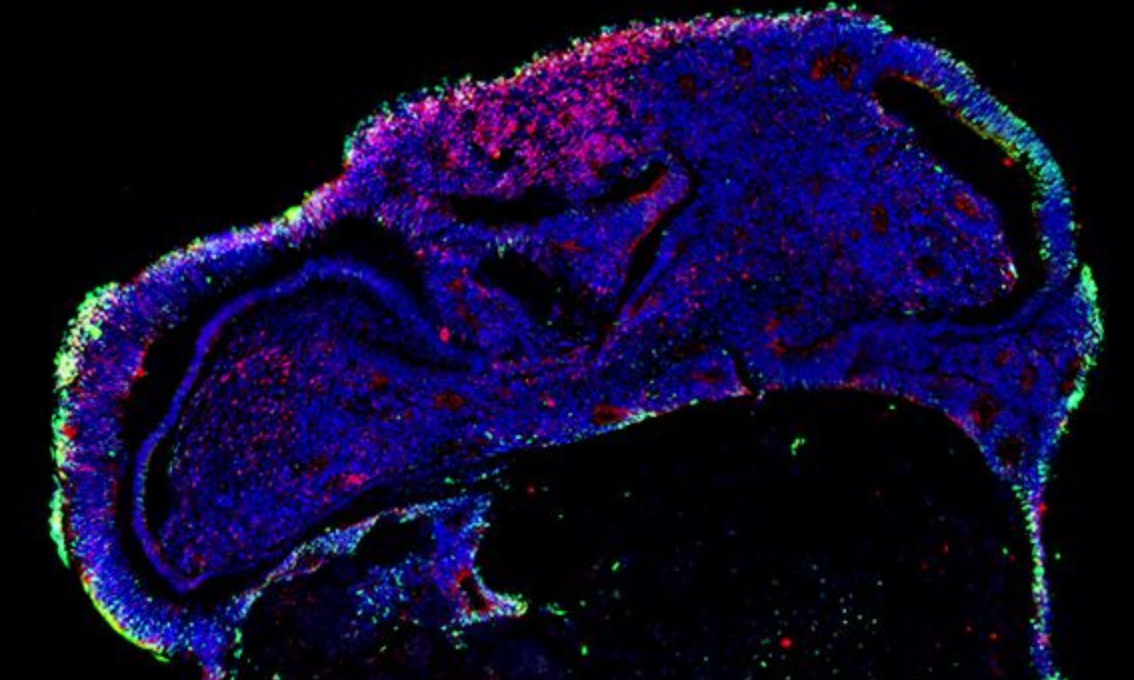

USC scientists have pioneered a novel human brain organoid model that generates all the major cell types of the cerebellum. This a hindbrain region predominantly made up of two cell types necessary for movement, cognition, and emotion: granule cells and Purkinje neurons.
This marks the first time that scientists have succeeded in growing Purkinje cells, which possess the molecular and electrophysiological features of functional neurons in an all-human system.
The cerebellum controls movement and plays important roles in cognitive functions, including language, spatial processing, working memory, executive functions, and emotional processing.
Targeting conditions like autism and ataxia disorders
Degeneration of Purkinje cells is associated with various neurodevelopmental and neurodegenerative disorders, including autism spectrum disorder and cerebellar ataxia, a condition that affects muscle movement.
Other neurons within the organoids—both excitatory neurons that share information, and inhibitory neurons that inhibit the sharing of information—formed circuits and showed coordinated network activity, demonstrating that they were also functional nerve cells.
These breakthroughs in organoid-directed brain modeling have been published recently in the journal Cell Stem Cell.
New treatments for brain tumor, other diseases
The organoid model creates a platform for discovering new treatments for variety of diseases. Organoids form human-specific progenitor cells, which are associated with medulloblastoma, the most prevalent metastatic brain tumor in children. This makes the organoids a potentially useful model for studying and finding treatments for this pediatric cancer.
This project was funded by the Robert E. and May R. Wright Foundation, The Eli and Edythe Broad Foundation, and the Edward Mallinckdot, Jr. Foundation.
Citation: Alexander Atamian et al. 2024. Human cerebellar organoids with functional Purkinje cells. Cell Stem Cell. DOI: https://doi.org/10.1016/j.stem.2023.11.013 (open-access)