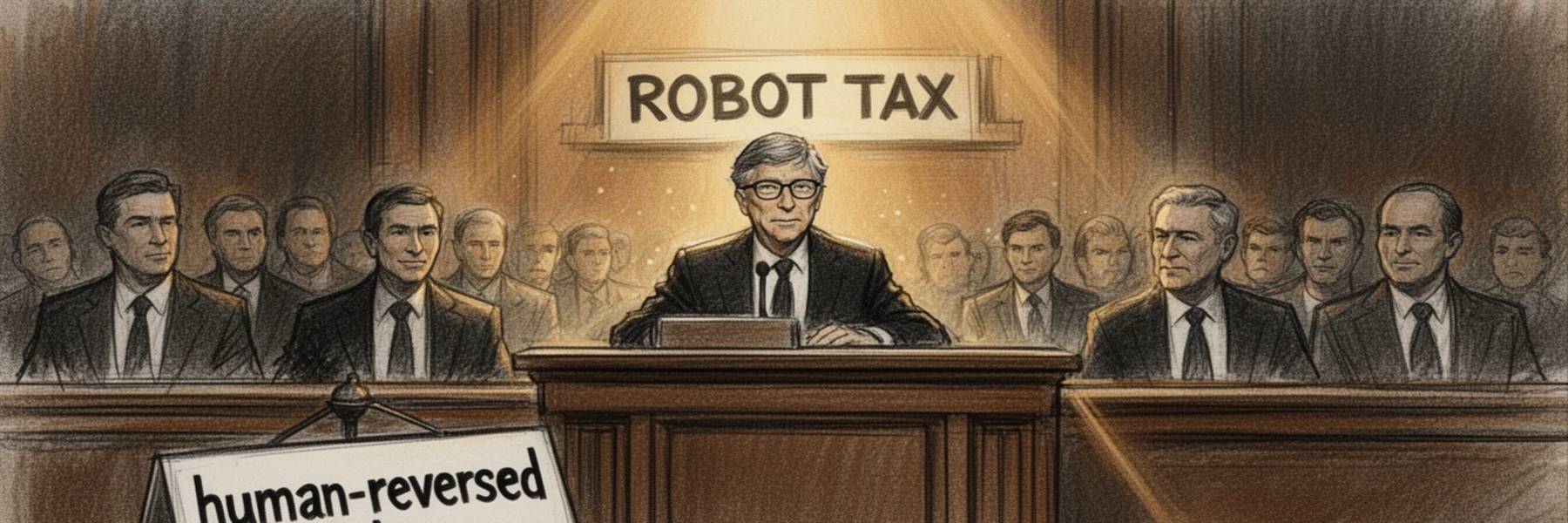

Bill Gates has proposed a “robot tax” and the creation of “Human Reserved” jobs as governments grapple with the increasing impact of artificial intelligence on employment. In a lengthy essay published on his Gates Notes website, Gates explored how AI could reshape society, underscoring its potential to speed up progress in science and healthcare while warning that automation could leave millions of workers vulnerable.
Gates argued that the current tax system encourages businesses to replace humans with machines. Employers typically pay payroll taxes when hiring workers, while robots and AI systems can often be treated as business expenses. He suggested imposing a tax on robots to slow the shift away from human labour while generating revenue that could fund worker retraining and stronger social safety nets. His second proposal is the creation of “Human Reserved” jobs assumed to be roles or tasks where AI and robots would be restricted or prohibited. Gates stated several occupations could be protected because replacing workers would cause economic turmoil, particularly for older employees who may struggle to transition into entirely new careers. He also suggested that some jobs should remain human-led for emotional or ethical reasons. For example, delivering the news of an incurable disease. The ideas come as governments and tech firms argue over the rapid adoption of technology and how workers can be protected from displacement.
A recent Oxford research study found that Americans remain deeply anxious about AI job displacement and the loss of human control, ranking these as top concerns despite widespread daily AI adoption. A Federal Reserve report also highlighted that while AI investment is accelerating, productivity gains remain modest, and MIT research suggests around 11.7% of the U.S. workforce could be replaced by AI.