

Google DeepMind has introduced Gemini Robotics 2.5, its most capable vision-language-action model to date. A vision-language-action model, or VLA, is an AI system that turns camera images and text instructions directly into robot movements. The new model widens the range of skills a robot can learn and speeds up learning, aiming to move robots out of the lab and into less predictable real-world settings.
The company tested the model on more than 200 distinct tasks, such as serving food with tongs, tying a bow on a gift box, and pipetting a liquid. Compared with earlier baselines, Gemini Robotics 2.5 reached success rates 30 to 100 percent higher depending on the task, while working 20 to 30 percent faster. The release builds on Gemini Robotics 2, introduced earlier this year, which first brought whole-body control to humanoid robots.
From the laboratory to the production line
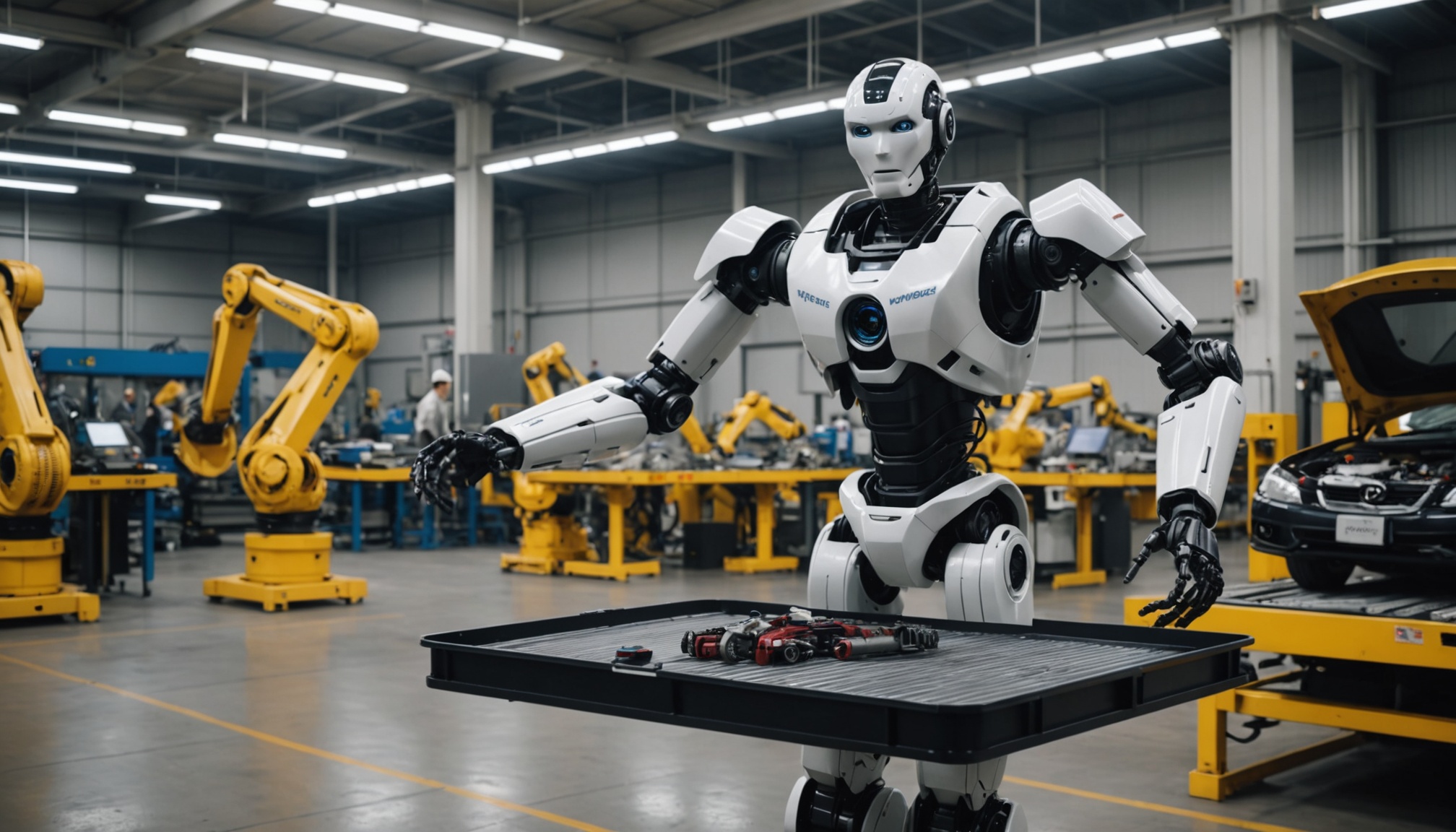
To check reliability outside the lab, DeepMind partnered with robotics company Apptronik and carmaker Mercedes-Benz. Apollo 2 humanoid robots worked on active production lines, sorting parts from bulk bins into trays in the exact order each vehicle needs. A reasoning model tracked the workflow while Gemini Robotics 2.5 controlled the hands and arms, reaching a 96 percent success rate.
Safety also improved. The model uses inference-time reasoning guidance, meaning it reasons while it acts to steer around hazards in real time. DeepMind also introduced a benchmark to test robots against adversarial jailbreaks, attempts to trick the model into unsafe behavior.
Much of the progress comes from Gemini 4 Argon, DeepMind's frontier model, which can generate thousands of simulated practice runs from one real camera scene and build a digital twin, a realistic virtual copy of the environment. This lets robots adapt to new scenes with less physical training data.
This matters because dependable, adaptable robots have been a longstanding goal, and a 96 percent success rate on a live factory line is concrete evidence of progress. Faster skill learning and better safety steering address two of the main obstacles to robots working alongside people in homes, warehouses, and hospitals.