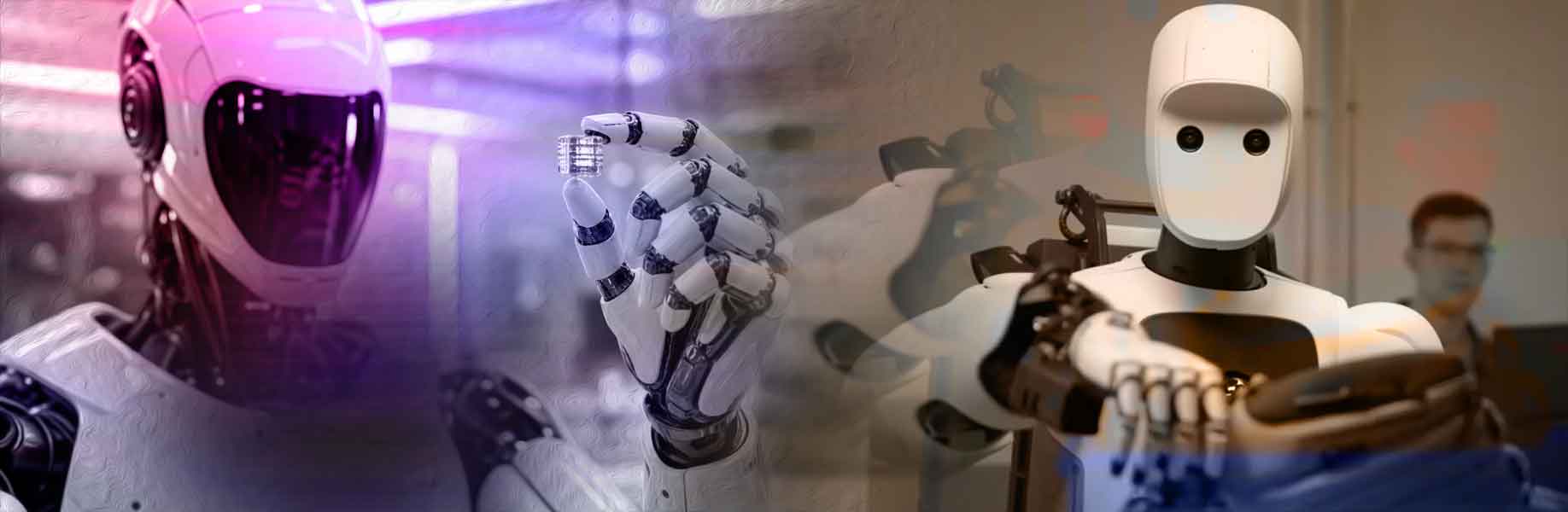

Researchers at Google DeepMind have developed a new system called Gemini Robotics 2, designed to give robots the intelligence to move, reason, and work together far more flexibly than before. Unlike most robots today, which follow pre-set instructions or are steered by a human operator, this system aims to let machines learn on their own and adjust to unpredictable surroundings. The company says the new model lets robots control their whole body, from feet to fingertips, rather than just an upper section for tabletop tasks.
The system is made up of three parts. The main model, called a vision-language-action model (a program that turns what a robot sees and hears into physical movement), lets a robot carry out full-body actions like walking, crouching, and picking things up. A second part, called an embodied reasoning model (a program that helps a robot understand and plan around real-world situations), acts like a high-level planner. It breaks spoken instructions into steps, tracks progress over several minutes, and can even coordinate several robots working on the same task. A third, lighter version of the system runs directly on a robot's own hardware, without needing an internet connection, and can be adapted to new robot bodies within a few hours using a small number of examples.
Practical demonstrations and dexterity
In one demonstration, a humanoid robot made by Apptronik was asked to place a watering can into a bin on a shelf; it walked to the table, picked up the object, and delivered it to the right spot. The system also allows finer hand control, including operating a five-fingered robotic hand with 22 separate joints to tie knots or seal a bag, as well as simpler two-fingered grippers for tasks like tight packing.
Safety was also a focus of the update. The team introduced a new benchmark, a standard test used to measure and compare performance, called ASIMOV-Agentic, which checks whether a robot refuses unsafe commands and asks for human help when uncertain. The developers say the reasoning model is now better at detecting nearby people and stopping safely if someone gets too close, a standard requirement for robots working alongside humans.