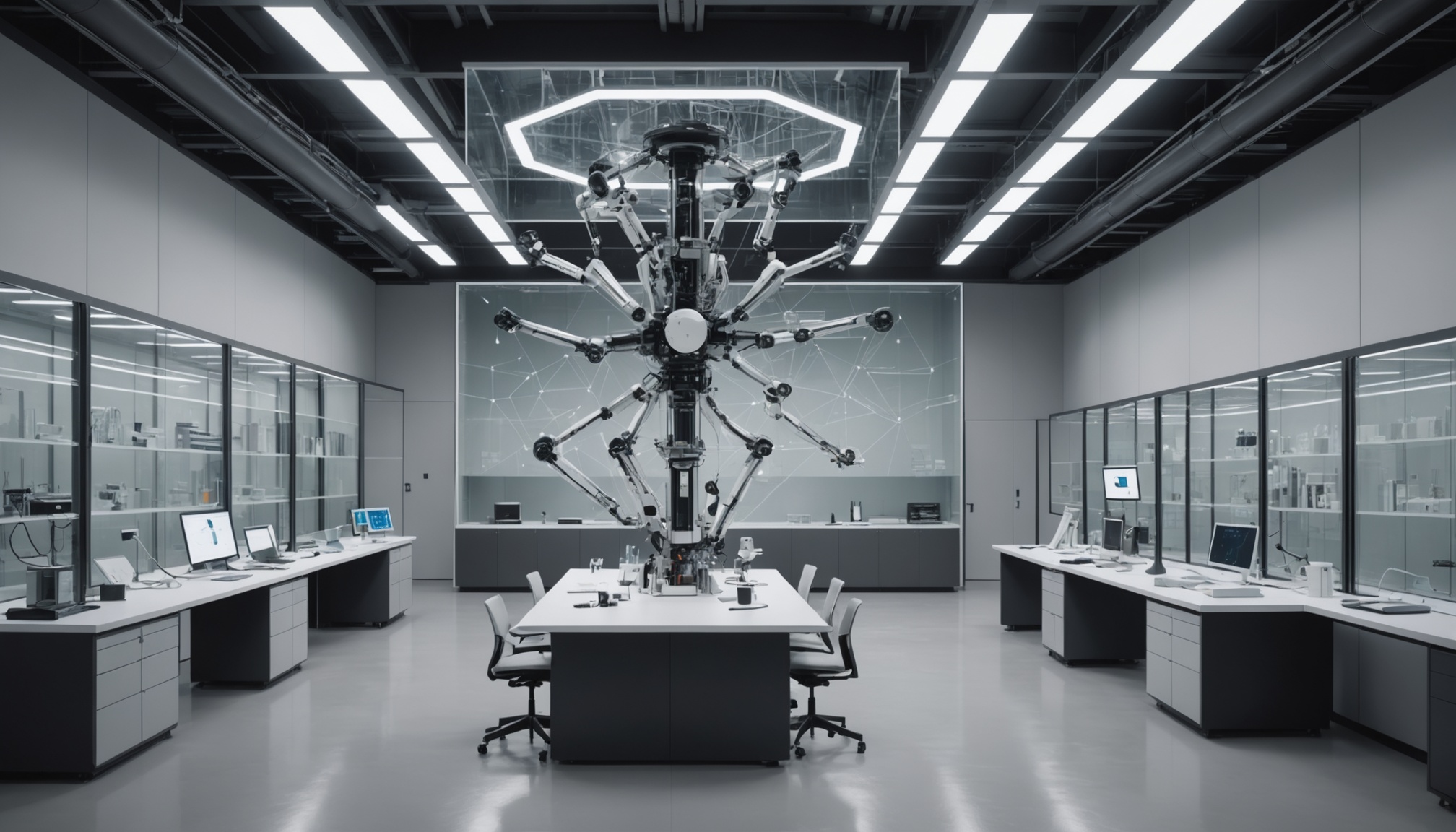


Google Research has developed a system that brings AI agents into physical laboratories, allowing them to design, run, and learn from real wet-lab experiments without human intervention at every step. The work addresses a critical gap in modern biology research: while computational models can explore vast molecular spaces, they cannot replace empirical validation, and traditional lab experiments have become a bottleneck.
The core of this effort is a framework called VERID, which stands for VERified Infrastructure for Discovery Laboratories. VERID, built on top of the open-source PyLabRobot library, acts as a live model of the laboratory that tracks everything from robotic arm positions to well volumes, reagent identities, and pipette tip inventory. The framework bridges the gap between AI agents and the complex, error-prone physical reality of a real biology lab.
Learning from molecules and mistakes
Researchers tested their approach using aptamers, which are short DNA sequences that bind to specific proteins.
The team also applied their workflow to de novo protein binder design, targeting fibroblast activation protein alpha, a receptor overexpressed in solid tumors. By surgically excising just the local binding pocket during computational folding, they accelerated structure prediction more than eightfold. In just a few experimental runs, their top designs produced binders with single-digit nanomolar affinity - a level of tight binding typically achieved only after extensive laboratory optimization.
This research matters because it demonstrates a path toward autonomous scientific discovery where AI agents can navigate complex biological landscapes through direct interaction with the physical world. Rather than being limited to in-silico exploration, agents can now test hypotheses, observe outcomes, and refine their understanding through repeated cycles of experimentation. The safety framework includes simulation before execution, biosecurity screening of designed sequences, and maintained human oversight - essential safeguards as AI systems take on more of the scientific process.