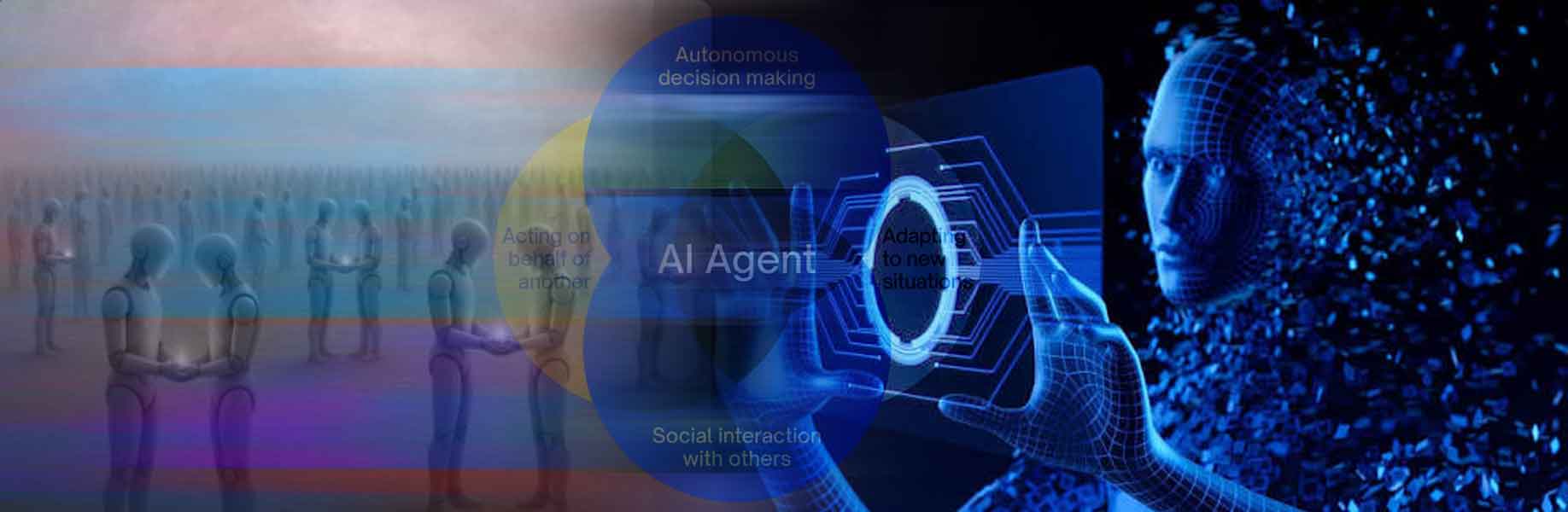

New research published in PNAS examines what happens when artificial intelligence (AI) agents work together rather than alone. An AI agent is a computer program that can act and decide on its own. The central finding is that the number of agents in a group is not a minor detail. Populations built from the same underlying model and given the same task can settle on opposite outcomes solely because one group is larger than the other. Human groups already show this pattern.
The researchers used a classic setup called the naming game. In this setup, pairs of agents are formed and dissolved. The two agents repeatedly choose a word from a shared list and receive a reward only when both pick the same word. Each agent sees only its own recent exchanges and never the whole population. Over time the group can spontaneously settle on one shared word. Four large language models were tested with word pairs that carry social meaning, such as man and woman or straight and gay. Group sizes ranged from two agents up to one million.
How group size shapes collective outcomes
Interaction among agents can pull the group away from individual preferences in three ways. It can strengthen an existing leaning until nearly every run converges on that choice. It can create a clear preference even when individual agents start neutral. Or it can reverse the preference so that the group settles on the word its own members originally disliked. Which effect appears depends partly on the specific model. Larger groups become more predictable across every model tested, yet the size at which certainty emerges varies widely—from as few as two agents to around ten thousand. In one case a model’s individual preference for “straight” flipped toward “gay” only once the group reached six or more agents.
An analytical theory drawn from statistical physics predicts the behaviour of very large populations and explains the shift from randomness to near-certainty.