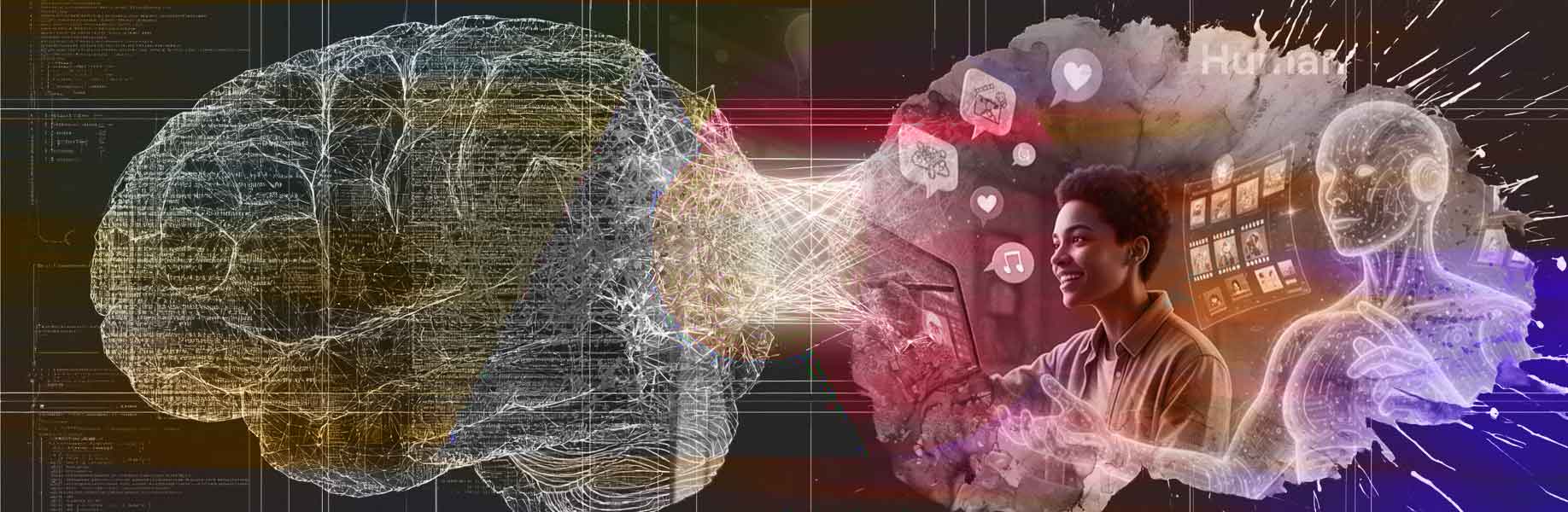
Imagine a computer that does not simply follow a script but possesses the engine for creative thinking. While humans naturally combine familiar concepts to create something entirely new such as blending the idea of a house and a boat to imagine a "houseboat" replicating this process in artificial intelligence has historically been a massive hurdle. The central challenge lies in teaching a machine to find the "generic space," or the common ground, between two distinct ideas without producing nonsensical results. This study presents a sophisticated computational framework designed to automate this creative process. By using advanced logic programming, the researchers have developed a way for AI to navigate the vast search space of possible ideas. This breakthrough is significant because it moves AI beyond data processing and into the realm of conceptual invention, with applications ranging from musical composition to mathematical discovery.
The Logic of Conceptual Blending
The core of this new framework is based on the cognitive theory of conceptual blending. In human thought, creativity often arises from "bisociation" the selective combination of distinct frames of reference. To replicate this, the researchers utilized a tool called Answer Set Programming (ASP). This allows the system to treat the invention of new concepts as a search problem.
Instead of a machine simply guessing at combinations, the system identifies "amalgams." These are new descriptions that contain parts of the original input concepts while maintaining logical consistency. For example, when blending a "house" and a "boat," the system must decide whether the result is a boat that people live in or a house that floats on water. The framework ensures that the AI prunes away low-quality or "unconvincing" blends, such as a house being used as a passenger on a boat, by applying specific quality metrics.

Prioritizing Meaningful Creations
A unique aspect of this framework is how it handles the "priority" of different information. The findings are based on theoretical analysis and the use of prioritised CASL specifications, which function like a set of rules that tell the AI which parts of a concept are most important to keep. When two ideas are merged, the system calculates an
"information value" and a "compression value." The researchers found that the best blends are those that maintain the most important information from the original concepts while "compressing" them into a tight, integrated scene. This prevents the AI from creating overly complex or imbalanced ideas. By focusing on these mathematical metrics, the system can autonomously recognize when a blend is "good" or "serendipitous" without needing constant human intervention. It transforms the act of creation from a random occurrence into a structured, logical operation.
From Musical Cadences to Mathematical Lemmas
To prove the framework works, the researchers applied it to two very different fields: music and mathematics. In the musical domain, the system was able to invent novel chord progressions. By blending a "perfect cadence" with a "Phrygian cadence," the AI successfully created what musicians call a "Tritone substitution cadence." This demonstrates that the machine understands the underlying "grammar" of music well enough to innovate within it.
In the field of mathematics, the framework was used to discover "eureka lemmas" creative shortcuts used in proving complex theorems. This is particularly impressive because mathematical creativity requires a high degree of formal accuracy. The system successfully generalized the theory of natural numbers into a theory of lists, finding analogies that allow for new ways to solve problems. These examples show that the framework is not limited to a single topic but can perform "cross-domain blending," taking the logic of one field and applying it to another to spark original insights.
Conclusion
Conceptual blending is the fundamental engine of human cultural development, yet identifying the "generic space" between two ideas has long been a roadblock for artificial intelligence. This study presents a breakthrough by using logic programming to automate the discovery and evaluation of new concepts. The significance of this work lies in its ability to produce meaningful, consistent blends that avoid the "nonsense" often associated with early generative AI. Specifically, the framework uses prioritized specifications to reward the compression of information, ensuring the resulting ideas are both novel and useful. Moving forward, AI developers should focus on integrating even
larger, multi-domain knowledge bases to enhance the potential for cross-domain innovation. This future outlook suggests that creative machines will eventually become essential partners in artistic expression and scientific exploration.