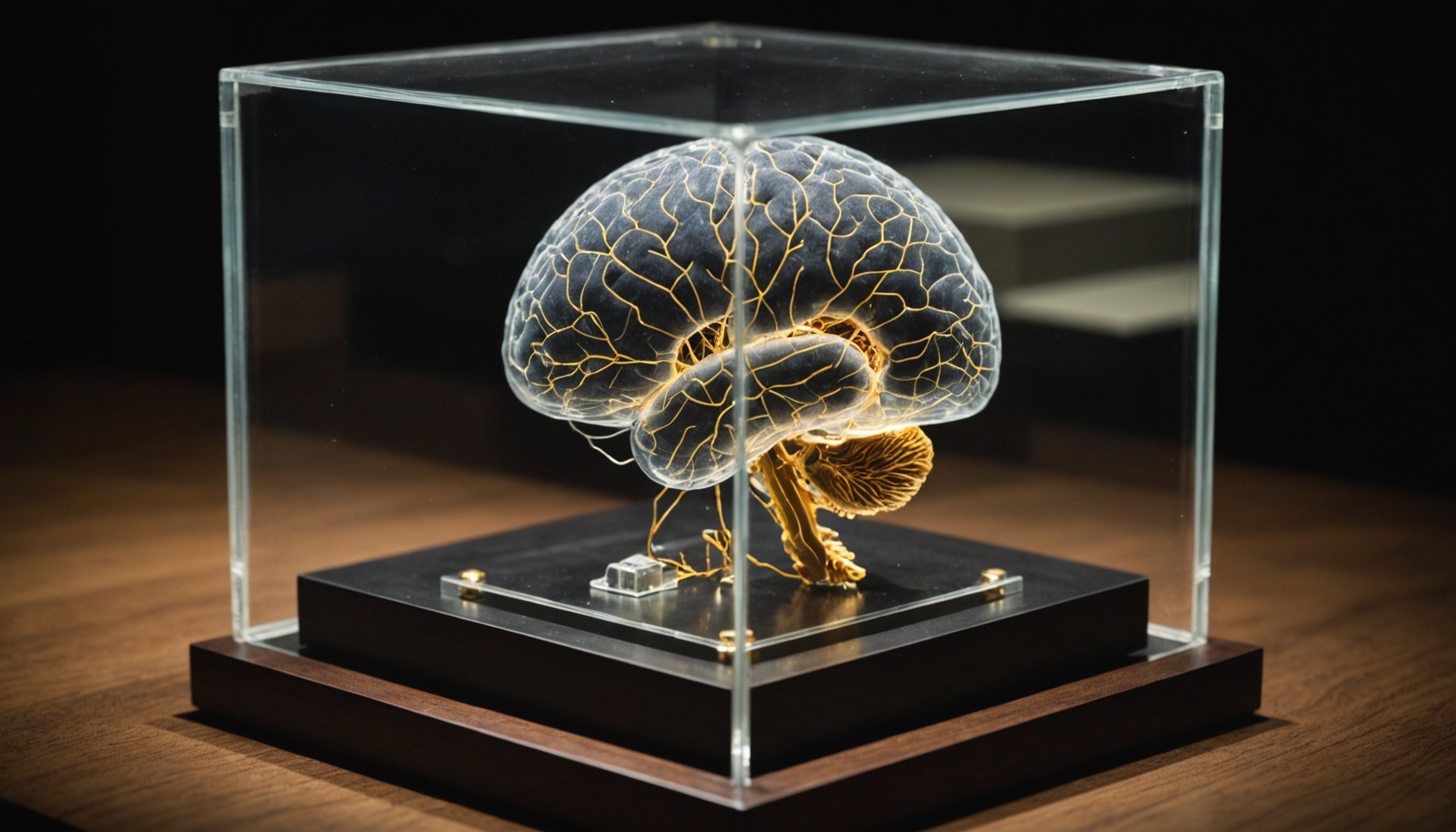


Researchers at EPFL have created a low-power implantable chip that monitors how different brain regions communicate with each other, opening new possibilities for treating psychiatric disorders. The device, called LogSync, tracks patterns of neural activity across multiple brain areas and uses machine learning to recognize cognitive and emotional states.
This research is published in IEEE Journal of Solid-State Circuits.
Why this matters
Most current brain stimulation devices work in "open loop" mode, delivering fixed patterns of electrical pulses regardless of what the brain is actually doing. Even adaptive systems often rely on signals from just one brain region. This is a problem for psychiatric conditions like depression, anxiety, and PTSD, which appear to involve disrupted communication between networks of brain areas rather than problems in any single region. LogSync addresses this by monitoring synchrony - the coordinated activity - between regions, potentially allowing treatments that respond to a patient's actual mental state.
The chip measures about 4 by 2 millimeters and integrates recording, processing, and decision-making on a single device. It extracts biomarkers describing the strength of brain wave oscillations and the degree of synchrony between signals from different areas. A machine-learning algorithm then classifies these patterns to distinguish states like cognitive engagement or emotional arousal.
The researchers validated the system using human brain recordings from previous psychiatric experiments and through tests in rats at the University of Minnesota. In the rat studies, the implant successfully tracked ongoing brain oscillations and generated stimulation triggers at specific phases of activity.
Power consumption was a major design constraint. The system uses under 200 microwatts - far less than many implantable neural interfaces - achieved by co-designing the hardware and algorithms specifically for implantable use. LogSync also employs logarithmic computations, which simplify the complex math needed for brain network analysis.
The work builds on earlier developments from the same lab, including a brain-to-text decoding chip and a closed-loop neuromodulation system for detecting and suppressing seizure and tremor symptoms. This latest advance extends those capabilities to network-level biomarkers relevant for psychiatric conditions.