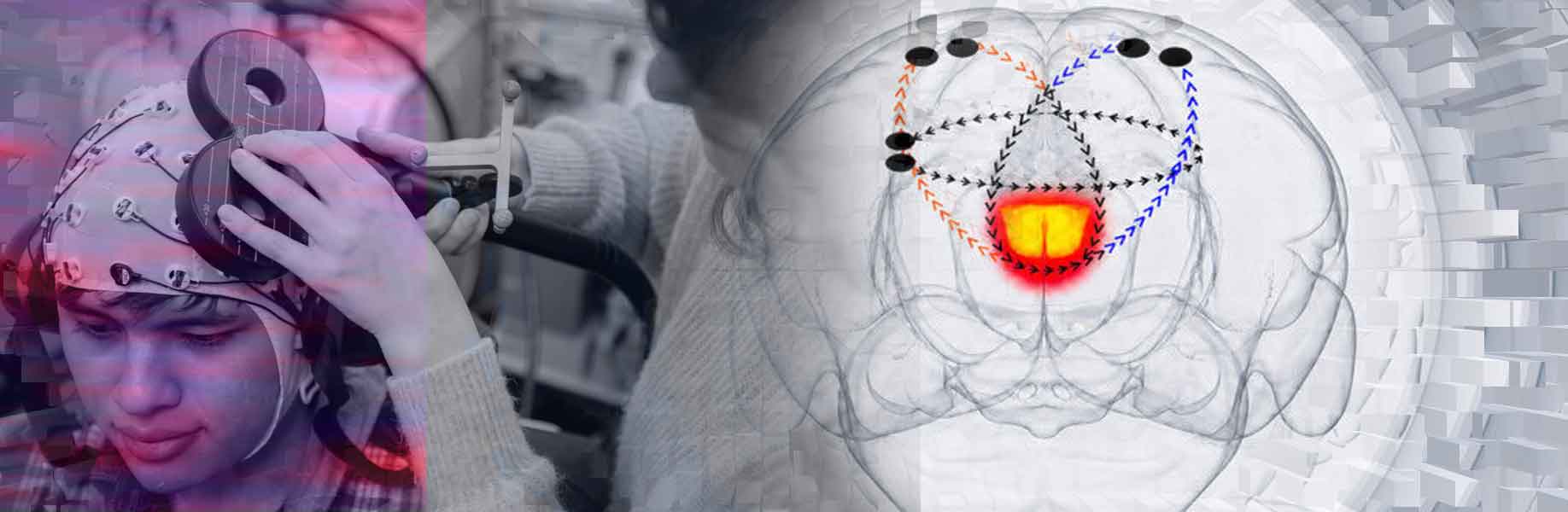
Brain stimulation techniques aim to correct irregular patterns in brain circuits that contribute to disorders like Parkinson's disease and depression. Current ways to deliver stimulation through the scalp only reach the outer surface of the brain and therefore have limited impact on deeper structures. Surgical methods can access these deeper areas but require implanting electrodes inside the skull which carries risks.
Temporal interference stimulation offers a middle way. It sends two high frequency electric fields from the scalp with a small difference in their speeds. Neurons do not react much to the high frequencies but they do respond to the lower frequency that appears where the fields overlap inside the brain. This overlap can be positioned in deeper regions allowing stimulation without surgery. Until now however the method also produced unwanted changes in other brain areas because the fields affected tissues on their way to the target.
Reducing unwanted effects across the brain
Scientists improved the technique by adding a third pair of electrodes that generate an extra electric field. This extra field is designed to cancel the interference in regions that should remain unaffected while leaving the desired effect at the target site intact. To test the updated approach in mice the scentists combined recordings of electrical activity from brain cells with imaging methods that track when cells become active through changes in calcium levels and with scans that reveal active brain areas by detecting blood flow.
The findings, published in Cell Systems, showed that the target region responded as intended while activations in other circuits were lower than before. This reduction in off target effects addresses a key limitation and makes the method safer for future use in humans. The improved temporal interference stimulation could serve as a precise non invasive tool to help restore normal activity in deep brain networks. It is not intended to fully replace surgical deep brain stimulation but rather to provide an additional option that avoids the need for operations in some cases. Further development will focus on refining the cancellation field and testing in more complex models before any human applications.