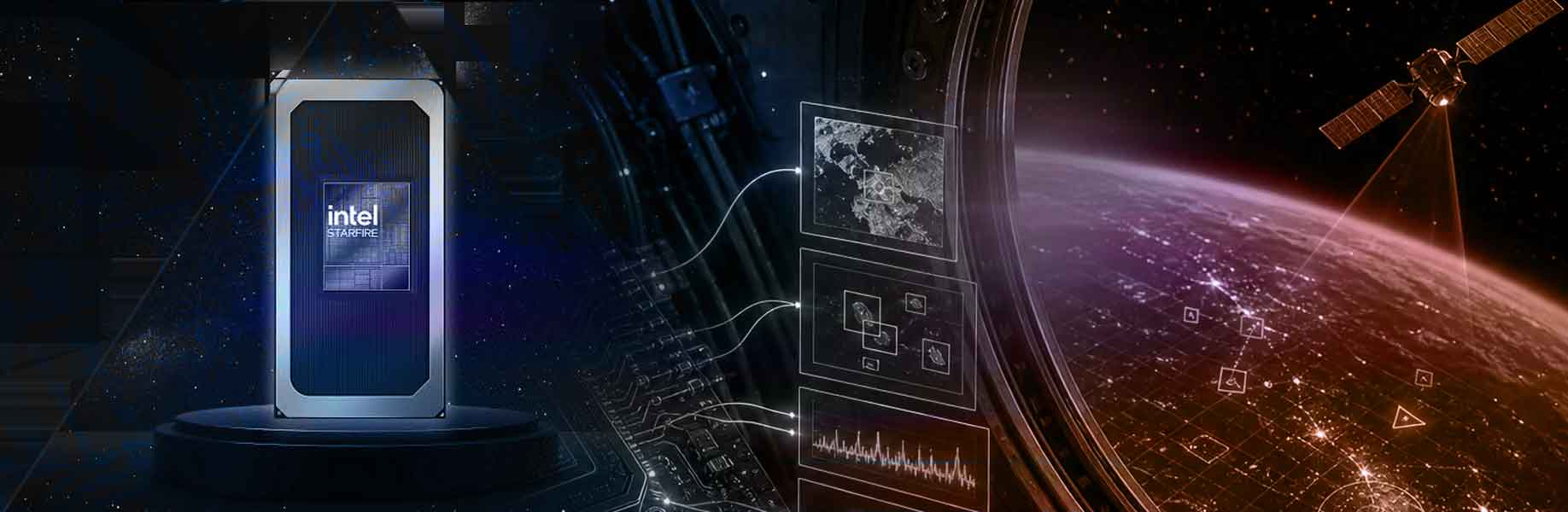

Intel has been working for several years on a new processor meant for satellites, SpaceNews reports. The goal is to handle growing needs for artificial intelligence (AI) and data work done right on the spacecraft itself. Intel sees enough demand from both government security efforts and commercial satellite networks to justify the project. The processor is called Starfire and remains under testing. It is built for steady high-power operation in space, a setting that is too severe for ordinary. It should become available to customers by the end of the year.
Space places extreme demands on electronics. Starfire aims to meet this challenge by adapting a modern commercial system-on-chip design for orbit. It includes a central processor plus graphics, neural-network, and image tools. This setup lets a satellite run more advanced artificial-intelligence tasks while using less size, weight, and power.
Meeting the needs of modern space missions
Modern space chips must examine images, combine sensor readings, spot targets, act on their own, and move information across networks almost at once. Other suppliers already offer radiation-hardened processors, yet Intel believes a broad need exists for reliable advanced computing that can serve both government and commercial users. Starfire will come in two models. One draws less than ten watts for craft with tight energy limits. The other uses more power for greater speed. Radiation testing should finish by the end of the third quarter. Early results look promising, and talks are under way about flying the chip on an experimental mission later this year.
The processor is meant to manage everyday spacecraft tasks such as tracking status, following commands, compressing data, and scheduling work. It can also support AI jobs including image study, object detection, anomaly spotting, sensor fusion, and health checks. It runs Ubuntu Linux and uses the familiar x86 design so software writers can work with tools they already know. Intel plans to offer test data, software help, and close support rather than simply selling parts. The main hurdle may be convincing builders to leave behind older chips that already have long flight records.