

The refrigerator that tried to cook its own food
On the morning of November 2, Alex Pearce was making his usual rounds at his fruit and vegetable wholesale business in London when he noticed something strange.
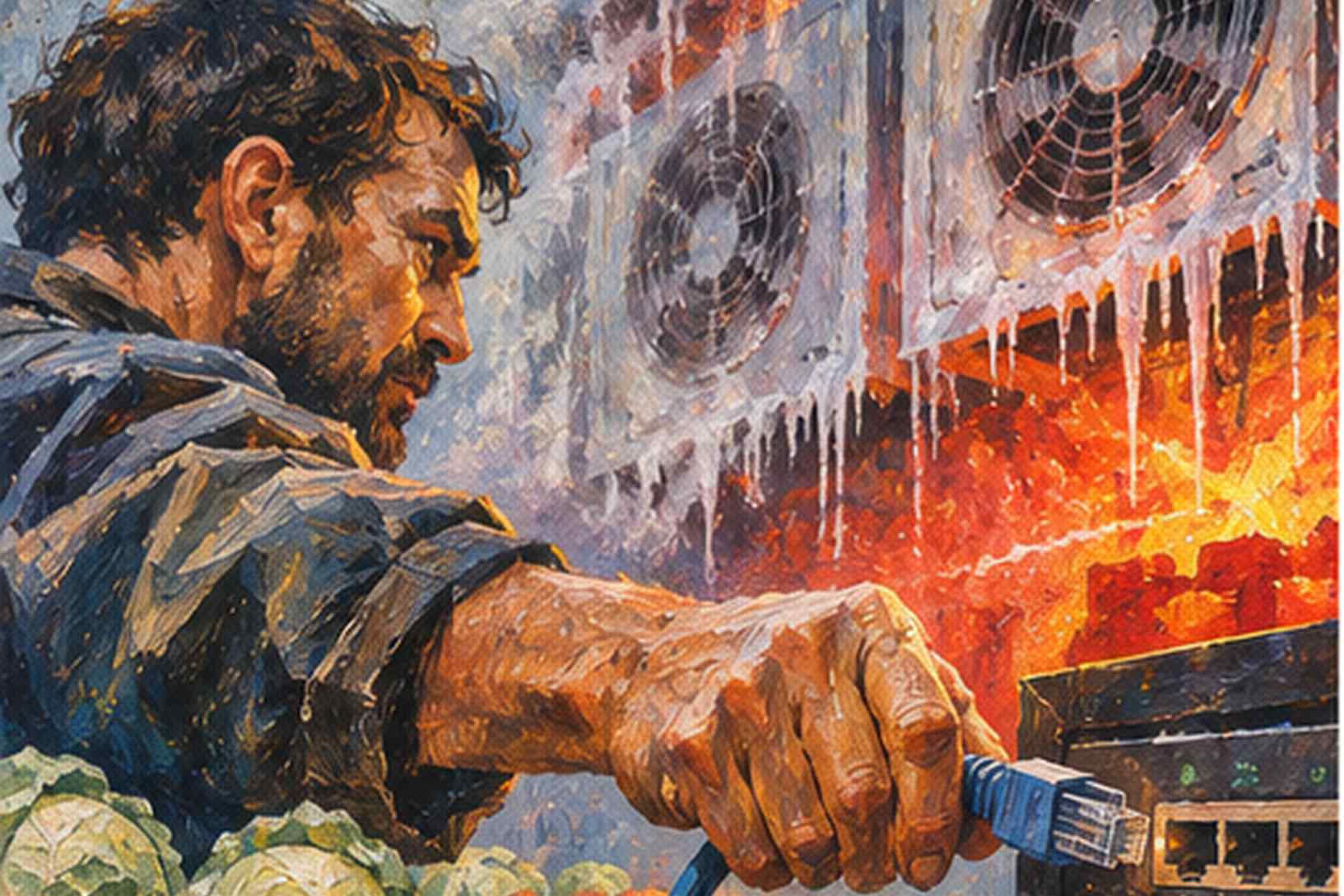
The defrost light on refrigeration unit number two was illuminated. Its temperature display read 150°C.
That was absurd. The machine was supposed to keep produce cold, not roast it. Unit number four was showing the same problem. Then the defrost light came on in his largest refrigeration unit.
Pearce had a suspicion.
He walked to the equipment connecting his refrigeration system to the internet and pulled out the cable.
It was a remarkably simple response to a potentially devastating cyberattack. According to The Guardian's firsthand account, the intervention helped prevent a much more serious incident. Pearce later warned that the consequences might have been disastrous had the malfunction occurred when nobody was there.

Across Europe, other refrigeration systems were experiencing similar problems. Supermarkets in Sweden, Belgium, Luxembourg, Ireland, Finland, Estonia, and the Netherlands reported extraordinary temperature changes. Products worth millions were spoiled. In Stockholm, ICA store manager Engla Ingwall told Reuters that the attack had struck at approximately 2 a.m.
Workers arrived to find food that could no longer be sold. But this was not the first warning.
On October 11, French supermarkets had already suffered a large refrigeration attack. More than 700 stores were reportedly affected. The attackers appeared to have discovered something alarmingly simple: refrigeration controllers connected to the internet could be reached and manipulated remotely. In some cases, outdated software, exposed management interfaces, and inadequate authentication provided opportunities for intrusion. The infrastructure of everyday life had become a target.
And then, as investigators were still trying to understand who had attacked Europe's food supply chains, another series of extraordinary technological failures began.
This time, refrigerators were the least of the world's problems.
Thirteen days later, America stopped flying
Friday, November 13.
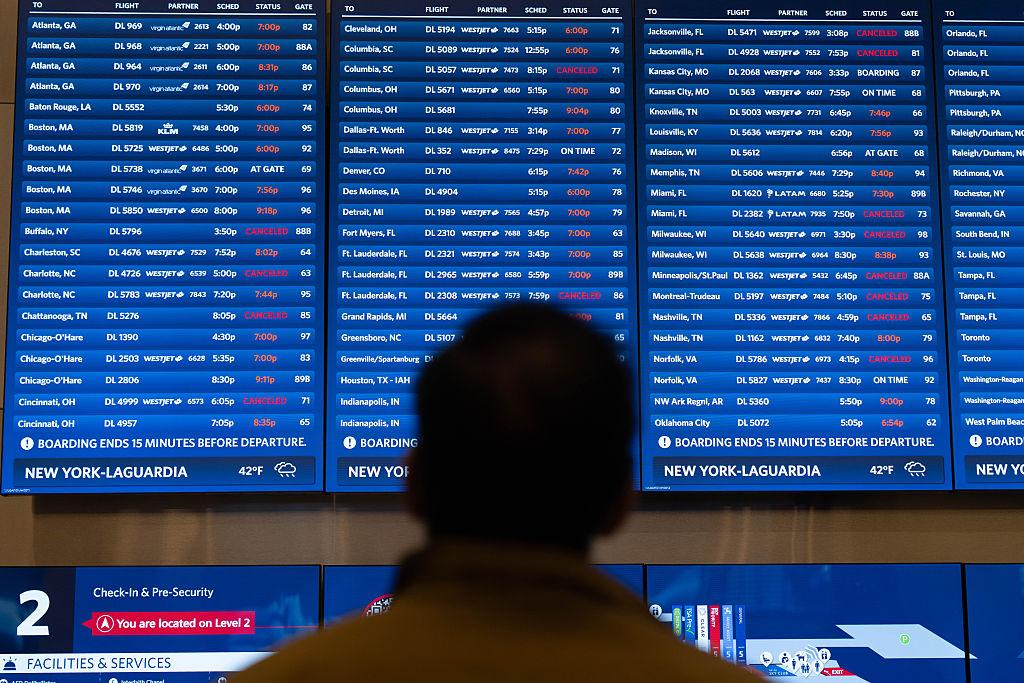
For the thousands of passengers preparing to fly across the United States, it began with departure boards changing, flights being delayed, and announcements that nobody wanted to hear. America's air traffic system was experiencing a serious failure.
The Federal Aviation Administration issued a nationwide ground stop after communications and radar systems became unstable. The disruption affected 17 of its 22 air route traffic control centers. Around 3,500 aircraft already in the air landed safely, while departing aircraft were held on the ground.
According to the FAA's official investigation update, approximately 12,462 flights were cancelled that day, although not every cancellation was directly attributable to the ground stop.
Federal Aviation Administration+1FAA Issues Nationwide Groundstop At U.S. Airports
Consider the implications. Modern aviation depends on a vast network of radar stations, communication systems, computers, and people exchanging information continuously. When crucial parts of that network become unreliable, the safest decision may be to stop aircraft from taking off.
And that is exactly what happened.
But the aviation collapse arrived at a particularly suspicious moment. On November 12, a day earlier, Microsoft had experienced a worldwide outage affecting Outlook, Microsoft 365, Teams, and several other business applications. Email communications failed across businesses and government institutions. Hospitals, schools, and public agencies struggled to access systems on which they had become dependent.
The incident lasted nearly 24 hours, beginning on November 12 at 16:20 UTC and ending the following day at 16:10 UTC, according to Microsoft's preliminary incident report.
Meanwhile, on November 16, JPMorgan Chase customers experienced banking disruptions. United Airlines temporarily delayed departing flights because of another technology problem.
Then came reports of an outage affecting the National Security Agency's internal communications network, followed by disruptions to Apple services.
Microsoft. Airlines. Banks. Government intelligence. One after another.
By November 18, the The Wall Street Journal was examining a string of failures involving Microsoft, the FAA, Workday, Chase, United Airlines, Apple, and the NSA.
To someone following the news, the pattern was difficult to ignore.
It became even harder to ignore when experts began talking about artificial intelligence finding security vulnerabilities faster than humans could fix them.
The terrifying theory: Has the AI uprising already begun?
The internet did what the internet does best. It connected the dots.
Social media users began suggesting that the outages were not coincidences but the opening stages of a coordinated cyberattack. More extraordinary theories proposed that autonomous AI agents might already be infiltrating the world's digital infrastructure.
One online rumour reportedly originated on October 31, when an X account predicted a catastrophic event beginning November 17. The story claimed that hackers would attack major banks, erase customer balances, and shut down the internet for months.
As the actual outages unfolded, the prediction circulated more widely.
The coincidence was compelling. Unfortunately for the theory, coincidence was almost all it had. A November 18 investigation into the supposed digital apocalypse traced the rumour and found no corroborating evidence.
But the underlying fear was not entirely invented.
On November 16, Google's Threat Intelligence Group published a report with an unsettling title: Agentic Threat Activity Crosses a Significant Threshold.
Its findings were serious.
Researchers documented cybercriminal and state-linked actors increasingly employing AI-powered frameworks to automate reconnaissance, identify vulnerabilities, and execute elements of sophisticated cyberattacks.
These systems could perform operations that previously required considerable human effort, potentially compressing attack timelines and increasing the number of targets criminals could pursue.
AI was no longer merely a chatbot answering questions about computer security. It was becoming a tool for performing security operations, including malicious ones.
Meanwhile, cybersecurity leaders were issuing their own warnings.
Richard Horne, head of Britain's National Cyber Security Centre, warned that the world was entering the early stages of a much more demanding cyber threat environment. He highlighted the vast number of existing software vulnerabilities that attackers could potentially exploit.
Technology commentator Azeem Azhar offered an even more provocative analogy, describing the emerging AI vulnerability-discovery threat as a "Wuhan moment." Cloudflare chief executive Matthew Prince had warned that the coming years could produce a relentless succession of alarming security discoveries.
These were warnings about the future of cybersecurity, not evidence that AI had orchestrated the November outages. That crucial difference was becoming lost in the online discussion.
An apocalyptic interpretation was emerging: perhaps an AI system had become sufficiently autonomous to conduct attacks across multiple sectors, concealing its activity behind what appeared to be ordinary technical malfunctions.
The speculation had an obvious appeal. If an intelligent attacker could target refrigeration systems, banks, aviation networks, and government computers simultaneously, the resulting disruption might look remarkably similar to the events people were watching.
There was just one problem. The evidence did not fit the theory.
The investigation: What actually happened?
The aviation shutdown: A communications failure, not an AI attack!
Let's examine the incidents individually, starting with the one that appeared most frightening.
The FAA's investigation identified an extraordinary volume of network traffic overwhelming its older communications infrastructure.
The agency reported approximately 1,000 connection attempts every four to five seconds. Investigators identified potential sources at facilities in Amarillo, Texas, and El Dorado, Arkansas, where network contractor L3Harris had been performing work involving a new router.
After the suspect connections were blocked and router functionality was disabled, the network stabilized.
The FAA explicitly stated that the available evidence provided no indication of a cyberattack or malicious external actor. It also rejected speculation that its new SMART aviation software caused the disruption.
The investigation into the ultimate root cause was still continuing, but the publicly documented problem involved a vulnerable interaction between network equipment and legacy systems. The agency's detailed explanation is available here.
No rogue AI was required.
Microsoft's global outage: A bug hiding in plain sight
Microsoft's investigation uncovered a separate technical sequence.
According to its preliminary findings, a software defect introduced in July had remained undetected. Increased network traffic, a Teams failover, and reduced available server capacity combined to trigger cascading failures.
More than 80% of the affected networking gateway servers reportedly became unresponsive.
The result was a worldwide communications disruption originating from infrastructure that millions of people use without ever thinking about its internal workings.
Microsoft's public statement was unusually explicit: the problem was technical and not connected to a cyberattack or autonomous AI agents.
The preliminary findings, reported by BleepingComputer, describe a serious engineering and resilience problem rather than malicious intrusion.
Banking, airlines, and intelligence systems: Different failures
JPMorgan Chase attributed its disruption to an internal software bug delaying certain interbank transactions.
United Airlines reported a technology problem affecting communications with pilots.
Apple's service interruption was attributed to an internal update.
The NSA also suffered an internal network outage, although the publicly available technical information was less comprehensive.
Together, they formed an alarming cluster of failures. Individually, however, the reported explanations differed. There was no publicly demonstrated common attacker, shared malicious code, or coordinated intrusion campaign connecting them.
In a November 18 analysis for the Council on Foreign Relations, cybersecurity expert Adam Segal concluded that the available public evidence pointed toward unrelated events with different technical causes. He noted that intelligence officials had rejected the theory of a coordinated nation-state attack.
The explanation was less sensational than an AI uprising. It was also much better supported.
But wait. Europe's refrigerators really were hacked.
There is one important distinction... Europe's refrigeration incidents were not simply another software outage. They involved genuine malicious interference with physical equipment.
And, unlike the US service disruptions, some of these attacks may indeed have been connected to one another.
The French attacks in October and the European incidents in early November exploited similar weaknesses in industrial refrigeration technology. Researchers had identified internet-exposed controllers and vulnerable remote-management configurations.
French authorities subsequently attributed the October attack to Iran. Tehran denied responsibility. The available public evidence did not, however, establish that the entire subsequent European wave had the same perpetrator.
Other confirmed malicious operations also occurred during the broader period. Hackers interfered with Ukraine's emergency warning system on November 1, distributing false alerts about a nuclear strike. A major cryptocurrency theft was reported on October 30. Neither event establishes a causal connection to the later US outages.
That distinction matters.
Several cyberattacks can occur during the same period without being part of one operation. Similarly, several technology systems can fail without any of them being hacked.
The real pattern is not that every event had the same cause. It is that societies are simultaneously confronting malicious cyber activity and the accidental failure of increasingly complex systems. And artificial intelligence may intensify both problems.
The real threat: AI can find vulnerabilities faster than we can repair them
Consider a building that has stood for decades.
Its original designers understood the foundations, wiring, plumbing, and ventilation. But over time, new owners added floors, installed additional electrical systems, and built extensions. Some original components were never replaced.
Eventually, the building became so complicated that nobody fully understood how every part interacted.
Now imagine a machine that can examine that entire structure, identify thousands of weaknesses, and suggest ways to exploit them.
That is one way to understand the emerging cybersecurity challenge.
Modern software infrastructure is full of decades-old components, third-party dependencies, undocumented assumptions, and complicated interactions.
AI-powered vulnerability discovery can expose security flaws at extraordinary speed. This benefits defenders, who can use the findings to repair systems before attackers exploit them.
But criminals can use similar capabilities.
Research documented by Google Threat Intelligence shows attackers experimenting with automated exploitation pipelines and agentic systems that reduce the need for continuous human supervision.
Cybersecurity researcher Mikko Hyppönen has warned that automation changes the economics of cybercrime. When identifying and exploiting a vulnerability becomes cheaper, attacking additional targets becomes economically attractive.
The troubling consequence is not necessarily that AI systems will develop a desire to attack human civilization.
It is that people may gain access to increasingly powerful tools that make exploitation faster, cheaper, and more scalable.
There is another complication.
Defenders must install security patches, replace outdated components, and modify operational software. But updating interconnected infrastructure is not as simple as installing an application on a personal laptop.
Changing one part of a large network can create unexpected problems elsewhere. The very process of fixing vulnerabilities can introduce new instability.
That is why the current crisis has exposed an uncomfortable dilemma: systems become dangerous when they are not updated, but poorly tested updates can also bring them down.
David Woods, professor emeritus of integrated systems engineering at Ohio State University, has warned about the consequences of reducing testing and verification as technological development accelerates.
Liz Fong-Jones, a technical fellow at Honeycomb, argues that many of the recent outages reflect long-established patterns of cascading system failures, not an entirely new phenomenon caused by AI.
Security expert Bruce Schneier offered another explanation for the public alarm: humans instinctively search for patterns, even where events may be coincidental.
Their comments were reported in Axios's November 17 investigation.
The numerical evidence complicates the apocalypse narrative further.
Downdetector recorded nearly six million US problem reports during the seven days ending November 16, its highest weekly total in a year.
Yet over a 30-day period, researchers counted only three major outages, compared with a more typical five.
A concentrated week of disruptive incidents certainly deserved attention. It did not, by itself, establish an unprecedented global collapse.
The world has a cybersecurity problem. It also has a dependency problem.
There is a reason why the refrigerator story is so important.
People understand that banks and intelligence agencies can be attacked. They expect their computers to contain sensitive information. They know that governments and financial institutions attract sophisticated adversaries.
But a refrigerator?
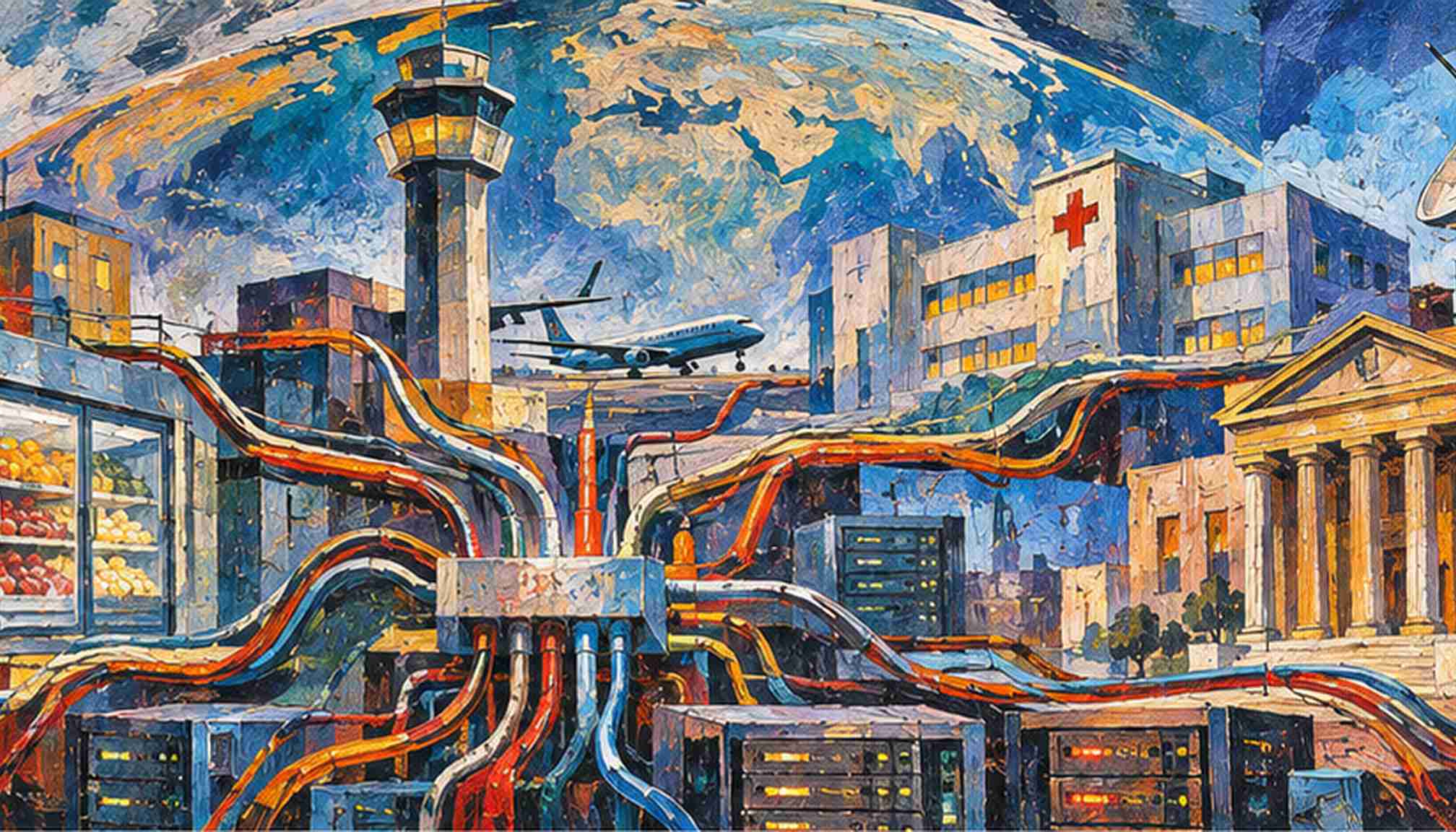
The incident revealed just how thoroughly the internet has penetrated physical infrastructure. Refrigeration equipment communicates with remote monitoring services. Medical institutions depend on cloud software. Utilities rely on digital industrial control systems. Airlines operate through interconnected communications networks. Even ordinary domestic appliances can exchange data with remote servers.
These technologies produce enormous benefits. They reduce operating costs, improve monitoring, and allow equipment to be managed more efficiently.
But they also create new points of failure.
A compromised refrigerator controller can destroy food. A cloud outage can interrupt hospital administration. A failed communications router can temporarily immobilize an aviation network.
And when multiple organizations rely on the same vendors and software components, problems can propagate far beyond their original source.
The important question is no longer whether society should use connected technologies. That decision has effectively been made.
The question is whether the infrastructure supporting them has received the investment, oversight, testing, and security architecture necessary to justify our dependence. The evidence suggests that in too many cases it has not!
The final revelation: The world does need an update
Return to that London warehouse.
Alex Pearce discovered that his refrigeration equipment was behaving in a way it should never have been allowed to behave. His response was to disconnect it from the internet.
A business running sophisticated, remotely controlled refrigeration technology was protected, at a crucial moment, by someone physically removing a cable.
That image captures the contradiction at the heart of modern technological civilization.
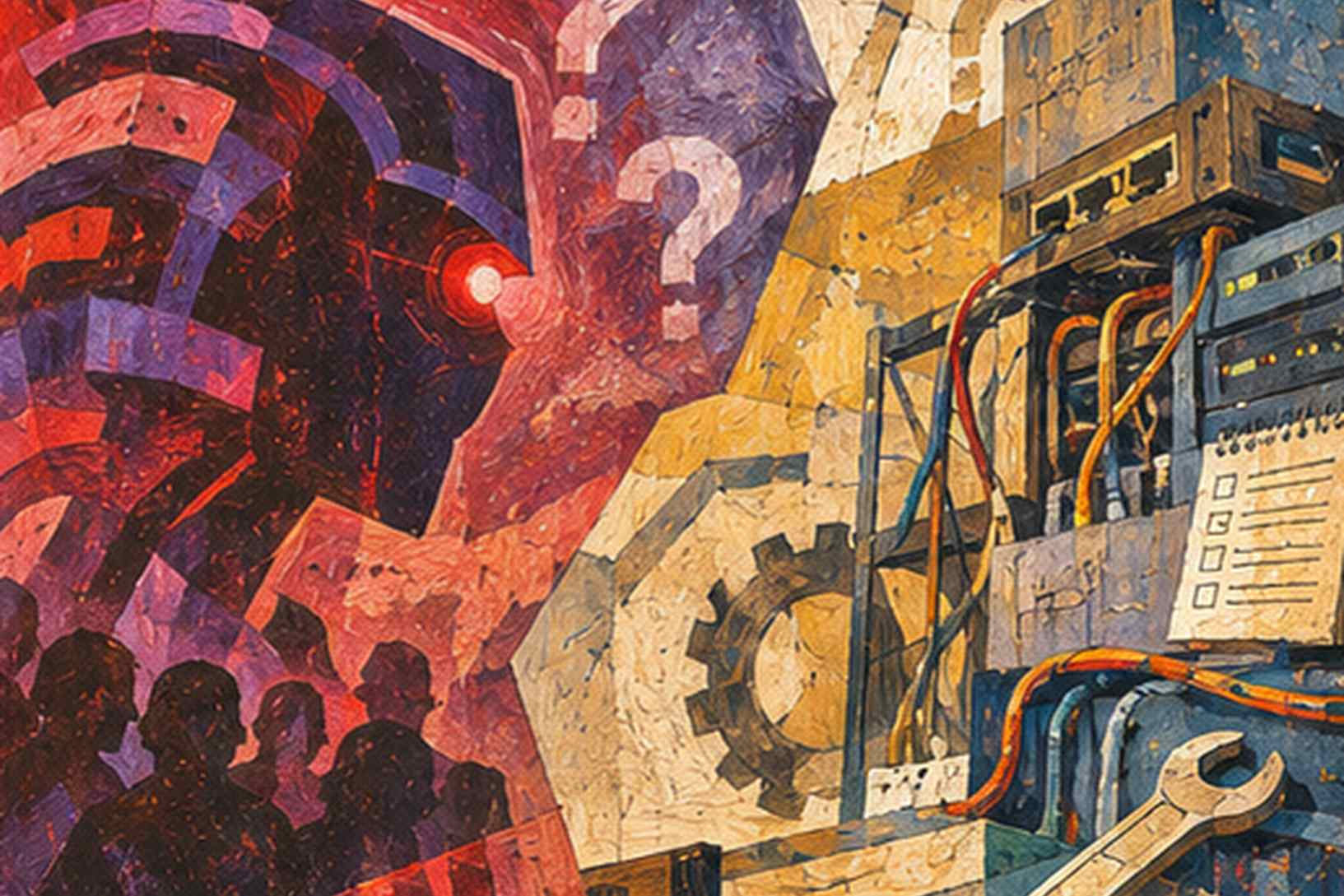
We have developed remarkable capabilities to connect and automate the world, but we have not always developed equally effective mechanisms for keeping those systems secure, isolated, and operational when something goes wrong.
The events of November 2026 do not establish that artificial intelligence has launched a coordinated attack against humanity.
There is no verified evidence connecting the American aviation failure, Microsoft outage, banking disruptions, and other technical incidents to one autonomous AI campaign. The available investigations point instead toward different software defects, configuration problems, legacy equipment, and operational failures.
Nor should that conclusion diminish the severity of the genuine cyberattacks in Europe or the growing evidence that criminals are using AI to accelerate their operations.
The appropriate response is not panic about an imminent machine uprising. It is a serious modernization effort: replacing unsupported infrastructure, securing internet-connected industrial equipment, strengthening authentication, reducing unnecessary external access, conducting rigorous software testing, and ensuring that essential services have independent backups and practical recovery procedures.
Governments and technology companies must also confront the dangerous concentration of services on a small number of critical platforms. When one cloud provider or communications network fails, the consequences should not ripple through hospitals, airports, financial institutions, and public administration simultaneously.
And cybersecurity investment must increasingly reflect the physical consequences of digital intrusion, not merely the value of stolen information.
In the end, the most unsettling lesson from these strange two weeks is not that the machines have become intelligent enough to turn against us. It is that we have become so dependent on them that even ordinary technical failures can resemble the opening scenes of a global catastrophe.
The AI apocalypse has not been demonstrated. But the need to upgrade the world's cybersecurity and technological resilience is very real.