
Probably not. Signs of human life can be found nearly everywhere, short of isolated islands and remote mountaintops, according to a new University of Florida study, noting that this is both a scientific boon and an ethical dilemma.
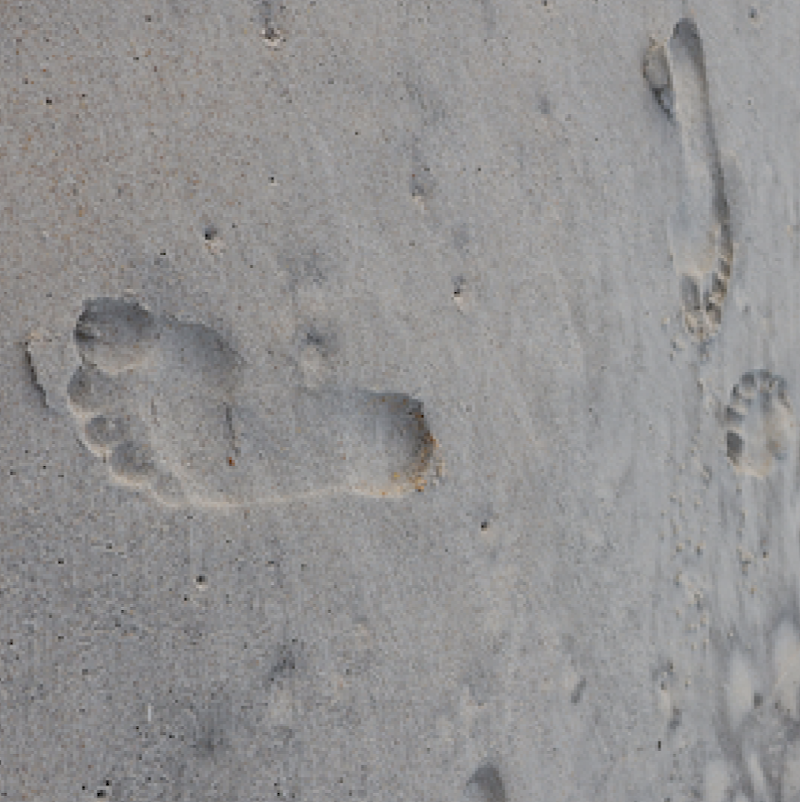
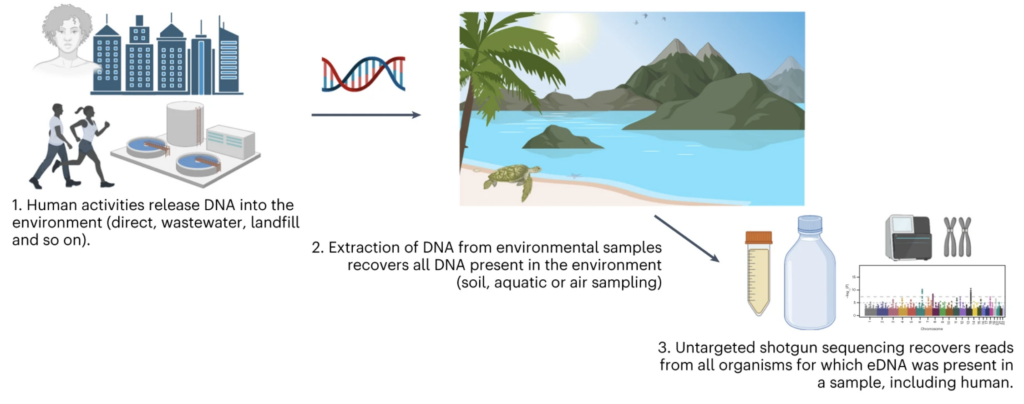
The UF researchers collected high-quality "environmental DNA" (eDNA) from footprints made by one of the researchers on an uninhabited island that was otherwise devoid of human DNA. Sequencing the DNA revealed identifiable information about the participant’s genome.
"Almost equivalent to if you took a sample from a person”
The DNA was of such high quality that the scientists could identify mutations associated with disease and determine the genetic ancestry of nearby populations. They could even match genetic information to individual participants who had volunteered to have their errant DNA recovered.
“We’ve been consistently surprised throughout this project at how much human DNA we find and the quality of that DNA,” said David J. Duffy, Department of Biology, College of Liberal Arts and Sciences, University of Florida. “In most cases, the quality is almost equivalent to if you took a sample from a person.”
Even in the ocean and rivers
The team found quality human DNA in the ocean and rivers surrounding the Whitney Lab, both near town and far from human settlement, as well as in sand from isolated beaches. Duffy also tested the technique in his native Ireland. Tracing along a river that winds through town on its way to the ocean, Duffy found human DNA everywhere except the remote mountain stream where the river starts, far from civilization.
Because of the ability to potentially identify individuals, the researchers say ethical guardrails are necessary for this kind of research.
... and in the sky*
Citation: Whitmore, L., McCauley, M., Farrell, J. A., Stammnitz, M. R., Koda, S. A., Mashkour, N., Summers, V., Osborne, T., Whilde, J., & Duffy, D. J. (2023). Inadvertent human genomic bycatch and intentional capture raise beneficial applications and ethical concerns with environmental DNA. Nature Ecology & Evolution, 1-16. https://doi.org/10.1038/s41559-023-02056-2 (open-access).
*In a recent paper, Dr. Kimberly Metris, a faculty member at Clemson University and lead investigator, reports that eDNA also extends to the sky. Using a light aircraft with a sampling probe and high-throughput metagenomic sequencing, the researchers discovered widespread presence of allergens and pathogens, including bacteria eDNA, in the atmosphere, reaching 8,500 feet above the ground in the southeastern US.
Citation: Métris KL, Métris J. Aircraft surveys for air eDNA: probing biodiversity in the sky. PeerJ. 2023 Apr 14;11:e15171. doi: 10.7717/peerj.15171. PMID: 37077310; PMCID: PMC10108859. https://peerj.com/articles/15171 (open-access).