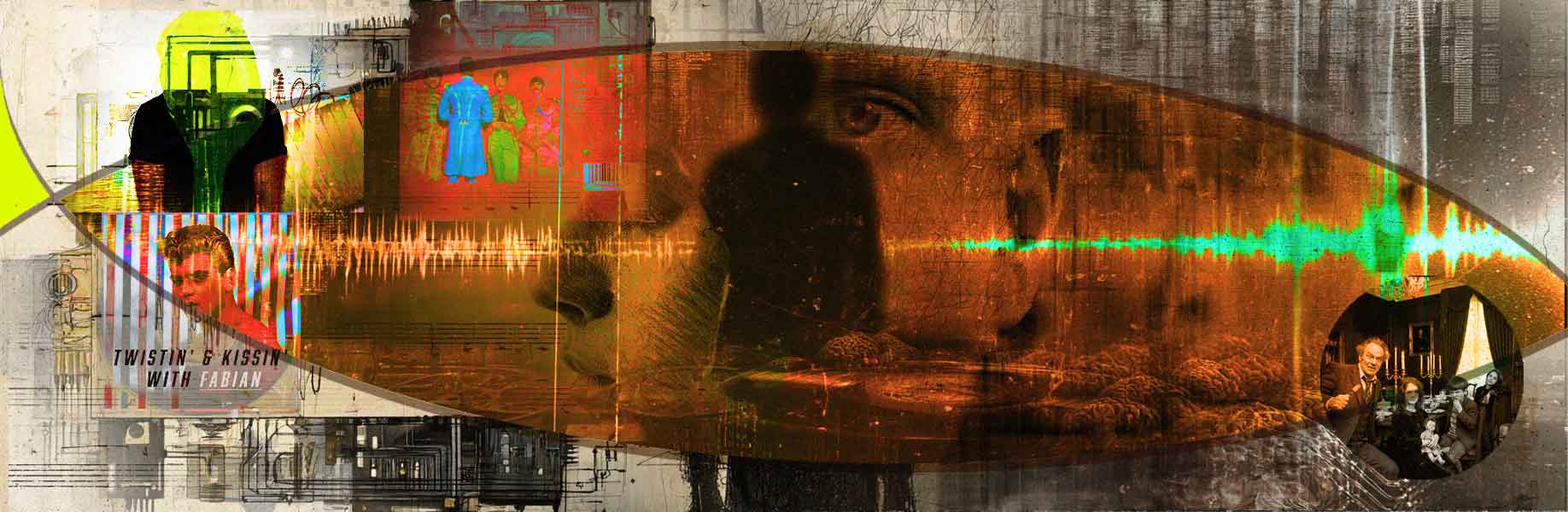

It’s the end of recorded music
The Debasement Tapes lyrics by R.U. Sirius
Pull the rug then pull the plug
It’s the end of recorded music
Pull the rug pull – pull the plug fool
Studio tricks was the first grift
Recorded music should not exist
I’m the man
Royal Scam
Sgt. Peckerhead says I am
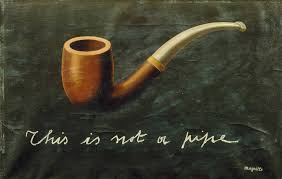
“Recorded music does not exist". The Virtual Pretenderers in the song “The Debasement Tapes”.
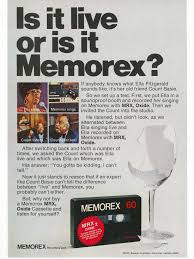
Note: I apologize that this piece is riddled with self-promotional materials but this topic and how I’m relating to it has been on my mind for months so I’m motivated to share what I think is a good piece that reflects my enthusiasm. Also, Gemini’s enthusiasm bwaaahhahah...
In an earlier article here on Mindplex I wrote,“In 1931, The American Federation of Musicians denounced recorded music as, basically, a facsimile of live music that would debase the art.)” At least one person on Bluesky asserted that maybe they were right. And I responded that it could be argued
Yes, my appreciation for live music has doubled since I started spending a lot of time in the realm of AI created music.
I made the flat out statement in the lyrics quoted at the top of this piece that “Recorded music should not exist. I didn’t exactly argue that point in song and I don’t intend to do that here. In any event, the song is part of a work in progress titled “Simcere.” Look twice.
Not Slop(py) enough

AI for music isn’t “slop” as most people understand the term. It’s not sloppy. It’s not sloppy enough! It’s too perfect. Don’t get me wrong. “Simcere” is going great but it needs to get scuffed up a bit.
People Strongly Objected To The Advent of Recorded Sound

[note: much of this is taken straight from Gemini. I’ve engaged in some fact checking but beyond that I’m bored with the pressure put upon journalists and essayists to somehow impose a note of originality onto a presentation of facts that are just facts.[I suspect that we all use that terrible cheating mechanism known as a thesaurus]
I will put the direct use of Gemini for these facts in italics. You might have to pay attention to see my sometimes one-line comments in the midst.

The first recorded sound that could be immediately played back was a rendition of the nursery rhyme “Mary Had a Little Lamb,” recorded by Thomas Edison on his newly invented phonograph in 1877.
While earlier recordings exist, Edison's phonograph was the first machine designed to both record and reproduce sound at will.
The Earlier “Unplayable" Sound: Although Edison’s 1877 recording was the first to be played back at the time, French inventor Édouard-Léon Scott de Martinville created the earliest known recording of a human voice, “Au Clair de la Lune,” on April 9, 1860. This was done using a “phonautograph," which traced sound onto soot-blackened paper but was not designed for playback.
Playback of the 1860 Recording: In 2008, scientists used modern digital technology to play back Scott’s 1860 recording for the first time, proving it contained a recognizable human voice.
The objections to recorded sound were almost immediate.
People voiced significant objections, skepticism, and even outright accusations of fraud immediately following the announcement of the phonograph. Because the concept of a machine reproducing human speech seemed impossible at the time, the initial public and scientific reaction was highly polarized.
The primary objections and forms of skepticism manifested in several ways:
Accusations of Ventriloquism and Fraud.
Many people believed the phonograph was a hoax. When Thomas Edison demonstrated the device to the French Academy of Sciences in 1878, a French professor of linguistics named Jean Bouillaud grabbed the demonstrator by the throat, shouting that he would not be deceived by a ventriloquist.
Even within the American scientific community, some warned Edison to deny the early reports to protect his reputation. One professor wrote to Edison calling the very "idea of a talking machine ridiculous".
Religious and Supernatural Anxiety: For a highly religious 19th-century public, separating a person's voice from their physical body felt deeply unsettling.
The "Spooky" Factor: Some critics and citizens felt that capturing human voices was an unnatural tampering with the human soul.
Association with Spiritualism: Because the machine could "speak" after a person had left the room (or died), some objected to it on spiritual grounds, fearing it would be used by fraudulent mediums to simulate ghosts or stage fake séances.
Technical Disappointment: Once the initial shock wore off, practical objections arose regarding the actual quality of the device. The original tinfoil cylinders were fragile, the playback tore the foil after only a few viewings, and the actual sound reproduction was incredibly harsh, metallic, and often difficult to understand
”Slop” Mr. Edison. “Slop” I say.
One relatively early use of recording technology was recording sounds of nature. As Cezanne might have pointed out, ““This is not a frog.”
Apropos of nothing in particular John Cage, the avant-garde artist and zen Buddhist who encouraged people to hear all sound as music worked with both live sonic experiments before audiences and record making and, of course, famously with recorded silence.
Tricks Are For Kids
The real fun started when recorded music became popularized through radio and commercially available vinyl.
I’ll let Gemini tell you about some early popular recordings that were designed to include voices and sounds that could not be produced without some technical trickery
Early commercial audio trickery relied on variable-speed tape, disc-cutting lathes, and multi-track layering. Novelty hits, avant-garde sound collages (musique concrète), and pop experiments used these studio techniques to create impossible voices and sounds.
Novelty and Comedy Hits
"The Chipmunk Song (Christmas Don't Be Late)" (1958) & "Witch Doctor" (1958) by David Seville (Ross Bagdasarian): Seville created the iconic high-pitched squeaky chipmunk voices by recording standard vocal performances on tape at half-speed, then playing the tape back at normal speed, which doubled both the pitch and the tempo.
"It's in the Book" (1952) by Johnny Standley: A spoken-word comedy and novelty sermon that manipulated pacing, pause manipulation, and dynamic reverb effects to create an exaggerated, otherworldly classroom environment.
"The Purple People Eater” (1958) by Sheb Wooley & "Monster Mash" (1962) by Bobby "Boris" Pickett: These tracks used primitive vocal transposition, heavy spring reverb, and manual sound effect spot-cues (like blowing bubbles through straws or hitting planks) to simulate monsters and alien speech.
(As a little kid, I loved “the Purple People Eater”)
Early Tape Manipulation and Musique Concrète
Étude aux chemins de fer" (1948) by Pierre Schaeffer: Created by the pioneer of musique concrète in Paris, this piece used locked turntable grooves, deliberate speed alterations, and backward masking of recorded train station sounds to turn industrial noise into rhythmic, surreal compositions.
"Symphonie pour un homme seul" (1950) by Pierre Schaeffer and Pierre Henry: This foundational electro-acoustic work sliced, looped, and reversed fragments of human sighs, gasps, footsteps, and shouted speech to make the human body sound like a percussion instrument.
Pop and Early Rock Innovation
”Smokey Places" (1961) by The Corsairs: Producer Ray Pennington used heavy echo chamber layering and tight multi-tracked vocal fading to give the backing chorus an eerie, distant, cavernous atmosphere that felt physically impossible in a normal room. Les Paul and Mary Ford recordings (early–mid 1950s): Pioneer guitarist Les Paul used custom acetate disc recording setups and early multi-track tape machines to stack dozens of layered guitar harmonies and fast-forwarded or slowed-down vocal tracks (such as in "The World Is Waiting for the Sunrise"), creating a surreal wall of sound long before the multi-track era became standard.
There’s more from this early period, but let’s move on to…
The Rise of The Use of the Recording Studio To Make Art Rock & Psychedelia
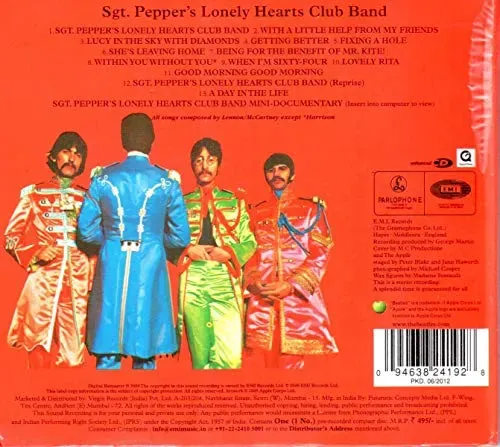
Putting aside any bands or recording artists working in pop and rock music that were way below the radar, I recall that many claimed that Brian Wilson and the Beach Boys were the first out of the gate in terms of using recording studio manipulation to create the psychedelic song “Good Vibrations.”
It could indeed be that the Beach Boys recorded “Good Vibrations” before anyone else (again excluding way-below-the-radar recordings.) But Gemini points out that although Wilson began recording the song in February 1966 and The Beatles didn’t start their first studio sound manipulation experiment “Tomorrow Never Knows” until April of ‘66, the Fabs got the song out sooner than the Beach Boys.
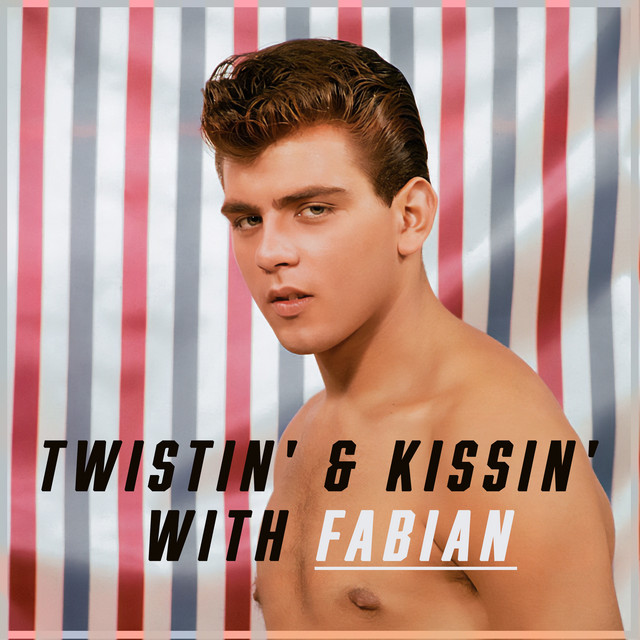
I’m afraid we now need to double back a bit to the end of the ‘50s and start of the ‘60s. With the rise of Elvis Presley, managers and record companies hoping to make a quick buck started looking around for young men they could turn into “teen idols” by marketing them to teen and pre-teen girls. The era of authentically wild rock and rollers like Jerry Lee Lewis and Little Richard would be followed by these safe manufactured, manicured, cooperative human products. The studio trick was that they were hired for their looks and for possessing a modicum of performative presence. However, they couldn’t sing very well. But even then, we had the technology.
Tape Splicing and Line-by-Line "Comping": Because artists like Fabian couldn't carry a tune across an entire song, engineers abandoned the standard practice of recording a full, continuous take.
Severe Fragmenting: A singer would be tasked with singing just one or two lines—sometimes just a few words—at a time. If they hit the correct note, the engineer stopped the machine.
Razor-Blade Editing: Engineers manually cut out the out-of-tune or poorly phrased attempts using razor blades and spliced the few successful, isolated notes together onto a master tape loop. This manual "composite take" (or comping) created the illusion of a flawless, sustained performance.
Vocal Doubling and Tripling: A weak, flat, or shaky voice sounds significantly worse when isolated. Studio engineers realized that layering multiple tracks of the same weak voice masked individual pitch flaws.
Thickening the Signal: The singer would record the same vocal line two or three different times on separate tracks.
Chorusing Effect: When played back simultaneously, the subtle variations in pitch and timing between the takes rubbed against each other. Instead of sounding out of tune, it created a naturally lush, "thickened" chorus effect that hid the vocal imperfections.
Pitch Alteration via Speed (Varispeed): If a teen idol couldn't hit a specific high note, engineers manipulated the frequency of the tape itself. They would slow the backing track down slightly while the idol sang, allowing him to hit the note comfortably in a lower, safer register. When the tape was sped back up to its normal playback tempo, the singer's pitch was artificially lifted into the desired higher key.
Back To The Kudzu At Hand

I’m going to shift the ground a little to make a point.
The 1980s saw the release of The Engines of Creation by K. Eric Drexler. Drexler’s notion of Nanotech as a mechanism that could program physical matter to grow anything imaginable out of “dirt and sunlight” was an element of the utopian techno-dreams of the 1990s. Perfect free medicines, space colonies, economic abundance, clean energy—all that and more could result from Drexerian nanotech (if only it would work.) There was at least one snake in this Edenic imaginary—the dreaded Gray Goo.
Gemini: "Gray Goo" was seen as an apocalyptic end-of-the-world scenario where out-of-control self-replicating nanobots consume all organic matter on Earth to fuel their own growth, reducing the entire biosphere into a lifeless mass of replicating dust.
Yeah, that. The entire biosphere smothered in key-lime pie. YUM!
Now, about slop…
Slop is viewed as slop by most people mainly because it’s bad content, yes? As you’ve seen, in terms of writing, it’s pretty okay for spitting out facts. I felt no need to fancy up Gemini’s basic reasonably elegant prose in that context. I have not found it—or other LLMs—to be impressive when it comes to the more creative aspects of writing. I’ll leave aside the visual arts except to say that the quality of the results are ambiguous. But as I pointed out at the top of this piece, the musical output, particularly from SUNO, is not slop in terms of this aesthetic understanding of slop. It is slop because it’s a cultural or mediated gray goo. It—and the other products of “AI”—are so easily replicated and spread that it threatens to smother the internet and beyond in its products, some of it good, plenty of it awful and much of it somewhere in between.
(I came up with this interpretation of slop on my own, although I immediately thought that it was probably not original to me. I was right. It’s a reasonably common understanding of the term in the AI context.)
The thing is, this is the result of something that the tech culture—the idealistic optimistic ‘80s/’90s cyberculture—desired. As Richard Stallman (then the head of the Free Software Foundation (and no… I’m not going to get into it) told us at Mondo in our first issue (and I’m paraphrasing), anyone trying to capitalize on or to limit access to digital programs (including access to the code for one’s own use and adaptation) is creating scarcity in the face of abundance. Anything digital can be infinitely copied and then immediately shared with anyone with access to the internet (file size is, of course, a compilation). And here we are!... at, perhaps, a troubling endpoint to this ideal.
At Mondo 2000, appropriation, remixing, sampling was a central theme. Gareth Branwyn wrote approvingly about The Tape-Beatles, whose slogan was “plagiarism saves time.” Mondo art director Bart Nagel actually softened that a bit. He used “appropriation saves time.”
So Good It Hurts
Returning to a view I started expressing early in this piece, when I put my lyrics to music using SUNO, what I got is not slop. They’re actually well-constructed, well-produced songs. They’re too good. As of this writing, I have had trouble getting SUNO to scuff it up; to get truly discordant or to bring the grunge, i.e. what Neil Young refers to as ‘ragged glory.”
Here Come The Watermarks: I’m Going To Miss The Mystery
We live in an age in which people want everything explained. All the didacticism and pontification has started to drive me mad. Of course I’m doing some of that in this essay. I mean I’m pleased to puncture my heroic writer-guy appearance with my abuse of Gemini, but still I’m trying to say some things about the use of AI in creative works, particularly in music. And I regret doing it.
To me, what was and is fun about sharing the AI recordings was (and is) the uncertainty. Four times, this happened: I posted a piece I’d made with SUNO (sometimes with the help of other “art criminals”) and someone heard it and asked “Who’s singing?” And each time I said “nobody.” You could feel the penny quickly dropping, even over email. Nobody became angry. Each was impressed.
Now, we have hit the age of the imposed watermark. Thanks, Europe! I consider the imposition of watermarking an assault against, well, me… but more generally, against the few eccentric—sometimes transgressive—experimentalists, including perhaps a few other trickster/pranksters who, in a long and storied avant-garde tradition, have ignored moral opprobrium around how they use whatever tools work to realize their obsession or creative instinct in any way they fucking well please.
As for me, I wanna be your Watermarxist