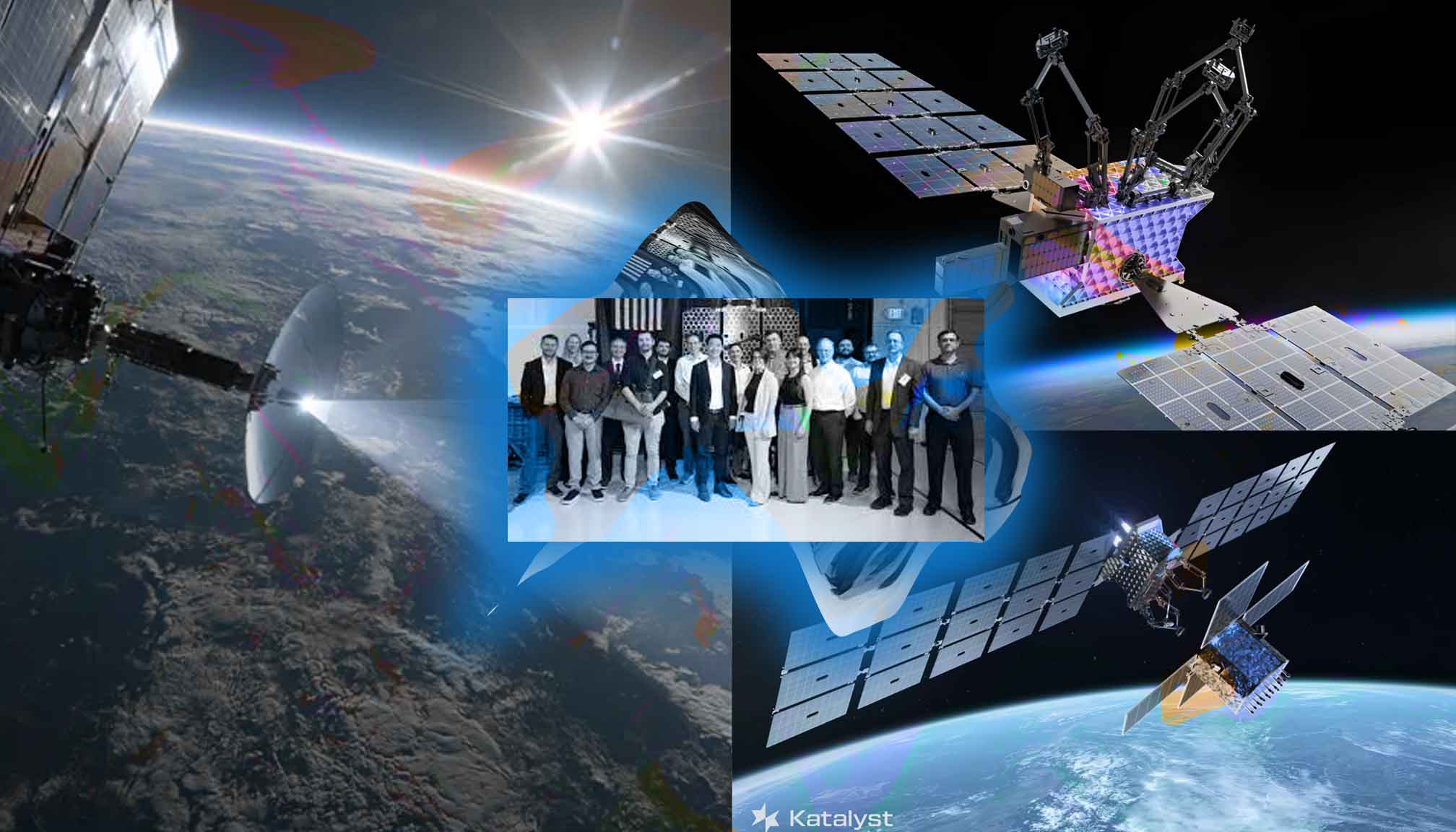

Katalyst Space said it was selected by the Operational Energy Capability Improvement Fund, or OECIF, a U.S. government fund that pays for new ways to supply energy during military operations. Under a program called ASGARD, short for Advanced Scalable Growth Architecture for Robotic Deployment, the company will develop and launch a robotic spacecraft. That craft is meant to put together a large power-beaming system while in space and send the collected energy back to Earth.
The work relies on Katalyst’s NEXUS spacecraft. NEXUS is a multi-use robot built to move, grasp, and assemble hardware in orbit. The company stated that a single robot that can do many jobs is what makes power beaming practical.
Space-based solar power could send electricity to remote sites, strengthen national security, and later support work on the Moon and other missions in space.
On-orbit assembly and how the system would work
A finished beaming array is too large to fit in one rocket. On-orbit assembly means the parts launch unbuilt and a robot joins them after they reach space. The U.S. Naval Research Laboratory (NRL) has developed a way to turn direct current from solar cells into microwave energy. Direct current is the steady form of electricity that solar panels produce. For ASGARD, NEXUS will fly to low Earth orbit, with modular tiles designed by NRL. Modular tiles are standardized panels that can be joined like building blocks. Robot arms on NEXUS will assemble the tiles into a large collector. Once joined, the tiles will take in sunlight, convert it to radio-frequency microwave energy, and send that energy to Earth. The companies and labs involved describe this as one of the largest tests yet of building and running a power-beaming system in space.
The system is meant to be restocked and enlarged over time, growing from kilowatts of power toward megawatts. Katalyst, founded in 2020, builds robotic vehicles that can dock with other objects in space and take on new tasks.