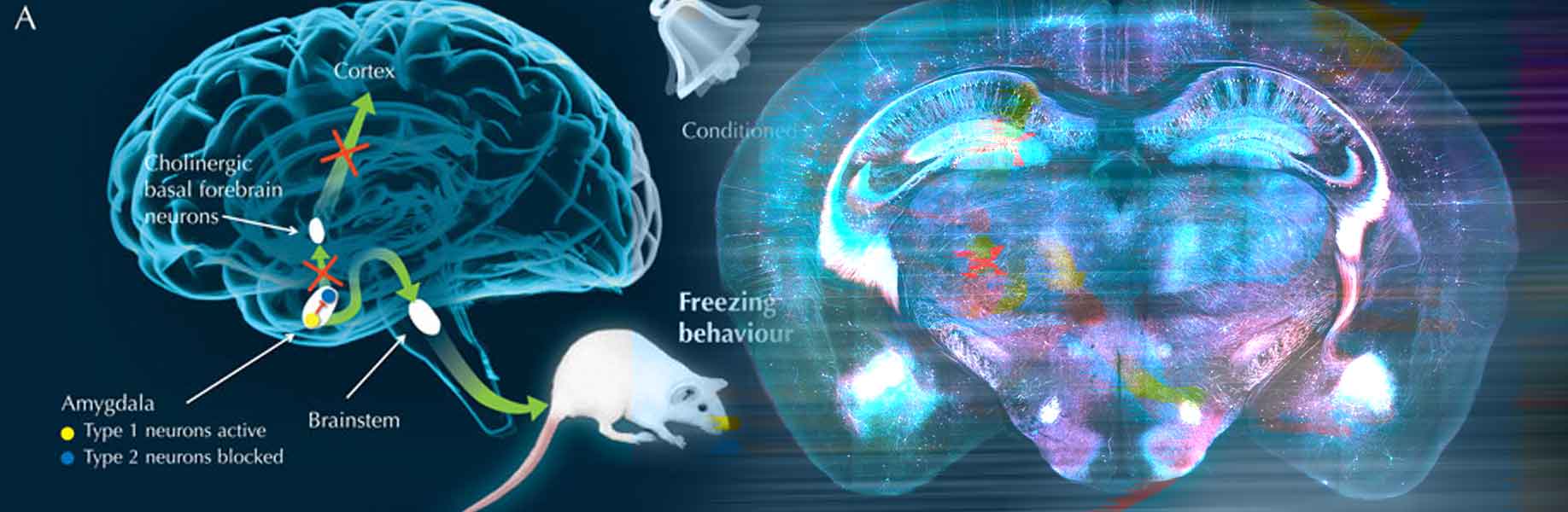

Scientists have found that mice can unlearn fear more quickly when certain brain cells are activated. This discovery could lead to better ways to understand and treat anxiety disorders. Fear extinction is the brain process where animals or people stop reacting to something scary once it is no longer dangerous. It is key for therapies in conditions like anxiety and post-traumatic stress disorder (PTSD), a mental health issue caused by traumatic events.
In earlier research from 2022, scientists showed that mice without a specific serotonin receptor, called 5-HT2C - a protein that responds to serotonin, a chemical messenger in the brain - unlearn fear faster. The new study, published in Translational Psychiatry, explains why this happens. It focuses on nerve cells that produce corticotropin-releasing factor (CRF), a hormone involved in stress responses. These cells act as a main switch in the bed nucleus of the stria terminalis (BNST), a small brain area that handles fear and anxiety. By turning on these cells in normal mice, fear unlearning speeds up.
How brain cell control aids fear reduction
Researchers used chemogenetics, a technique that acts like a custom switch to turn specific brain cells on or off. In mice without the 5-HT2C receptor, blocking CRF cells slows down fear extinction. In unchanged mice, activating those same cells makes fear go away quicker. This mimics the earlier results without genetic changes.
The missing receptor alters how serotonin works in the BNST, boosting the CRF cells' role in reducing fear. This is relevant to common treatments, such as selective serotonin reuptake inhibitors (SSRIs), medicines that raise serotonin levels and are used for anxiety and PTSD. Long-term use of SSRIs affects the 5-HT2C receptor and may work through the BNST-CRF system. This could explain why these drugs often increase anxiety at first but reduce it over time. The findings highlight a specific brain pathway that supports faster fear unlearning, opening doors to targeted therapies without broad side effects. Overall, this research advances knowledge of brain mechanisms for emotional health.