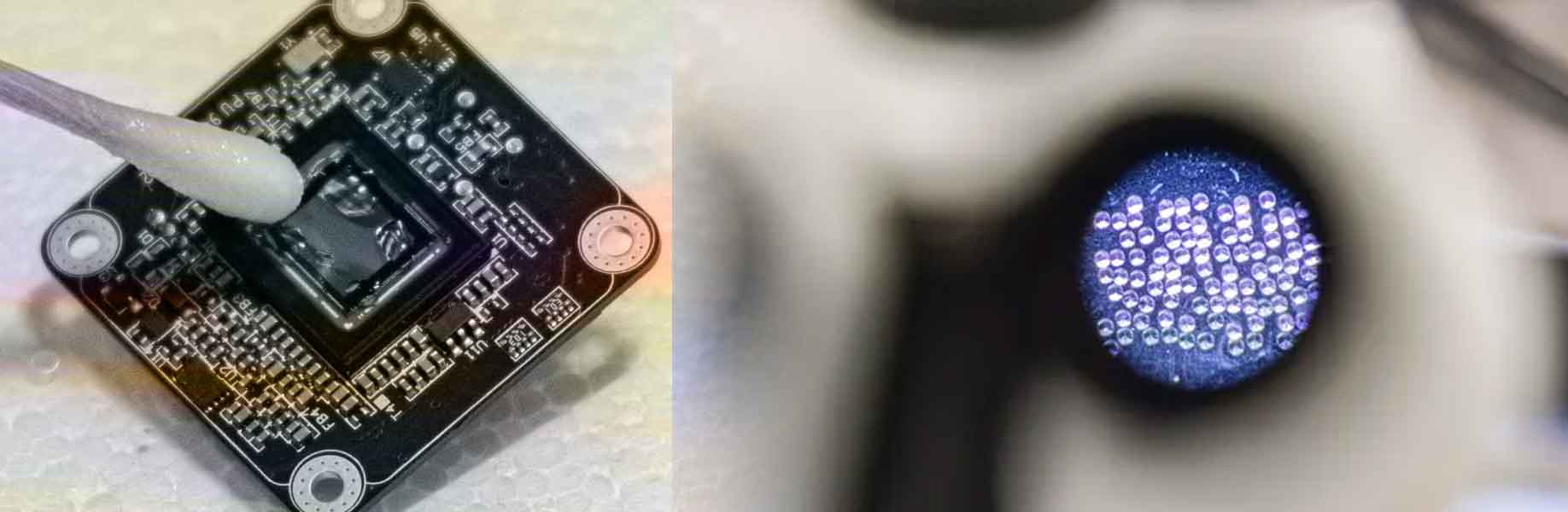

Scientists at the University of California, Davis, have invented a small microscope named DeepInMiniscope. This tool provides high-resolution pictures of brain activity in real time and without invading the body. It lets researchers watch how brain signals guide actions and senses in mice behaving naturally. Such insights could improve therapies for brain disorders in people by clarifying brain functions.
The device relies on a thin mask with many tiny lenses called lenslets. In live tissues, previous versions of the microscope faltered due to light scattering, where light rays bounce and blur inside matter. This cuts signal contrast and complicates rebuilding detailed views over wide spaces with math.
DeepInMiniscope overcomes these with a mask holding over 100 small, sharp lenslets. A new neural network merges their images into a full 3D reconstruction. This neural network mixes model-based optimization, step-by-step math refining, with deep neural networks for speed. It forms an unrolled neural network, unfolding layers like quick optimization rounds. This yields instant, precise images of tiny details in large volumes, needing little training data but handling big sets fast.
The setup records neuron activity in moving mice. The scientists note that the algorithm blends clarity, speed, growth potential, and accuracy.
Device design for free movement
At three square centimeters, like a grape, and 10 grams, like four pennies, DeepInMiniscope fits snugly on a mouse for safe wear during activity. Unlike bulkier past versions with full cameras, it uses a slim circuit board and image sensor. This frees studies of natural behavior, deepening grasp of information processing and action control, while aiding brain illness understanding and human therapies.
The scientists have described the methods and results of this study in a paper published in Science Advances. Next, the scientists plan to build a two-square-centimeter size version of DeepInMiniscope, and a wireless version next.