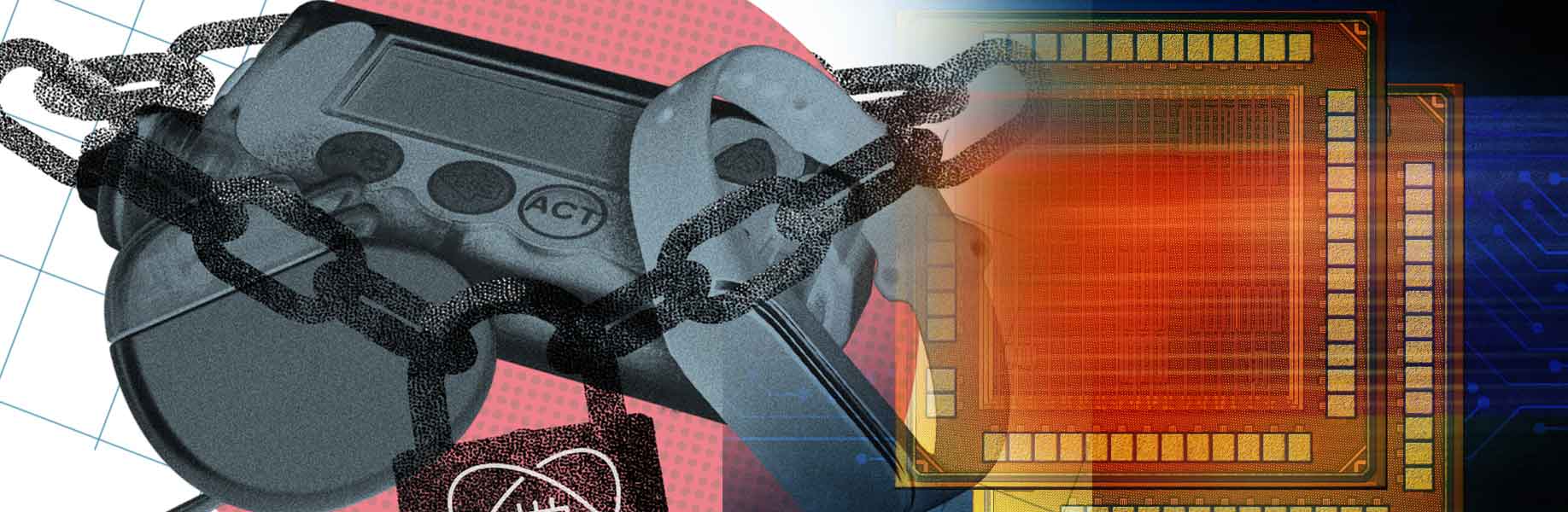

Researchers at the Massachusetts Institute of Technology have created an ultra-small microchip that allows wireless biomedical devices, such as pacemakers and insulin pumps, to use strong post-quantum cryptography. Post-quantum cryptography refers to new security methods designed to resist attacks from future quantum computers, which could break current encryption techniques. Many small medical devices have lacked this level of protection because the required calculations use too much power.
The chip is about the size of a fine needle tip. It runs post-quantum cryptography with more than ten times better energy efficiency than earlier designs. It also includes built-in defenses against physical hacking attempts that try to steal data by observing the device’s power use or creating electrical glitches. This matters for patient privacy, as these devices can hold sensitive health and personal information.
Design features that improve efficiency and protection
The engineers built a custom application-specific integrated circuit (ASIC). They included two different post-quantum cryptography schemes so the device remains secure even if one method is later found weak. They added a built-in true random number generator to create secure keys directly on the chip rather than relying on external sources. The design also uses targeted protections against power side-channel attacks, in which attackers analyze power consumption patterns to uncover secrets, and includes early detection to stop faulty operations quickly and save energy.
Tests showed the chip achieves 20 to 60 times higher energy efficiency than comparable approaches while taking up less space. It adds almost no extra power cost for the added security features.
This technology could strengthen security for many types of small edge devices that operate with limited battery power, including medical implants and industrial sensors. As standards organizations phase out older encryption, such efficient hardware solutions will help keep patient data safe without shortening device battery life. The work demonstrates that strong protection and low energy use can coexist in tiny devices.
This research was presented at the IEEE Custom Integrated Circuits Conference.