
Mr. Descartes said… there is nothing so far removed from us as to be beyond our reach, or so hidden that we cannot discover it.
—John Young, Apollo 16
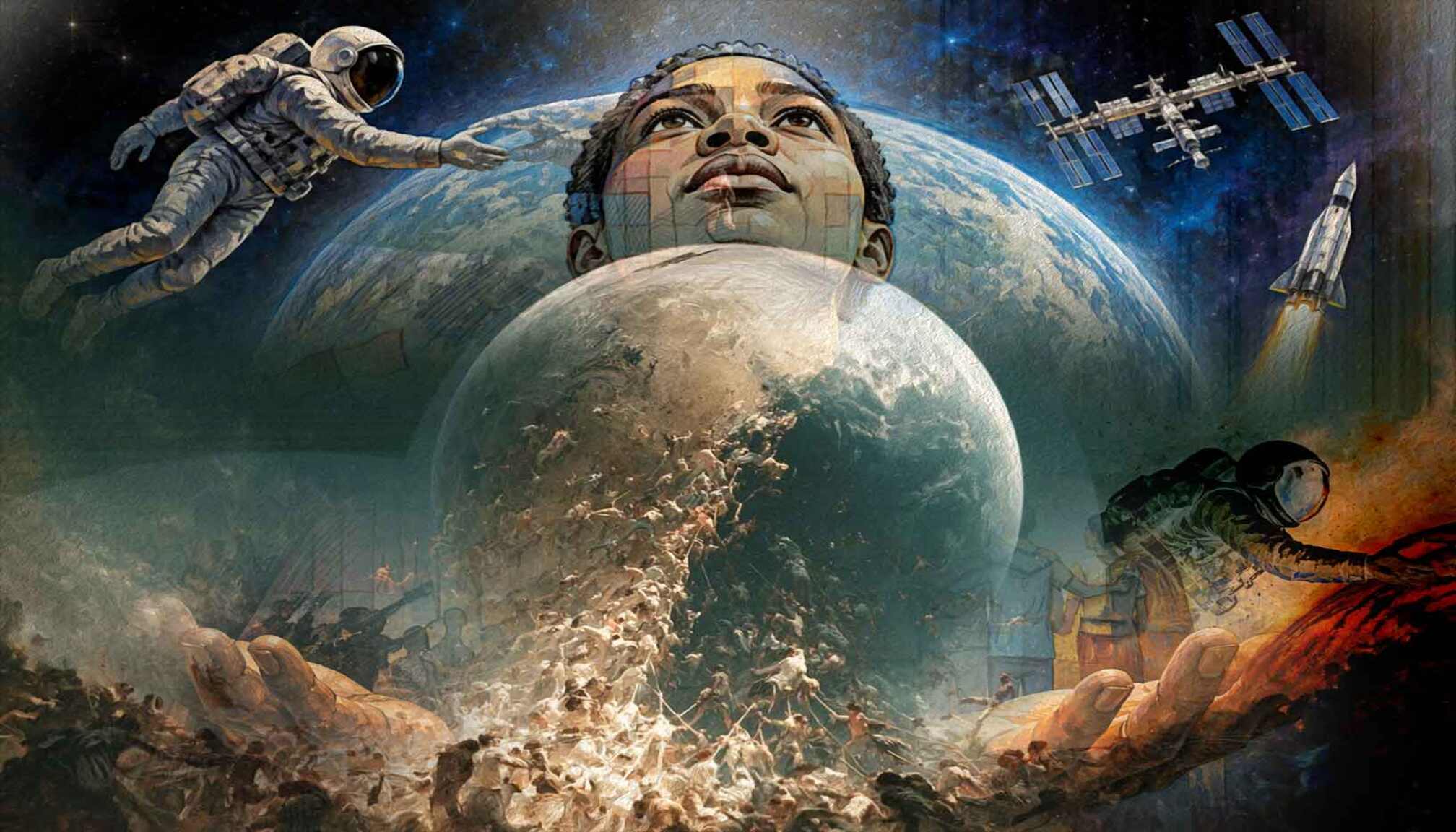
On some date before I was born—December ’68, when Apollo 8 orbited the moon, or July ’69, when Armstrong walked on it, or November ’71, when the first spacecraft orbited Mars; take your pick, somewhere around 1970—humanity crossed the threshold of becoming an interplanetary species, able to witness the entire earth from above, from outside, from another world. The implications are so mind-boggling that we have still not gotten our heads around them, and our failure to do so has both instantiated and exacerbated the so-called meta-crisis. We are caught in some kind of amnesiac bottleneck, unable to integrate or even remember the achievements of the twentieth century; having taken our eyes off the horizon and forgotten our confirmed self-esteem as a species, we have dug into our insecurities and turned all of our energies and faculties against one another. It seems perfectly reasonable to me that we could escape the gravity well of tribalism that pervades our politics, and the doomed sense of meaninglessness that pervades our culture, if we could remember and meaningfully integrate the implications of what we’ve accomplished, where we’ve been, and who we are.
Technologically, the space program of the mid-to-late twentieth century represents an astonishing confirmation of Descartes’ bold assertion about humanity’s capacity for confronting and mastering the problems of the material world. Interestingly enough, it also confirms the basic premise of Genesis: we are the stewards of this realm, empowered with the mental capacity for mastering physical force, distance, and limitation. We are the hands and feet of God, as it were, and the material world is ever increasingly at our disposal. (If the climate alarmists are correct about our ability to alter planetary dynamics at the scale they propose, this only confirms the truth of our power, and our responsibility.) Furthermore, the relentless, masterful solving of problems during the space age generated a wealth of life-saving, life-enhancing technology for everyone back on earth—from fire-resistant gear for firefighters to water purification to the cordless drill in your garage—confirming a suspicion raised by the discovery and settling of America: that the conquest of new horizons is accompanied by seemingly unrelated treasure troves that benefit humanity. Positive encouragement, perhaps, from the Divine Mind that our deep impulse to explore the unknown is good and worthy of reward.
Just as astonishing as the technological implications of the space program are the political ones. The mid-century space program involved hundreds of thousands of people—men and women of different ethnicities and religious backgrounds (who are, by the logic of the current culture, incapable of anything but conflict and power struggle)—working in concert, over decades, without violence, at the highest levels of professional competence and commitment to problem solving, in order to accomplish what nearly every human before 1960 considered laughably impossible. Nations worked hand in hand to assemble the International Space Station without a shot fired; even the US and the USSR docked their spacecraft in orbit and shook hands at the height of the Cold War. But on an even grander scale, the experience of viewing the world from outside transformed the political consciousness of everyone back on earth, even if we are still struggling to integrate the transformation. The astronauts themselves experienced it consciously and completely, and almost all of them expressed the same reflection: that viewing the world from above renders our earthbound tribal identities, borders, and conflicts utterly trivial and absurd.
These achievements represent an absolute transition in human history—an end to the cycles of empire, unexplored continents, and deep, violent commitment to tribal identities that characterize the long eons preceding 1970. Unfortunately, we haven’t realized it yet. We are trying, desperately and hilariously, to hold onto the familiarity of the past. But an honest appraisal will show that it is impossible to return to the earthbound mentality that defined our reality before Bill Anders photographed the earth rising over the lunar surface. It is impossible to hold onto deep ethnic and national division in the light of all the continents of a fragile planet viewed as one. It is laughable to imagine a war between the sexes in the light of men and women working together to solve engineering problems and flying shuttle missions together. You would think that the accomplishments of space exploration would be undeniable proof of our maturity as a species—confirmed in our self-esteem as explorers and inventors, in our ability to cooperate peacefully toward new goals, united across culture and race by the universal language of mathematics. You would think that no one could entertain any doubts about the goodness of mankind and the possibility of an end to war, petty tribalism, ignorance, and pessimistic fatalism. And yet, here we are.
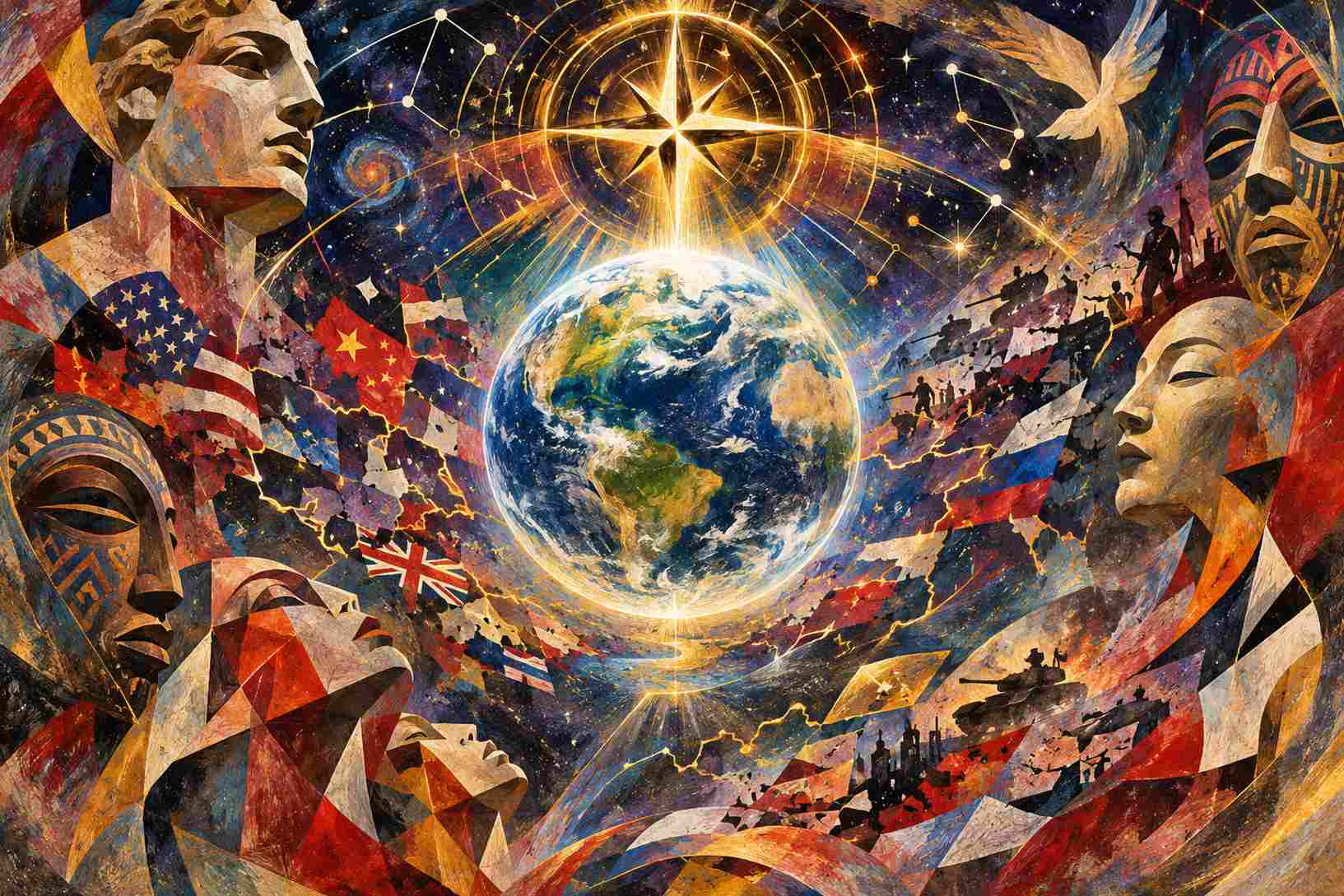
The state of mass amnesia that pervades our cultural moment regarding any positive vision of humanity or the future is truly mind-blowing. It is as though all of the irrefutable positive confirmations of NASA never happened (indeed, a growing number of people are determined to prove that they didn’t). But the problem is not confined to the factual errors of the flat-earthers; it is the spirit of Apollo that has been lost in the political divorce that has infected the entire developed world. The global culture has bifurcated into two opposing representations of the worst of our qualities. The one on the left still believes in scientific progress, albeit an increasingly dogmatic version of it, but rejects the necessity of moral strictures, self-control, personal sacrifice, and impersonal dedication to objective reality. The other camp, on the right, believes in self-control and objective reality, but denies that such a thing as progress exists at all, and hearkens back in increasingly desperate ways to the earthbound glory days of kings and manly violence.
The left seems to want, or expect, automatic progress that will magically unfold despite an ever-deepening encouragement—even enforcement—of neoteny and infantilism: the teaching that any limit on one’s subjective whims, or any suggestion of personal sacrifice or moral discipline, is a form of oppression that must be fought with the full power of the state, corporate policy, and educational reform. What we see from the left side of the divide is a failure to see the connection between the development of morality, perseverance, and the ability to separate one’s personal feelings from the task at hand, on one hand, and the development of a high level of professional competence in the general population on the other—which is an essential condition for any kind of progress, whether technological, political, artistic, or personal. The results are baby-voiced pop stars churning out shallow emotional comfort to young people who have been taught that they should never have to bear the slightest responsibility, emotional stress, or personal hardship. What we have is a nation (actually, multiple nations whom America has enculturated) of children demanding that the world move forward… somehow.
The left, at least, while undercutting all of the preconditions of progress, still believes in the idea of progress. The right, increasingly, doesn’t believe in progress at all.
For the right, the cultivation of morality, honor, and adherence to objective truth are important, but seem to be projects undertaken for their own sake (or solely for the sake of the next life). The conservative view of the world seems to be that of a Samsaric wheel of kingdoms rising and falling eternally, armies clashing, always defined by the same set of permanent values and inevitable outcomes—“progress” being just an illusory distraction. The reality, they say, is simply that the uniforms of the troops change colors, and the swords get a little fancier, in the endless cycle of war that defines humanity. Valor, self-discipline, cool-headedness—these are useful qualities indeed, for the soldier, or for the debate stage, or for the corporate acquisition. The ultimate ground of human life, they say, is and has been and always will be violence and bloody competition, and that’s just the Way It Is. The idea of peaceful cooperation and of values beyond violence is a fairy tale to the modern right, as demonstrated by the insistence of its online prophets of manhood that violence is the foundational basis of authentic masculinity—never mind the fifteen nations that peacefully collaborated on the space station, or the four hundred thousand who put a man on the moon without bloodshed—those who could honestly claim, “We came in peace for all mankind.”

And so, as long as the great divorce persists, we are all trapped in a bottleneck, like children of divorced parents who won’t stop fighting even though nothing ever comes of it but destruction. The left refuses to stop spoiling the children, and the right won’t stop beating them. The right, like a bad father, defines itself by its loudest, strongest, and worst qualities—getting into bar fights, buying sports cars, and racking up notches on the bedpost in a desperate attempt to live half a life. The left, like a forsaken wife, is dyeing her hair, spiraling into hedonism, and insisting that everyone affirm the incorruptibility of her already faded beauty, while pouring all of her energy into coddling and pampering the children.
The consequences of this dialectical quagmire are understandably disheartening. Everyone, from every political vantage point, has the same feeling that the world has gone completely insane and is spiraling into dysfunction. Unfortunately, everyone is so dug into their half of the divorce that they see the problem cockeyed, refusing their own responsibility and piling up blame on the other side. We have taken our eyes off the horizon and become trapped in earthbound, tribal, unreflective, totalized prescriptions. Totalized, violent masculinity is pushed as an antidote to extreme feminization; totalized authoritarian reaction is proposed as an antidote to the riotous excesses of personal liberty; totalized, unquestioning submission to tradition is sought as a cure for a dissolving, watered-down, create-your-own-adventure kind of ecumenical spiritualism.
This is what happens when people lose their sense of purpose, and lose the unifying mission of new challenges to conquer. We have turned on each other and adopted old missions in an attempt to squeeze new vitality out of them—a doomed project, and an unnecessary one, because the conquerable horizon of space stretches out infinitely and invites bold new steps. Enemy images, recycled missions, and an utter blindness to the infinite frontier that beckons us characterize the entire cultural discourse of the moment. I hear pastors on the right lament the meaninglessness of modern life, denounce “those who love the world of filth,” and conclude that we must become like the Pilgrims who first settled America—only, they add, there is no longer any wilderness left to settle.
We aren’t going to become like the Pilgrims. Not in mentality, not in religious practice, not in dress, not in any way, shape, or form. This is a costume fantasy of grown men desperate for some kind of authentic manhood—a desperation that is understandable, but that no costume will ever satisfy. And blaming the people who “love the world of filth”—and, inevitably, justifying violence against them—is just another way of clinging to juvenile crusades and enemy images to evade the responsibility of creating a peaceful, legitimate future for human flourishing. If seventeenth-century Massachusetts Bay had succeeded as a utopia, we wouldn’t be having this conversation; no one who is honest wants to go back to a world where we behead people for blasphemy. And there is still a wilderness to settle. It’s just overhead.
Likewise, the left’s dream of a gay space communism isn’t getting off the ground anytime soon. There’s not going to be a spacefaring civilization populated by people who can’t bear the trauma of being asked, “So where are you really from?” There’s no warp drive that’s going to be invented by people who can’t handle the responsibility of paying for car insurance, and no cure for cancer is coming from a culture that treats every discomfort as an injury.
We have got to see our way out of this mess. And it’s not rocket science. Like any marriage that is going to survive a rocky period, both sides have to stop blaming the other and take responsibility for their own destructive tendencies and their failure to see the bigger picture. The left has to acknowledge the damage done by teaching children entitlement and subjectivism; the right has to renew a commitment to non-violence and strive earnestly for peaceful cooperation as a principal value. Of course, I don’t believe that any of this is simply a matter of belief, or that the world will be fixed by everyone accepting certain propositions. The world will be fixed by the reclamation of genuine agency and personhood, with an eye on the stars and both feet on the ground.