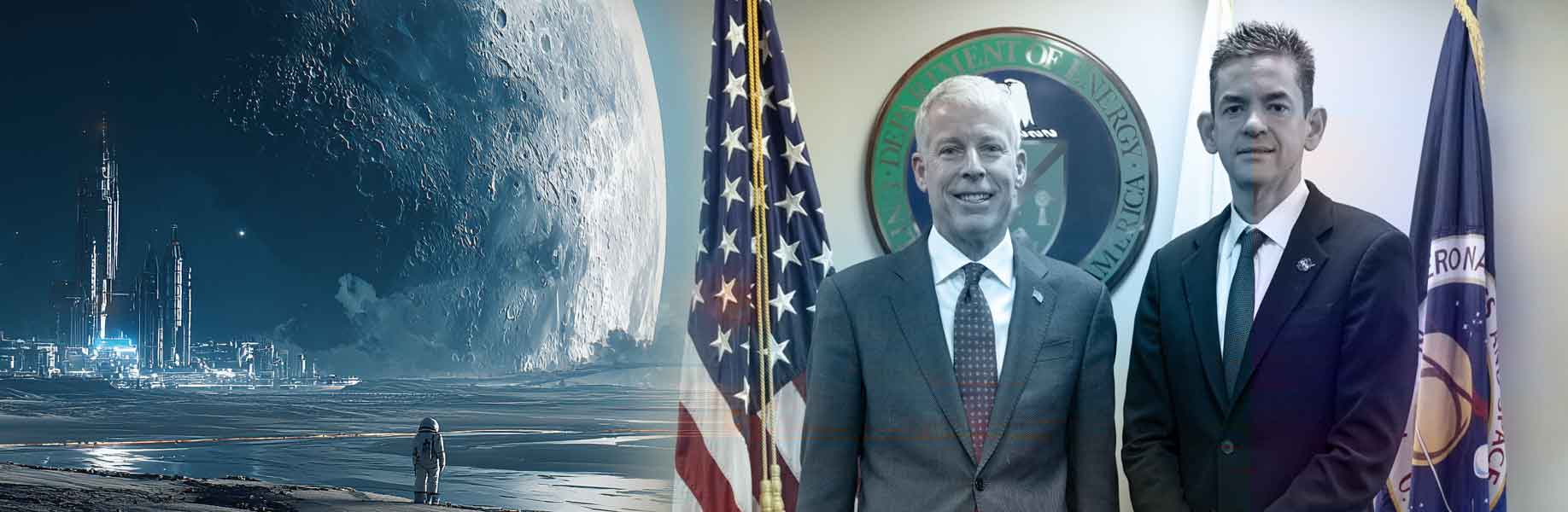

NASA and the U.S. Department of Energy (DOE) have announced a renewed partnership to advance nuclear power for space missions. They signed a memorandum of understanding focused on creating a fission surface power system, a type of nuclear reactor that generates electricity by splitting atoms, for use on the Moon as part of the Artemis program and later for Mars trips.
The goal is to have a working lunar reactor ready by 2030. This effort aims to keep the United States leading in space exploration and related business activities.
The system would provide safe, efficient, and abundant electrical power that lasts for years without needing more fuel. On the Moon, where sunlight and temperature change often, this reactor would offer steady energy for long stays, unlike solar panels that depend on light. The partnership builds on over 50 years of joint work in space tech, exploration, and national security.
Benefits for future missions
Leaders from both agencies highlighted how this fits with national space goals, including returning to the Moon and preparing for Mars.
The DOE "is proud to work with NASA and the commercial space industry on what will be one of the greatest technical achievements in the history of nuclear energy and space exploration,” says US Secretary of Energy Chris Wright in a DOE press release. "America is committed to returning to the Moon, building the infrastructure to stay, and making the investments required for the next giant leap to Mars and beyond,” says NASA Administrator Jared Isaacman in a NASA press release. “Achieving this future requires harnessing nuclear power.
They noted that nuclear power is key to these plans, allowing better teamwork to build, fuel, and launch the reactor. Past U.S. achievements, like major science projects, show that such innovation can open new frontiers. This collaboration is seen as a major step in nuclear energy and space history, supporting a strong presence in orbit and on other worlds. Overall, the agreement strengthens efforts to make space travel more reliable and ongoing, helping achieve big leaps in discovery.