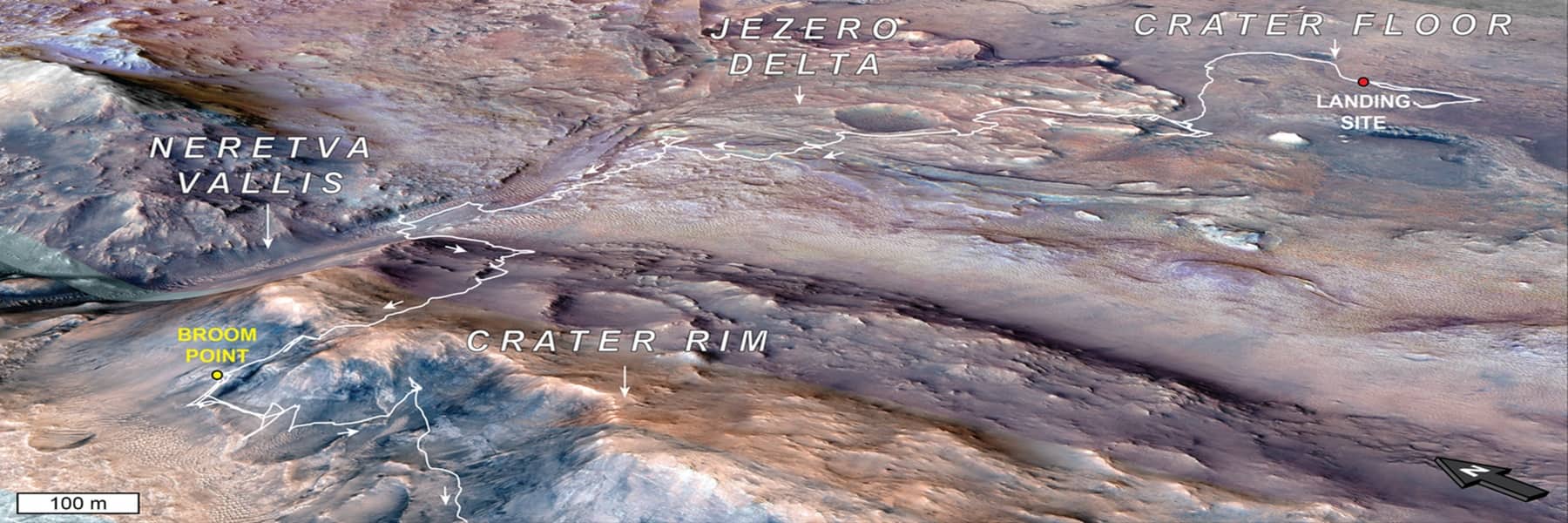

NASA's Perseverance rover has discovered a 245-foot-thick layer of ancient rock on the rim of Jezero Crater on Mars that preserves a roughly 4-billion-year-old record of repeated asteroid bombardment during the solar system's most violent epoch. The formation, exposed at a site dubbed "Jezero Point," contains impact breccias and glass-like beads formed under extreme pressure: telltale signatures of asteroids slamming into the Martian surface.
The discovery provides the most detailed in-situ cosmic "weather report" from that era ever recovered on another planet, offering scientists a new window into the rate and intensity of impacts that shaped the early inner solar system. The findings were announced by NASA JPL on July 15, 2026. [1]