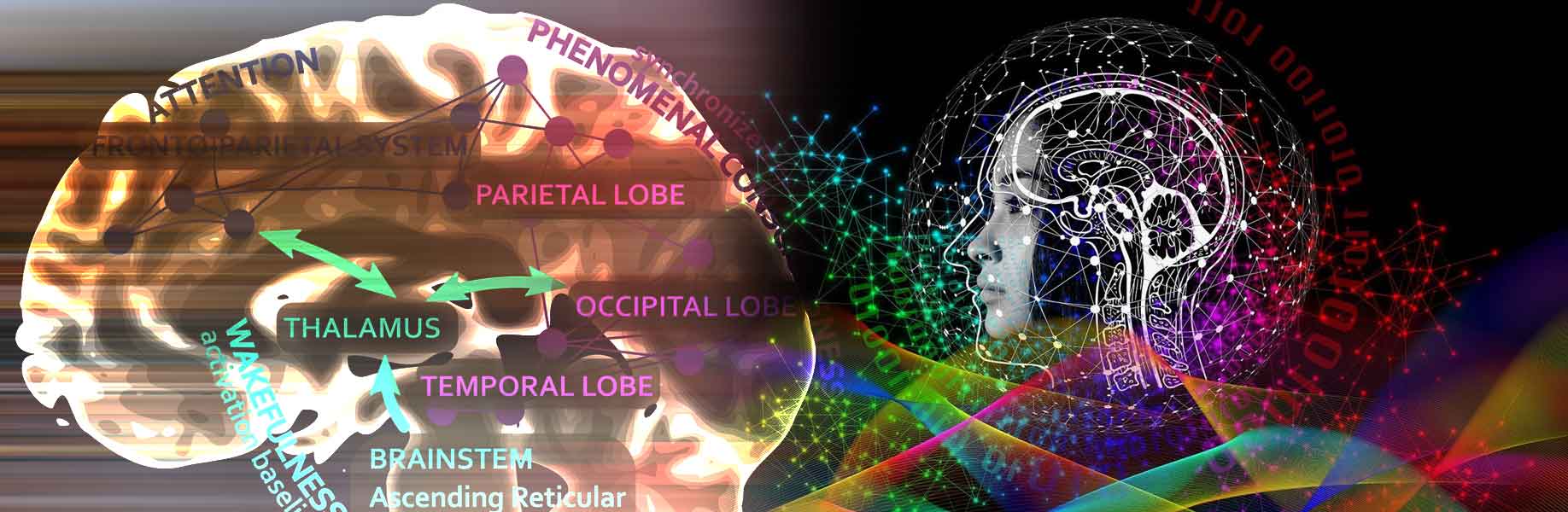

Researchers have suggested that the same neural circuitry involved in remembering the past also create our awareness of the present and predictions of the future. This view comes from combining insights in memory, perception, and neurology.
Conscious perception seems like a direct view of the world, but delays in brain processing mean it cannot be instant. Instead, unconscious mechanisms build a timeline of events, which the brain then consciously recalls as the present. The default mode network is a set of brain areas active during internal thoughts like daydreaming. The frontoparietal control network helps manage attention and decision-making. The salience network detects important changes in the environment. These networks, key for imagining and remembering, are also essential for consciousness, which is our aware state of mind.
Unified brain simulations
The researchers explain that the brain uses simulation processes - mental recreations of scenarios - for remembering the past, experiencing the present, or imagining the future. There is no clear divide between perception and memory over short times like milliseconds to seconds. Perception and memory blend seamlessly at these scales, and that the brain creates simulations for memory, imagination, and even the ongoing present.
This combined theory solves puzzles about consciousness. Its purpose is to use past information to make sense of the now, picture futures, and plan actions. The anatomy of consciousness matches that of explicit memory - clear recall of facts and events - which involves the whole cerebral cortex, the brain's outer layer for higher thinking.
The idea fits with other consciousness theories, like global neuronal workspace, which sees the brain sharing information widely, and predictive processing, where the brain guesses what will happen next. The researchers suggest that many theories describe different aspects of the same system. This synthesis could deepen understanding of how the brain creates our sense of reality.
The researchers have published the methods and results of this study in a paper published in Journal of Cognitive Neuroscience.